
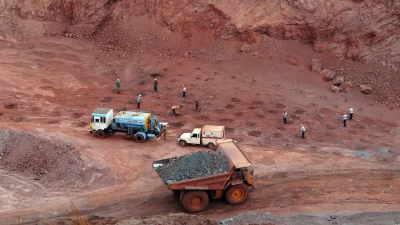
Recently, the Union Cabinet approved amendments to the Mines and Minerals (Development and Regulation) Act, enabling commercial mining of lithium and other minerals. This move opens up new opportunities for India to tap into its substantial lithium reserves and reduce import dependence for this valuable mineral.
About Lithium and Its Uses
- Lithium is a soft, shiny grey metal that is found in the earth’s crust. It is a highly reactive and alkaline metal, making it an essential element for various industries. Lithium has diverse applications and is used in ceramics, glass, telecommunication, and aerospace industries. One of its well-known uses is in lithium-ion batteries, which are widely used in portable electronic devices, electric vehicles (EVs), and renewable energy storage systems. Additionally, lithium is used in lubricating grease, as a high energy additive to rocket propellants, optical modulators for mobile phones, and as a converter to tritium used in thermonuclear reactions.
- Lithium is highly valued for its role in advancing clean energy technologies and reducing carbon emissions. As the demand for EVs and renewable energy storage continues to rise, the importance of lithium as a strategic resource becomes even more significant. Due to its wide-ranging applications and economic value, lithium is often referred to as ‘White Gold’.
Potential of Commercial Lithium Mining in India
Currently, India relies heavily on imports to meet its lithium requirements, primarily from countries like Australia and Argentina. However, the country possesses substantial lithium reserves, estimated to be around 4,00,000 metric tonnes. By enabling commercial mining of lithium, India has the opportunity to reduce import dependence and support domestic production for the growing electric vehicle industry.
Lithium Extraction and Processing
- Lithium extraction can be achieved through various methods, including conventional and advanced techniques. Conventional methods involve open-pit mining and underground mining, where lithium-bearing ores are extracted from the earth’s crust. Another extraction method is brine extraction, which involves pumping lithium-rich brines to the surface and evaporating the water to concentrate the lithium.
- Once lithium-bearing ores or brines are obtained, they undergo a series of processing stages to extract lithium carbonate or lithium hydroxide, which are used in battery production. The processing stages typically involve crushing, grinding, and chemical treatment to separate lithium from other minerals present in the ores or brines.
Future Prospects
- The global shift towards clean energy and the rapid growth of the electric vehicle market present promising prospects for the lithium industry. As countries strive to reduce carbon emissions and transition to sustainable energy sources, the demand for lithium is expected to increase significantly.
- Commercial lithium mining in India has the potential to contribute to the country’s economic growth, create job opportunities, and reduce import dependence. By tapping into its own lithium reserves, India can bolster the development of the electric vehicle industry and support the transition to a sustainable energy future.