
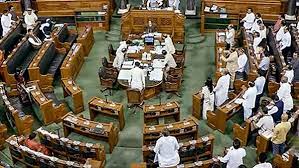
Co-operatives in India have played a significant role in community development and empowerment. The Multi-State Cooperative Societies (Amendment) Bill 2023, passed by the Lok Sabha, aims to amend the Multi-State Co-operative Societies Act 2002 to address shortcomings in the functioning and governance of co-operatives.
Co-operatives in India
Co-operatives in India are voluntary, democratic, and autonomous organizations controlled by their members who actively participate in their policies and decision-making. They were strongly emphasized during the first five-year plan (1951-56) after India gained independence. According to Article 43B of the Indian Constitution inserted by the 97th Amendment (2011), states are encouraged to promote voluntary formation, autonomous functioning, democratic control, and professional management of cooperative societies.
Understanding Multi-State Co-operative Societies
Multi-State Co-operative Societies are entities that operate in more than one state. These societies, such as farmer-producer organizations (FPOs) that procure grains from farmers in multiple states, are governed by the Multi-State Co-operative Societies Act 2002. The Supreme Court has clarified that Part IXB of the Constitution, which pertains to co-operative societies, is applicable only to multi-state co-operatives, while states have jurisdiction over state co-operative societies.
Shortcomings in the Functioning of Co-operatives
Co-operatives face several challenges in their operations, including inadequacies in governance, excessive government interference, and difficulties in maintaining active membership, lack of efforts for capital formation, and struggle to attract and retain competent professionals. In some cases, elections to co-operative boards have been indefinitely postponed, leading to governance issues.
Key Features of the Multi-State Cooperative Societies (Amendment) Bill 2023
- Election of Board Members: The Bill establishes the Co-operative Election Authority, which will be responsible for conducting elections to the board of multi-state co-operative societies. The Authority will consist of a chairperson, vice-chairperson, and up to three members appointed by the central government based on recommendations from a selection committee.
- Amalgamation of Co-operative Societies: The Bill allows state co-operative societies to merge with existing multi-state co-operative societies, subject to respective state laws. This provision aims to facilitate the consolidation and strengthening of co-operatives.
- Fund for Sick Co-operative Societies: The Bill introduces the Co-operative Rehabilitation, Reconstruction, and Development Fund to revive sick multi-state co-operative societies. The fund will be financed by profitable multi-state co-operative societies that have shown consistent profitability over the preceding three financial years.
- Restriction on Redemption of Government Shareholding: The Bill amends the existing provision, stating that shares held by central and state governments in multi-state co-operative societies cannot be redeemed without their prior approval. This measure seeks to preserve the autonomy and independence of these societies.
- Redressal of Complaints: The Bill empowers the central government to appoint one or more Co-operative Ombudsman with territorial jurisdiction. The Ombudsman will be responsible for inquiry and adjudication of complaints, ensuring a timely resolution. Appeals against Ombudsman directions can be filed with the Central Registrar within a month.
Significance of the Bill
The Multi-State Cooperative Societies (Amendment) Bill 2023 aims to strengthen co-operatives by promoting transparency and introducing a system of regular elections. By aligning its provisions with Part IXB of the Constitution, the bill addresses concerns related to the functioning and governance of co-operative societies. It seeks to create a more robust framework for the effective functioning of multi-state co-operatives.
Concerns Regarding the Provisions of the Bill
Despite its positive intentions, the bill has raised some concerns:
- Imposing Cost on Well-Functioning Societies: The Fund for reviving sick co-operative societies is financed by profitable ones, which may be perceived as imposing a cost on well-functioning societies.
- Restriction on Autonomy: The provision restricting redemption of government shareholding may be viewed as interfering with the autonomy of multi-state co-operative societies.