
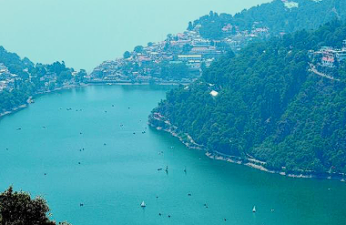
Naini Lake, attraction in Nainital, has reached a concerning water level of 4.7 feet, marking a five-year low. This drop has raised alarms about potential drinking water shortages as summer approaches. Experts warn that the lake may dip below its normal gauge level, although this does not indicate complete drying. The lake, with a maximum depth of 89 feet, has a standard gauge level of 12 feet. The Uttarakhand Jal Sansthan relies on the lake for 10 million litres of drinking water daily.
Historical Context
Naini Lake is a kidney-shaped natural lake located in the heart of Nainital. Discovered by English businessman P. Barron in the mid-19th century, it contributed to Nainital’s growth as a popular hill station. The lake has historically been a vital water source for the city, meeting 76% of its water demand in 2024.
Current Water Supply Challenges
The lake’s declining water levels are attributed to various factors. These include reduced snowfall and rainfall during winter months. An increasing population and rising tourist activity further strain the lake’s resources. The aging water distribution system struggles to meet the growing demand.
Environmental Concerns
Research indicates that Naini Lake faces human-induced challenges. A 2017 report brought into light issues such as unplanned construction and encroachment. These activities have degraded recharge zones and reduced the lake’s catchment area. Pollution from untreated wastewater and solid waste disposal exacerbates the situation.
Climate Change Impact
Climate change has altered weather patterns in Uttarakhand. From 1970 to 2022, average temperatures increased by nearly 1.5 degrees Celsius. This warming trend affects precipitation, with rainfall decreasing from 2400 mm in 2022 to 2000 mm in 2024. The absence of snowfall in 2025 further compounds the lake’s challenges.
Legal and Civic Responses
Multiple petitions regarding Naini Lake have emerged over the years. The Supreme Court ruled against commercial constructions in 1993, yet violations persist. Concerns over ongoing construction on wetlands have been raised, as these areas are crucial for the lake’s water supply during dry periods.
Future Development and Conservation Efforts
In 2021, concerns about the Sukhatal Lake project led to legal action, prompting the Uttarakhand High Court to suspend construction. Despite this, work resumed in 2024. Experts advocate for an ecosystem-based approach to development. They stress the importance of understanding catchment areas and prioritising the rejuvenation of natural water processes over tourism expansion.
Questions for UPSC:
- Critically analyse the impact of climate change on water resources in Himalayan regions.
- Point out the challenges faced by urban areas in managing water supply and demand.
- Estimate the effects of unplanned urbanisation on local ecosystems with suitable examples.
- What is the significance of catchment area management? Discuss its relevance in the context of water conservation.
Answer Hints:
1. Critically analyse the impact of climate change on water resources in Himalayan regions.
- Climate change has led to rising temperatures in the Himalayas, affecting snowfall and rainfall patterns.
- Decreased precipitation results in lower water levels in lakes and rivers, threatening water supply.
- Increased glacial melt initially raises water levels but ultimately leads to reduced long-term water availability.
- Shifts in weather patterns disrupt traditional water management practices, complicating resource allocation.
- Climate impacts exacerbate existing environmental issues, such as pollution and habitat degradation.
2. Point out the challenges faced by urban areas in managing water supply and demand.
- Urban areas often experience rapid population growth, leading to increased water demand that outstrips supply.
- Aging infrastructure can result in water loss through leaks and inefficiencies in distribution.
- Unplanned urbanization can lead to encroachment on water bodies, reducing available catchment areas.
- Seasonal variability in rainfall creates challenges for consistent water supply, particularly in summer months.
- Pollution from urban runoff and untreated wastewater further complicates water quality and availability.
3. Estimate the effects of unplanned urbanisation on local ecosystems with suitable examples.
- Unplanned urbanization leads to habitat destruction, reducing biodiversity in local ecosystems.
- Encroachment on wetlands and water bodies diminishes natural recharge areas, impacting water supply.
- Pollution from construction and urban runoff contaminates local water sources, harming aquatic life.
- Examples include the degradation of Naini Lake due to nearby construction affecting its health and water levels.
- Urban heat islands can alter local climate conditions, impacting flora and fauna in the vicinity.
4. What is the significance of catchment area management? Discuss its relevance in the context of water conservation.
- Catchment area management is crucial for maintaining water quality and ensuring sustainable water supply.
- Healthy catchment areas enhance natural water filtration and recharge processes, benefiting local ecosystems.
- Effective management can mitigate flooding risks and improve resilience to climate variability.
- Rejuvenating catchment areas supports biodiversity and helps maintain ecological balance.
- In the context of Naini Lake, proper catchment management is vital for preventing further water level decreases.