
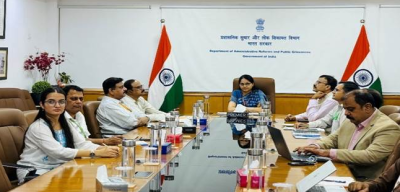
The Department of Administrative Reforms and Public Grievances launched the NeSDA 2025 portal to conduct the National e-Governance Service Delivery Assessment. This biennial evaluation measures the depth, maturity, and effectiveness of online citizen services across States, Union Territories, and Central Ministries. Developed by the Department of Administrative Reforms and Public Grievances, the assessment functions as an administrative backbone to coordinate online data collection, verification, and capacity building. The framework benchmarks digital governance structures, helping administrative divisions identify systemic gaps and improve public service delivery mechanisms from a citizen-centric perspective.
Core Objectives and Methodology
The framework assesses how efficiently online public services reach beneficiaries. It aims to reduce physical interface requirements and establish a competitive benchmarking culture among different administrative tiers.
Global and National Alignment
The methodology maps its assessment models directly against international standards.
- Global Benchmark: The core framework adapts indicators from the Online Service Index of the United Nations e-Government Survey.
- Federal Customization: The Department of Administrative Reforms and Public Grievances adapts these indicators to match the specific division of powers and governance capabilities of India’s federal setup.
- Service Delivery Models: Evaluation criteria look closely at Government-to-Citizen and Government-to-Business service pathways.
Classification and Scope of Portals
The assessment protocol divides all evaluated government web properties into two target classifications to separate informational frameworks from transactional setups.
State, UT, City, and Central Ministry Portals
These act as primary digital gateways for users. Assessment focuses heavily on basic access mechanisms, statutory disclosures, and informational visibility.
State, UT, City, and Central Ministry Service Portals
These focus on end-to-end transactional execution. They handle complex workflows like license applications, certificate processing, benefit transfers, and tax payments.
Key Evaluation Parameters
The evaluation structure utilizes a multi-dimensional matrix to determine the overall digital maturity of each portal.
- Accessibility: Evaluates compliance with standardized guidelines, multilingual availability, and assistive technology features for persons with disabilities.
- Content Availability: Measures the relevance, updates, clarity, and comprehensive nature of the information uploaded on government sites.
- Ease of Use: Assesses user interface design, visual navigation pathways, search functions, and minimal click requirements to find target services.
- Information Security and Privacy: Verifies data encryption standards, safety certifications, privacy policies, and protection mechanisms for user records.
- Integrated Service Delivery: Checks the level of cross-department backend linkage, single sign-on mechanisms, and complete digital tracking of applications.
- Open Government Data: Evaluates availability of machine-readable, downloadable public datasets to encourage transparency and public analytical reuse.
- E-Participation: Examines public feedback loops, dynamic grievance recording systems, and digital interactive forums for community consultation.
- Emerging Technologies: Tracks the adoption of innovative tools like Artificial Intelligence, machine learning interfaces, and predictive analytics to resolve public queries.
Sectoral Coverage and Mandatory Targets
The 2026 assessment cycle expands target focus sectors by integrating regulatory systems from the Ministry of Corporate Affairs into the digital ease-of-doing-business evaluations. The mandate tracks services across ten core sectors, including Finance, Labour & Employment, Education, Local Governance & Utility Services, Social Welfare, Transport, Environment, Tourism, and Public Grievance.
| Administrative Tier | Mandatory Services Evaluated | Sectoral Span |
| States and Union Territories | 59 Mandatory Services | Coordinated across all 10 priority welfare and regulatory sectors |
| Central Ministries / Departments | 43 Target Services | Evaluated across critical administrative and economic divisions |
IASPOINT Booster Facts for UPSC
- Nodal Department: The National e-Governance Service Delivery Assessment is managed and executed under the Department of Administrative Reforms and Public Grievances, which operates under the Ministry of Personnel, Public Grievances and Pensions.
- Launch Timeline: The initiative was conceptualized and launched in August 2018. Prior full editions include NeSDA 2019, NeSDA 2021, and NeSDA 2023.
- Historical Benchmarks: In previous reports, Jammu & Kashmir (e-UNNAT), Kerala (e-Sevanam), Assam (Sewa Setu), Karnataka (Seva Sindhu), Madhya Pradesh (MP e-Service), Odisha (Odisha One), and Uttarakhand (Apuni Sarkar) achieved peak service saturation under the assessment criteria.
- Centralized Best Practices: The National Digital Library of India and the Central Government Health Scheme portals are consistently highlighted by the assessment reports as benchmark model platforms for Central Ministry service delivery.
- Local Level Integration: The assessment extends evaluation architectures down to municipal portals to track localized citizen-administration touchpoints.