
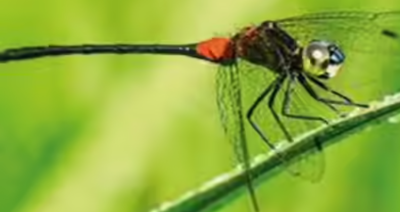
The discovery of a new dragonfly species, “Lyriothemis abrahami”, marks advancement in Indian odonatology. This species was long mistaken for “Lyriothemis flava” due to similar appearances. After over a decade of detailed fieldwork and scientific analysis, researchers from multiple Indian institutions confirmed the species’ distinct identity in 2025. The finding marks the rich biodiversity of the Western Ghats and the importance of conserving its unique forest habitats.
Initial Discovery and Identification
The first indication of “Lyriothemis abrahami” appeared in 2013 during a forest trek in Thenmala, Kerala. Researchers noticed a dragonfly guarding a tree hole that showed distinct physical traits. Despite photographic records, the team delayed publication out of respect for ongoing research by others. The original specimen was lost following the death of a key researcher, which slowed progress.
Challenges in Species Confirmation
Between 2013 and 2025, the species was observed only four times across various locations in Kerala, including Ponmudi and Neyyar. This rarity raised doubts about its distinctiveness. In 2022, larvae were found in tree holes, allowing controlled rearing. However, lab-reared adults did not develop full adult colouration, complicating taxonomic description. Finally, in 2025, mature adults were collected from Aralam Wildlife Sanctuary and Ponmudi, confirming the species.
Habitat and Distribution
“Lyriothemis abrahami” breeds in small water pools inside tree holes. It shows strong sexual dimorphism; males have uniquely shaped hamules, while females have jet-black bodies with yellow triangular spots. The species inhabits lowland rainforests to mid-elevation evergreen and deciduous forests, ranging from 50 to 1,100 metres above sea level.
Ecological and Conservation Significance
This discovery raises Kerala’s known odonate species to 191, including 78 endemics. It puts stress on the Western Ghats as a global biodiversity hotspot. The species’ reliance on microhabitats like tree holes marks the need to protect such niches. As an indicator of forest health, “Lyriothemis abrahami” stresses the broader ecological importance of habitat conservation.
Future Research Directions
Researchers plan to study the larval biology and evolutionary relationships of “Lyriothemis abrahami”. About its life cycle and genetic links will enhance knowledge of odonate diversity and forest ecosystem dynamics in the Western Ghats.
Questions for UPSC:
- Point out the significance of microhabitats like tree holes in maintaining forest biodiversity with suitable examples.
- Underline the role of the Western Ghats as a biodiversity hotspot and critically analyse the challenges in conserving its endemic species.
- Estimate the impact of species discovery on ecological research and conservation policies in India, and how do such findings influence forest management strategies?
- What is species dimorphism? How does sexual dimorphism in insects like dragonflies affect their ecological roles and evolutionary adaptations?