
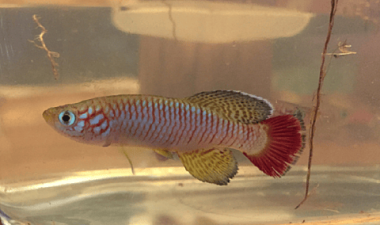
Scientists announced the discovery of a new killifish species, Nothobranchius sylvaticus, in the Gongoni Forest of southeastern Kenya. This fish is critically endangered, denoting urgent conservation needs. The discovery puts stress on the ecological significance of the area and the impact of geological events on biodiversity.
Overview of Killifish
Killifish are a diverse group of oviparous fish, primarily found in freshwater and brackish environments. There are approximately 1,270 species worldwide, with habitats spanning the Americas, Europe, Africa, the Middle East, and Asia. They are known for their colourful appearances and varied reproductive strategies.
Discovery Context
The Nothobranchius sylvaticus was identified during expeditions conducted in 2017 and 2018. The team used principal component analysis and DNA sequencing to confirm its status as a new species. This fish is unique as it is the first known endemic killifish to thrive in a forest setting.
Geological Significance
Phylogenetic analysis revealed that the lineage of N. sylvaticus diverged from its closest relatives approximately 7.09 million years ago. This finding suggests that the Gongoni Forest has existed for over seven million years, making it a critical site for studying evolutionary biology and ecology.
Ecological Importance of Gongoni Forest
The Gongoni Forest spans only 8.2 square kilometres and exemplifies the East African Mosaic ecosystem. It features a blend of savannah and forest patches, providing unique habitats for various species. This environment is crucial for the survival of the newly discovered killifish.
Conservation Challenges
Nothobranchius sylvaticus faces threats due to its limited habitat. The ancient forest is under pressure from human activities and climate change. Conservation efforts are essential to protect this species and its ecosystem.
Research Implications
The discovery contributes to ongoing research on the tectonic development of Central Africa over the last 20 million years. About the relationship between geological processes and biodiversity is vital for conservation strategies.
Publication Details
The findings were published in the journal Zootaxa. The research team included experts from Stellenbosch University, France, and Kenya, among others. Their work emphasises the importance of collaborative efforts in biodiversity research.
Questions for UPSC:
- Critically discuss the impact of tectonic activities on biodiversity in East Africa.
- Estimate the significance of endemic species in maintaining ecological balance. How do they contribute to local ecosystems?
- Examine the conservation challenges faced by critically endangered species in forest habitats.
- Analyse the role of collaborative international research in biodiversity conservation efforts.
Answer Hints:
1. Critically discuss the impact of tectonic activities on biodiversity in East Africa.
- Tectonic activities have shaped the landscape, creating diverse habitats that support various species.
- Geological events have led to the formation of distinct ecosystems, such as the East African Rift Valley.
- Changes in water bodies and drainage patterns influence species distribution and evolution.
- These activities can lead to isolation of populations, promoting speciation and endemism.
- Ongoing tectonic processes continue to affect habitats, posing both opportunities and challenges for biodiversity.
2. Estimate the significance of endemic species in maintaining ecological balance. How do they contribute to local ecosystems?
- Endemic species are adapted to specific environments, playing vital roles in their ecosystems.
- They contribute to food webs, serving as prey or predators within their habitats.
- Endemic species often assist in pollination, seed dispersal, and nutrient cycling.
- Their unique adaptations can enhance ecosystem resilience to environmental changes.
- Loss of endemic species can lead to ecological imbalances and loss of biodiversity.
3. Examine the conservation challenges faced by critically endangered species in forest habitats.
- Habitat destruction due to deforestation and human encroachment threatens species survival.
- Climate change impacts can alter habitats, making them unsuitable for specialized species.
- Pollution and invasive species can disrupt local ecosystems and outcompete native species.
- Limited genetic diversity in small populations increases vulnerability to extinction.
- Conservation efforts often face funding and resource allocation challenges.
4. Analyse the role of collaborative international research in biodiversity conservation efforts.
- Collaboration brings together diverse expertise, enhancing research quality and outcomes.
- International partnerships can facilitate resource sharing and funding for conservation projects.
- Joint research efforts can lead to comprehensive data collection and analysis, improving understanding of ecosystems.
- Collaboration encourages awareness and advocacy for global conservation issues.
- Shared findings can influence policy-making and conservation strategies across borders.