
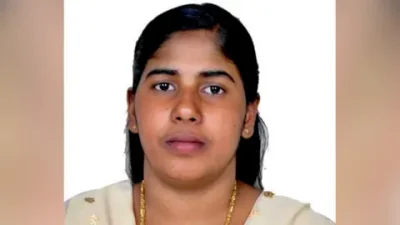
Nimisha Priya, an Indian nurse from Kerala, is facing execution in Yemen for the 2017 killing of a Yemeni national. The Yemeni President, Rashad al-Alimi, approved the death sentence in 2018. The execution is set to occur within a month. This case marks the complexities of legal systems under Islamic Sharia law, particularly concerning the death penalty and the concept of ‘diyya’ or blood money.
Background of Nimisha Priya
Nimisha Priya began her nursing career in 2008. She married Tomy Thomas in 2011 and later moved to Yemen. While Priya worked as a nurse, her husband remained in India. The couple aimed to establish a clinic in Yemen but faced legal challenges. They sought help from Talal Abdo Mahdi, a Yemeni national, who became a trusted figure in their lives. However, Mahdi allegedly exploited Priya, leading to a tragic series of events.
Incident Leading to the Death Sentence
Reports suggest that Mahdi physically and sexually abused Priya. He confiscated her travel documents, isolating her from her family. In a desperate attempt to escape this situation, Priya and another nurse, Hannan, tried to sedate Mahdi. Tragically, they administered an overdose, resulting in his death. Fearing the consequences, they dismembered his body and concealed it in a water tank, leading to their arrest.
Legal Framework and Sharia Law
In Yemen, the legal system is influenced by Islamic Sharia law, which permits the death penalty for murder. However, the Quran advocates for forgiveness and compensation. The concept of ‘diyya’ allows the victim’s family to decide the punishment. They can accept blood money as an alternative to execution. The Quran states that if the offender is pardoned, the amount of blood money should be negotiated fairly.
Status of Nimisha Priya’s Case
Currently, Priya’s mother is in Yemen, negotiating with the victim’s family to secure a pardon through blood money. Reports indicate that the Government of India has allocated $40,000 to facilitate these talks. The total amount required to potentially save Priya’s life is estimated between $300,000 and $400,000. The ‘Save Nimisha Priya International Action Council’ is actively crowdfunding for this cause. Priya’s lawyer has urged the Government of India for immediate intervention to assist in negotiations.
International Reactions
The case has drawn attention from various human rights organisations and the Indian public. Many are calling for the Government of India to take a stronger stance in advocating for Priya’s life. The complexities of international law and human rights are evident in this case, raising questions about the treatment of foreign nationals under local laws.
Potential Outcomes
The outcome of the negotiations remains uncertain. If the victim’s family accepts the blood money and grants forgiveness, Priya’s life may be spared. However, if negotiations fail, she faces imminent execution. The case puts stress on the challenges faced by individuals in foreign legal systems and the importance of diplomatic intervention.
Questions for UPSC:
- Critically analyse the implications of Sharia law on the legal rights of women in Islamic countries.
- Explain the concept of ‘diyya’ in Islamic law. How does it differ from the Western legal systems?
- What are the humanitarian concerns regarding the death penalty? Discuss with suitable examples.
- What is the role of international organisations in cases involving foreign nationals facing severe penalties abroad? Comment on their effectiveness.
Answer Hints:
1. Critically analyse the implications of Sharia law on the legal rights of women in Islamic countries.
- Sharia law often imposes gender-specific legal limitations, affecting women’s rights in areas such as inheritance, testimony, and criminal justice.
- Women may face harsher penalties for certain crimes compared to men, reflecting societal views on gender roles.
- Access to legal representation and protection can be limited for women, impacting their ability to seek justice.
- In some interpretations, Sharia law allows for practices like polygamy and child marriage, which can undermine women’s autonomy.
- However, some Islamic scholars advocate for reinterpretation of Sharia to promote gender equality and women’s rights.
2. Explain the concept of ‘diyya’ in Islamic law. How does it differ from the Western legal systems?
- ‘Diyya’ refers to financial compensation paid to the victim’s family in cases of murder or bodily harm, promoting reconciliation over retribution.
- The amount of ‘diyya’ is not fixed and is determined through negotiation, allowing for flexibility in compensation.
- In Western legal systems, penalties are typically punitive and determined by the state, focusing on punishment rather than compensation.
- Western systems often lack a direct mechanism for victims’ families to negotiate settlements, relying instead on judicial processes.
- ‘Diyya’ reflects a restorative justice approach, which contrasts with the retributive justice commonly found in Western legal frameworks.
3. What are the humanitarian concerns regarding the death penalty? Discuss with suitable examples.
- The death penalty raises ethical concerns about the right to life and the potential for wrongful executions, as seen in cases like that of Cameron Todd Willingham.
- It disproportionately affects marginalized groups, denoting systemic inequalities in the judicial system, such as in the case of George Stinney Jr., executed at age 14.
- The irreversible nature of capital punishment poses risks in cases of new evidence or changing societal views on justice.
- International human rights organizations advocate against the death penalty, arguing it constitutes cruel and unusual punishment.
- Countries that have abolished the death penalty often cite its ineffectiveness as a deterrent to crime, further questioning its humanitarian validity.
4. What is the role of international organisations in cases involving foreign nationals facing severe penalties abroad? Comment on their effectiveness.
- International organizations like the UN and Amnesty International advocate for fair trials and human rights protections for foreign nationals.
- They can facilitate diplomatic negotiations between countries to address cases of severe penalties, promoting dialogue and understanding.
- These organizations often provide legal assistance and resources to families affected by such cases, enhancing their ability to navigate foreign legal systems.
- Effectiveness can vary; while they raise awareness, they may lack enforcement power to change local laws or practices.
- Public campaigns and pressure from international organizations can lead to positive outcomes, as seen in cases like that of Meriam Ibrahim, who faced execution in Sudan.