
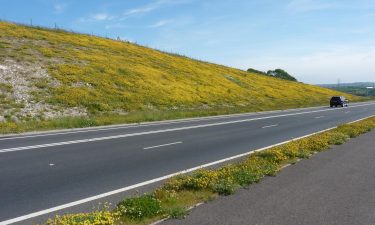
Recent studies highlight the importance of road verges in enhancing urban biodiversity. A study conducted in Singapore revealed that these often-overlooked green strips can boost butterfly populations, even in heavily urbanised areas. The findings suggest that city planners should reconsider their approach to green spaces and integrate road verges into biodiversity strategies.
Significance of Road Verges
Road verges serve as vital green spaces within urban environments. They can connect fragmented habitats and facilitate species movement. This study shows that these areas can support diverse wildlife, particularly butterflies, which are indicators of healthy ecosystems.
Research Methodology
The study assessed 101 road verges across Singapore. Researchers recorded 56 butterfly species and 1,320 nectar-feeding events. They applied structural equation modelling to determine how nectar availability, verge size, traffic density, and surrounding green cover affected butterfly diversity.
Key Findings
- Floral Diversity: The presence of a variety of flowering plants directly influenced butterfly abundance. Non-native species also attracted butterflies, denoting the importance of nectar sources.
- Structural Complexity: The variation in vegetation height created favourable microclimates. This complexity provided shelter from disturbances, aiding butterfly populations.
- Traffic Impact: Higher traffic density negatively affected butterfly diversity due to collisions and pollution. This finding puts stress on the need for careful urban planning to mitigate these effects.
Implications for Urban Planning
The research challenges traditional urban planning, which often prioritises larger parks over smaller green spaces like road verges. It suggests that enhancing these areas can improve urban biodiversity. Simple strategies such as selective mowing and planting diverse flowering species can be effective.
Singapore’s Urban Model
Singapore has successfully integrated greenery into its urban landscape. With 50% of its land area vegetated and connected through initiatives like “Park Connectors,” it serves as a model for other cities. This approach demonstrates that urban expansion does not have to come at the expense of biodiversity.
Future Directions
As cities continue to grow, the findings advocate for the preservation and enhancement of small-scale green spaces. Even modest patches of greenery can impact urban ecosystems. This research encourages ongoing exploration of innovative urban biodiversity strategies.
Questions for UPSC:
- Estimate the role of urban planning in biodiversity conservation in contemporary cities.
- Critically discuss the impact of urbanisation on butterfly populations and their habitats.
- Examine the significance of non-native plant species in urban ecological systems.
- Point out the relationship between traffic density and wildlife diversity in urban settings.
Answer Hints:
1. Estimate the role of urban planning in biodiversity conservation in contemporary cities.
- Urban planning shapes land use, influencing the availability of green spaces.
- Integrating biodiversity considerations can enhance ecological networks within cities.
- Effective planning can promote connectivity between habitats, aiding species movement.
- Incorporating small green areas, like road verges, can boost urban biodiversity.
- Urban policies can encourage community engagement in conservation efforts, enhancing public awareness.
2. Critically discuss the impact of urbanisation on butterfly populations and their habitats.
- Urbanisation fragments habitats, leading to isolation of butterfly populations.
- Increased impervious surfaces reduce nectar sources and natural vegetation.
- Higher traffic density contributes to mortality and pollution, disrupting butterfly behavior.
- Urban heat islands can alter microclimates, affecting butterfly survival and reproduction.
- However, strategic planning can mitigate some negative effects, promoting butterfly-friendly environments.
3. Examine the significance of non-native plant species in urban ecological systems.
- Non-native species can provide essential nectar sources for pollinators like butterflies.
- They may enhance floral diversity, supporting a wider range of species in urban areas.
- Careful selection of non-natives can help restore ecological functions in degraded habitats.
- However, they can also pose risks of invasiveness, potentially outcompeting native flora.
- Balancing native and non-native species is crucial for sustainable urban biodiversity management.
4. Point out the relationship between traffic density and wildlife diversity in urban settings.
- Higher traffic density correlates with increased mortality rates among wildlife, including butterflies.
- Pollution from vehicles can degrade habitat quality, impacting food sources and breeding grounds.
- Traffic can create barriers, limiting wildlife movement and access to resources.
- Areas with lower traffic density often support higher levels of biodiversity.
- Urban planning that reduces traffic impacts can enhance wildlife diversity and ecosystem health.