
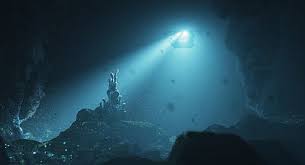
The Union Minister of Earth Sciences recently made a groundbreaking announcement that has stirred excitement and curiosity in the scientific and maritime communities alike. India’s ambitious Samudrayaan project is set to propel three personnel to a remarkable depth of 6000 meters in a specially designed submersible vehicle, marking the nation’s inaugural manned mission to explore the enigmatic depths of the ocean. This pioneering endeavor not only signifies India’s technological ability but also underscores its commitment to advancing our understanding of the ocean’s hidden treasures and complex ecosystems.
Samudrayaan
Developed by the National Institute of Ocean Technology (NIOT), Chennai, MATSYA 6000 is a manned submersible vehicle engineered to plunge into the deep ocean, facilitating the human presence in an otherwise inaccessible realm. The primary objective of this innovative submersible is to explore the untapped potential of mineral resources lurking beneath the ocean’s depths. With the capability to remain operational in the deep sea for an impressive 12 hours, and the ability to extend this to a remarkable 96 hours during emergencies, MATSYA 6000 is equipped with state-of-the-art safety measures to ensure the well-being of its human occupants.
Unlocking the Mysteries of the Deep
The Samudrayaan project goes beyond resource exploration. Designed with a conscientious approach to ecological preservation, the mission emphasizes minimal disturbance to the ocean’s delicate ecosystems. This dedication to responsible exploration resonates with the broader framework of the Deep Ocean Mission, a significant initiative aligned with the Central Government’s Blue Economy policy. Under the aegis of the Ministry of Earth Sciences (MoES), the mission seeks to unravel the mysteries of the deep sea and conduct comprehensive biodiversity assessments, all while promoting sustainable practices and bolstering India’s blue economy aspirations.
Deep Ocean Mission: Charting New Frontiers
A cornerstone of India’s scientific and economic vision, the Deep Ocean Mission is a mission-mode project designed to support the nation’s Blue Economy initiatives. Rooted in a multi-ministerial and multi-disciplinary framework, this ambitious program aims to enhance our comprehension of the living and non-living resources nestled within the Indian Ocean’s profound depths. By striving to achieve the coveted Blue Economy status, India demonstrates its resolve to harness the vast potential of oceanic resources for economic prosperity and sustainable development.
Components and Goals of the Deep Ocean Mission
The Deep Ocean Mission encompasses six pivotal components, each poised to drive technological innovation, scientific discovery, and responsible resource management:
- Development of Technologies for Deep Sea Mining and Manned Submersible and Underwater Robotics: This component forms the bedrock of the mission, focusing on technological advancements to tap into deep-sea mineral riches and facilitate human exploration.
- Development of Ocean Climate Change Advisory Services: Amid global concerns about climate change, this facet of the mission seeks to create advisory services that provide critical insights into oceanic climate dynamics.
- Technological Innovations for Exploration and Conservation of Deep-Sea Biodiversity: With biodiversity conservation at its core, this component endeavors to unlock the secrets of the deep-sea ecosystem while safeguarding its delicate balance.
- Deep Ocean Survey and Exploration: An integral part of the mission, this component involves extensive surveys and explorations to map the ocean’s topography, geology, and resources.
- Energy and Freshwater from the Ocean: Addressing critical resource needs, this component aims to harness energy and freshwater sources from the ocean, offering sustainable solutions for India’s growing demands.
- Advanced Marine Station for Ocean Biology: This component centers on establishing advanced marine stations that serve as hubs for oceanic research and biology studies.