
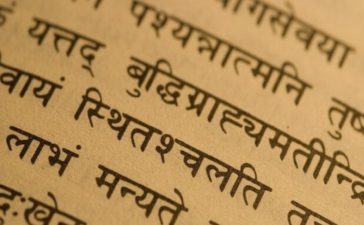
The recent initiative by the Uttar Pradesh government to enhance Sanskrit education reflects a growing recognition of the language’s potential in contemporary academic and technological contexts. Chief Minister Yogi Adityanath has proposed a scholarship scheme aimed at supporting Sanskrit students statewide, alongside plans to revive the traditional Gurukul education system. This move puts stress on a broader effort to integrate ancient knowledge systems into modern education.
Significance of Sanskrit
Sanskrit is often referred to as the ‘Dev-Vani’ or divine language, renowned for its precision and grammatical structure. Its linguistic features allow for a high degree of flexibility, making it suitable for various fields, including computer science and artificial intelligence. Interestingly, many modern programming languages, such as Python and Java, exhibit structural similarities to Sanskrit’s syntax, which could facilitate easier learning for students familiar with the latter.
Scholarship Scheme Details
The newly launched scholarship initiative aims to democratise access to Sanskrit education by removing previous age restrictions and expanding eligibility beyond the mere 300 students who previously qualified. With a budget of ₹586 lakh allocated for 69,195 students, this scheme is designed to ensure that financial barriers do not impede students passionate about pursuing Sanskrit studies. The emphasis on opening bank accounts for direct fund transfers also indicates a shift towards more transparent and efficient financial management.
Reviving Gurukul Education
The Gurukul system, characterised by its residential nature and personalised instruction, is being reintroduced as a vital component of Sanskrit education. Historically, Gurukuls have been the epicentres of knowledge transmission in ancient India, where students lived and learned under the guidance of learned acharyas. This revival not only aims to preserve traditional educational practices but also seeks to enhance community involvement and cultural continuity. Special provisions will be made for Gurukuls that offer free meals and accommodation, ensuring accessibility for all students.
Government Commitment and Future Prospects
The Uttar Pradesh government’s commitment to promoting Sanskrit is indicative of a larger cultural renaissance. By framing Sanskrit as a scientific language, the administration is positioning it as relevant for modern disciplines. This strategic approach aligns with global trends where ancient languages are being revisited for their unique contributions to contemporary science and technology. The integration of Sanskrit into educational curricula could encourage a more holistic understanding of India’s cultural heritage while preparing students for future challenges.
Challenges Ahead
Despite the positive strides, challenges remain in the implementation of these initiatives. Ensuring the quality of education in Gurukuls, recruiting qualified acharyas, and maintaining student engagement will be critical. Additionally, the broader societal perception of Sanskrit as an academic discipline must be addressed to attract a diverse student base.
Last Modified: October 29, 2024Questions for UPSC:
- Discuss the role of Sanskrit in modern education and technology.
- Evaluate the significance of the Gurukul education system in contemporary society.
- What measures can be taken to enhance the quality of education in traditional systems like Gurukuls?
- Analyse the impact of scholarship schemes on the accessibility of education in India.
- How can ancient languages contribute to scientific advancements?