
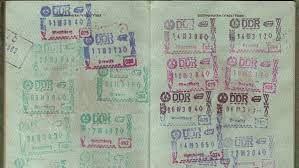
The longstanding border dispute between India and China has been a source of tension between the two Asian giants. Recently, the issue of stapled visas issued by China to Indian nationals from Arunachal Pradesh has once again resurfaced, leading to India withdrawing its 8-athlete wushu contingent from the Summer World University Games.
Understanding Stapled Visas
A stapled visa is a peculiar form of travel document where the visa is not directly stamped on the passport, but instead, an unstamped piece of paper is attached using pins or staples. Unlike regular visas, which are affixed and stamped by the issuing authority, stapled visas can be easily detached. This practice has become a bone of contention between India and China, particularly concerning athletes from Arunachal Pradesh and Jammu and Kashmir.
China’s Motivation behind Stapled Visas
The issuance of stapled visas by China to Indian nationals from Arunachal Pradesh and Jammu and Kashmir is rooted in the ongoing territorial disputes between the two countries. China challenges India’s sovereignty over Arunachal Pradesh, claiming it as part of its own territory. This territorial dispute centers around the McMahon Line, the boundary agreed upon between Tibet and British India during the Shimla Convention of 1914.
China’s assertion of sovereignty over Arunachal Pradesh is evident in its portrayal of the region on Chinese maps as “Zangnan” or “South Tibet.” By issuing stapled visas to residents of these regions, China seeks to undermine India’s claim over these territories, indicating that they do not recognize them as part of Indian Territory.
Implications of Stapled Visas
The issuance of stapled visas by China has several implications for India:
- Challenge to Sovereignty: The stapled visa practice challenges India’s sovereignty and territorial integrity, raising tensions and complicating bilateral relations.
- Discrimination and Differential Treatment: India firmly holds the position that there should be no discrimination or differential treatment based on domicile or ethnicity in the visa regime. China’s issuance of stapled visas contradicts this stance and further strains diplomatic ties.
Way Forward
To address the issue of stapled visas and ease tensions between India and China, the following measures can be considered:
- Diplomatic Engagement: Both countries must engage in constructive and open communication to prevent misunderstandings and reduce strain in bilateral relations. Diplomatic channels can be used to discuss contentious issues and find mutually acceptable solutions.
- Asserting India’s Position: India should emphasize its strength and commitment to safeguarding its interests during negotiations. It is crucial to firmly assert India’s position on territorial sovereignty to deter further attempts to undermine its claims.
Development of Border Infrastructure: Improving border infrastructure, such
Last Modified: February 22, 2024