
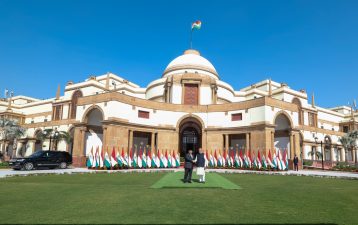
India and Indonesia have recently enhanced their bilateral relations through agreements on maritime security, health, traditional medicine, culture, and digital cooperation. This development occurred during a meeting between Prime Minister of India Narendra Modi and Indonesian President Prabowo Subianto in New Delhi. The two nations have a long-standing relationship that has experienced various phases since Indonesia’s independence in 1945.
Historical Context of India-Indonesia Relations
- The relationship between India and Indonesia began positively in the late 1940s, driven by shared anti-colonial sentiments.
- Prime Minister of India Jawaharlal Nehru was a strong supporter of Indonesian independence.
- The 1950s marked a decade of cordial relations, brought into light by the signing of a Treaty of Friendship. However, the 1960s saw tensions arise due to differing stances on China and Indonesia’s growing ties with Pakistan.
Recent Developments in Bilateral Relations
In recent years, particularly since the 1990s, India and Indonesia have revitalised their partnership. The ‘Look East’ policy initiated by India aimed to strengthen ties with Southeast Asian nations. The ‘Act East’ policy, introduced in 2014, further solidified this relationship. Bilateral trade has surged, making Indonesia India’s second-largest trading partner in the ASEAN region.
Defence Cooperation Initiatives
- The ratification of the Defence Cooperation Agreement (DCA) marks milestone in defence relations.
- This agreement aims to enhance collaboration through various initiatives, including cadet exchanges between naval academies.
- Both nations have engaged in joint military exercises and established the Joint Defence Cooperation Committee to facilitate defence modernization.
Maritime Security Enhancements
India and Indonesia have prioritised maritime security as a key area of cooperation. The leaders agreed to enhance communication on maritime safety and security, particularly in vital sea lanes like the Straits of Malacca and Singapore. The renewal of the Memorandum of About on Maritime Safety and Security Cooperation signifies their commitment to combatting maritime crime and coordinating search and rescue operations.
Counter-Terrorism Collaboration
Both countries have expressed a strong commitment to combating terrorism. They reaffirmed their dedication to enhancing cooperation through bilateral and multilateral platforms. The recent Joint Working Group Meeting on Counter-Terrorism serves as important forum for addressing evolving security challenges.
Future Prospects
The agreements signed during President Prabowo’s visit are expected to encourage deeper economic ties and boost defence cooperation. Despite the current progress, experts suggest there remains potential for further enhancing bilateral relations. Continuous dialogue and collaboration in various sectors will be essential for realising this potential.
Questions for UPSC:
- Examine the impact of the ‘Look East’ policy on India’s foreign relations in Southeast Asia.
- Critically discuss the historical significance of the Bandung Conference in shaping India-Indonesia relations.
- Estimate the role of maritime security in enhancing India-Indonesia defence cooperation.
- Point out the challenges faced by India and Indonesia in their counter-terrorism efforts.
Answer Hints:
1. Examine the impact of the ‘Look East’ policy on India’s foreign relations in Southeast Asia.
- Initiated in the 1990s, the ‘Look East’ policy aimed to strengthen economic and strategic ties with Southeast Asian nations.
- It facilitated increased trade, investment, and cultural exchanges, making India player in the region.
- India’s engagement with ASEAN countries improved regional stability and security, countering China’s influence.
- The policy led to the establishment of various bilateral agreements and cooperative frameworks with countries like Indonesia.
- Overall, it transformed India’s diplomatic approach, enhancing its visibility and partnerships in Southeast Asia.
2. Critically discuss the historical significance of the Bandung Conference in shaping India-Indonesia relations.
- The Bandung Conference in 1955 was a very important moment for post-colonial countries advocating non-alignment and anti-imperialism.
- It brought together leaders from Asia and Africa, including Nehru and Sukarno, encouraging solidarity among newly independent nations.
- The conference laid the groundwork for the Non-Aligned Movement (NAM), enhancing India and Indonesia’s diplomatic stature globally.
- It symbolized a united front against colonialism, strengthening bilateral ties based on shared ideologies and goals.
- The conference’s legacy continues to influence India-Indonesia relations, promoting cooperation in various sectors.
3. Estimate the role of maritime security in enhancing India-Indonesia defence cooperation.
- Maritime security is crucial for both nations due to their strategic locations and shared maritime interests in the Indo-Pacific region.
- Enhanced cooperation in maritime security helps safeguard vital sea lanes, ensuring economic stability and trade flow.
- Joint naval exercises and patrols, such as Ex Samudra Shakti, encourage operational synergy and mutual trust between the two countries.
- Agreements on maritime safety and security cooperation signify a commitment to combat maritime crime and enhance coordination.
- Collaboration in maritime security strengthens overall defence ties, contributing to regional peace and stability.
4. Point out the challenges faced by India and Indonesia in their counter-terrorism efforts.
- Both countries face the challenge of diverse terrorist threats, including regional extremism and transnational terrorism.
- Differences in political priorities and approaches to counter-terrorism can hinder effective collaboration.
- Limited resources and capacity in intelligence sharing and operational coordination complicate joint efforts.
- Online radicalization and the proliferation of extremist ideologies present ongoing security challenges for both nations.
- Addressing these challenges requires sustained dialogue, trust-building, and joint initiatives to enhance cooperation.