
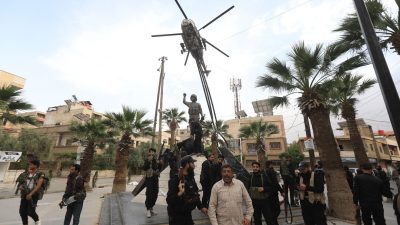
Recent weeks have seen deadly clashes in southern Syria’s Suweida Governorate. Over 1,000 people, mainly Druze and Sunni Bedouin militias, have died. Israel has intervened, supporting the Druze minority and launching airstrikes on Syria’s Ministry of Defense. These events show the deep challenges facing Syria’s President Ahmed al-Sharaa. After 14 years of civil war, Syria remains divided by ethnic and sectarian tensions and complicated by external powers.
President Ahmed al-Sharaa’s Challenges
Since taking office six months ago, Sharaa has focused on uniting Syria’s ethnic and sectarian groups. This is vital for rebuilding the country and reviving its economy. However, his past as an al-Qaeda leader and links to violence against minorities raise doubts about his intentions. His inability to prevent sectarian clashes undermines his efforts to forge national unity.
Alawite Minority and Violence
Alawites, Syria’s largest minority, mainly live along the Mediterranean coast. They were the main support base of former President Bashar al-Assad. Recent clashes in Alawite areas killed over 1,500 civilians and fighters. Sharaa blamed former regime supporters and urged them to disarm. His promise of investigations has yet to ease tensions.
Kurdish Autonomy and Syrian Control
Syrian Kurds control a semi-autonomous region called Rojava in the northeast. They formed the Syrian Democratic Forces (SDF) to defend this area. Sharaa wants the SDF to integrate fully with the Syrian Army. This led to daily clashes until March when Kurds agreed to limited integration. However, the interim constitution does not guarantee Kurdish rights, causing distrust. Kurds seek longer timelines and international oversight from the US and France.
Druze Minority and Israeli Involvement
The Druze population of about 500,000 lives mostly in Suweida Governorate. They reject the interim constitution that demands disarmament and Syrian government control. Israel has a large Druze community of 150,000 and supports Syrian Druze against Sharaa. Israel uses this to justify military strikes in southern Syria and expand control over the Golan Heights. Israeli Prime Minister Benjamin Netanyahu has declared an indefinite military presence in southern Syria, blocking Syrian army advances near Damascus.
Regional and International Dynamics
Arab neighbours and Turkey back Sharaa’s rebuilding efforts. Gulf states have repaid Syria’s World Bank debt and helped lift US sanctions. They aim to curb Iranian influence and promote stability. However, Israel’s independent military actions disrupt this regional cooperation. Instability in one Syrian region risks spreading elsewhere. Sharaa seeks peace with Israel while relying on Arab and Turkish support. Yet Israeli pressure weakens his internal position and fuels ongoing instability.
Impact on Syria’s Future
Sectarian tensions remain high across Syria. The political centre in Damascus struggles to enforce unity. Israeli military interventions in the south complicate Syria’s fragile peace process. The balance between external pressures and internal divisions will shape Syria’s path forward. Stability depends on managing ethnic demands, foreign interests, and national sovereignty.
Questions for UPSC:
- Critically discuss the role of ethnic and sectarian identities in the prolonged Syrian civil war and its impact on regional stability.
- Examine the strategic interests of Israel in southern Syria and analyse their implications for Syrian sovereignty and Middle Eastern geopolitics.
- With suitable examples, discuss the challenges of integrating semi-autonomous regions like Rojava into a centralised national framework in conflict-affected countries.
- Analyse the influence of external actors such as Gulf states, Turkey, and the United States on Syria’s reconstruction efforts and internal power dynamics.