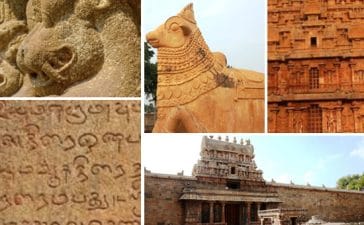
Brahmi is an ancient script used in India. It dates back to the 3rd century BCE. This script is significant in the history of writing. It influenced many other scripts in South Asia. Brahmi is linked to the development of languages like Sanskrit and Prakrit. It is also important for understanding ancient Indian inscriptions and texts. Its legacy continues in modern scripts today.
The Population Commission of United Nation considers the ability, to both read and write a simple message with understanding in any language, a sufficient basis for classifying a...
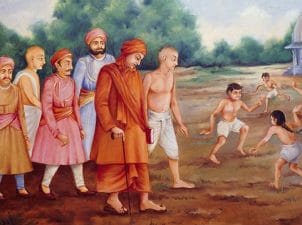
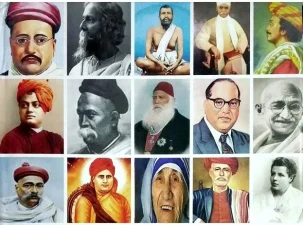
One of the greatest figures in 19th century Bengal was Narendra'Nath Datta, better known as Swami Vivekananda. His spiritual'preceptor was Ramakrishna Paramhansa (1834-1886).'Ramakrishna stressed universalism in religions and...
Debendranath Tagore was a philosopher and religious reformer,'active in the Brahmo Samaj, which purged the Hindu way of'life of its abuses. Tagore's writings were in his native Bengali.'One...
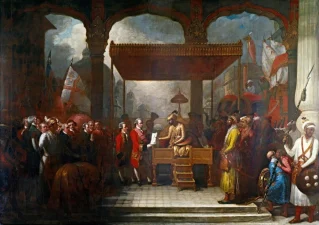
The onset of British influence in India differed both in manner'and in kind from that of other historical invasions. The British'did not come either as a migrating group...
The Cholas ruled for over four centuries and they paid a lot of'attention to administrative improvements as well as economic'and cultural growth. Administration The Chola rulers supervised the...
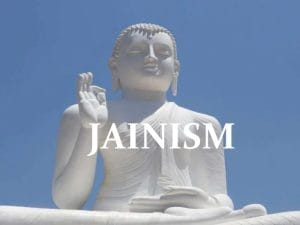
In the beginning the Jains were called Sramanes. Jainism doesn't have a single founder but according to Jain sacred literature, Anusruti, there were 24 tirthankaras (guides to salvation)....
Mahendrapala I reigned from approximately 885 to 910 CE, succeeding his father, the illustrious Mihira Bhoja. His rule represents the final phase of the Gurjara-Pratihara Empire at its...
Shaivism emerged as the most dominant religious sect in early medieval India, transcending regional boundaries to become the primary focus of royal patronage and popular devotion. It integrated...
The early medieval period witnessed a transformation in inland trade characterized by the localization of economic activities. While the decline of the unified Gupta-era market led to the...
The Tamil Nadu Archaeology Department (TNAD) has uncovered extensive cultural deposits during their excavation project at the Keeladi site, situated in the Sivaganga district. Their findings suggest that...