Disaster management involves preparing for, responding to, and recovering from emergencies. It includes planning, training, and resource allocation. Effective communication is crucial during crises. Governments and organisations collaborate to minimise risks. Community involvement enhances resilience. Legal frameworks guide disaster response efforts. Cultural factors influence recovery strategies. Understanding geography aids in risk assessment. Overall, disaster management aims to protect lives and property.
The U.S. Fish and Wildlife Service (FWS) has proposed to classify the monarch butterfly as a threatened species. This decision comes amid alarming population declines across North America....
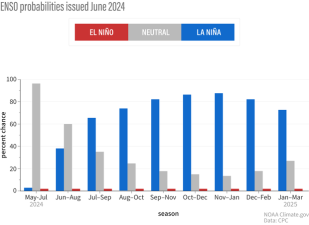
As 2024 approaches, climate experts are analysing the absence of La Niña, climate phenomenon. Predictions for La Niña's emergence have not materialised, raising concerns about its implications for...
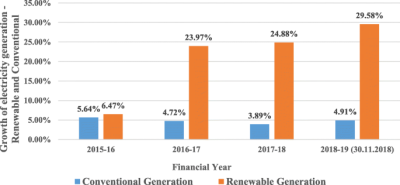
India is making strides in integrating renewable energy into its power grid. The Ministry of Power has outlined a comprehensive transmission plan to support the goal of achieving...
India is making strides towards decarbonising its steel sector. The unveiling of the Green Steel Taxonomy marks a very important moment in this journey. This initiative aligns with...
Recent research has revealed five new species of Darwin wasps from India and Thailand. Conducted by the Ashoka Trust for Research in Ecology and the Environment (ATREE), this...
Indore, the largest city in Madhya Pradesh, has been recognised as India's cleanest city for seven consecutive years. However, it faces challenge regarding air quality. Recent government data...
The Central Water Commission (CWC) released a study titled ‘Assessment of Water Resources of India 2024’. This report reveals that India’s average annual water availability from 1985 to...
Naya Raipur, envisioned as India's largest greenfield city, has faced challenges since its inception. Established after the formation of Chhattisgarh in 2000, it aimed to alleviate congestion in...
Recent studies indicate that the Arctic Ocean could experience its first ice-free day by 2030. This scenario is linked to increasing greenhouse gas emissions. The research marks alarming...
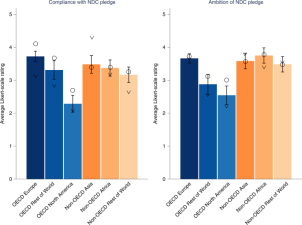
The Paris Agreement, established in 2015, aimed to combat climate change by limiting global temperature rise. However, nearly a decade later, its effectiveness is under scrutiny. Global emissions...