
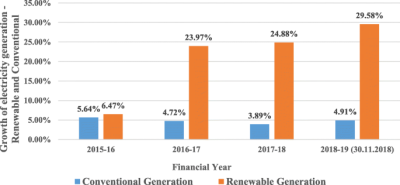
India is making strides in integrating renewable energy into its power grid. The Ministry of Power has outlined a comprehensive transmission plan to support the goal of achieving 500,000 megawatts (MW) of renewable energy capacity. This initiative aligns with India’s commitment to sustainable energy development and reducing carbon emissions.
Current Status of Renewable Energy Projects
As of now, India has over 127,000 MW of renewable energy projects under construction. Additionally, around 90,000 MW is in various stages of tendering. This robust pipeline reflects the country’s ambition to enhance its renewable energy capacity . The government is also focusing on nuclear energy, with 7,300 MW of nuclear capacity currently under construction and another 7,000 MW in the planning phase.
Hydro and Pumped Storage Projects
The development of hydroelectric projects is crucial for India’s energy strategy. Currently, 14,000 MW of hydroelectric projects are under construction. Furthermore, 24,225 MW of hydroelectric projects are in various planning stages. Pumped storage projects are also gaining attention, with 6,050 MW under construction and 50,760 MW planned. These projects are essential for energy storage and balancing supply and demand.
Renewable Purchase Obligations
To ensure the growth of renewable energy, the government has implemented Renewable Purchase Obligations (RPOs). These obligations require utilities to purchase a certain percentage of their energy from renewable sources. The RPOs and energy storage obligations are set to remain in force until 2029-30. This regulatory framework is designed to stimulate investment in renewable energy infrastructure.
Future Outlook
The phased implementation of the transmission plan is vital for supporting the projected renewable energy capacity. As India aims to increase its reliance on renewable sources, the integration of these energy systems into the existing grid will be crucial. Continuous investment in technology and infrastructure will be necessary to meet these ambitious targets.
Challenges Ahead
Despite the positive developments, challenges remain. These include the need for improved grid connectivity, managing energy intermittency, and ensuring adequate financing for projects. Addressing these challenges will be essential for the successful integration of renewable energy into India’s power landscape.
International Commitments
India’s renewable energy goals are aligned with its international commitments under the Paris Agreement. The country aims to achieve reductions in greenhouse gas emissions. By enhancing renewable energy capacity, India contributes to global efforts to combat climate change.
Questions for UPSC:
- Critically analyse the role of Renewable Purchase Obligations in promoting renewable energy in India.
- What are the implications of integrating 500,000 MW of renewable energy into India’s power grid? Explain.
- Comment on the significance of pumped storage projects in the context of renewable energy integration.
- What are the challenges faced by India in achieving its renewable energy targets? Discuss with suitable examples.
Answer Hints:
1. Critically analyse the role of Renewable Purchase Obligations in promoting renewable energy in India.
- RPOs mandate utilities to source a specific percentage of energy from renewable sources, encouraging market demand.
- They provide a regulatory framework that encourages investment in renewable energy infrastructure and technologies.
- RPOs contribute to achieving national renewable energy targets, aligning with India’s commitments under international agreements.
- Compliance mechanisms are in place to ensure adherence, with penalties for non-compliance incentivizing utilities to meet obligations.
- RPOs help diversify the energy mix, reducing dependence on fossil fuels and enhancing energy security.
2. What are the implications of integrating 500,000 MW of renewable energy into India’s power grid? Explain.
- Integration will reduce greenhouse gas emissions, contributing to climate change mitigation efforts.
- It will enhance energy security by diversifying energy sources and reducing reliance on imported fossil fuels.
- Increased renewable energy capacity will necessitate improvements in grid infrastructure and technology to manage variability.
- Economic growth may be stimulated through job creation in the renewable energy sector and related industries.
- Challenges in grid stability and energy storage solutions will need to be addressed to ensure reliable power supply.
3. Comment on the significance of pumped storage projects in the context of renewable energy integration.
- Pumped storage projects provide essential energy storage solutions, balancing supply and demand fluctuations in renewable energy.
- They enable the efficient use of excess energy generated during peak production times, enhancing grid reliability.
- These projects can respond quickly to energy demand, supporting the stability of the power grid.
- Pumped storage contributes to the overall efficiency of the energy system, reducing the need for fossil fuel backup generation.
- They play important role in facilitating the transition to a renewable-dominated energy landscape by providing flexible energy management options.
4. What are the challenges faced by India in achieving its renewable energy targets? Discuss with suitable examples.
- Grid connectivity issues hinder the efficient transmission of renewable energy from production sites to consumption areas.
- Energy intermittency from sources like solar and wind creates challenges in maintaining a stable power supply.
- Financing remains a critical barrier, with many projects struggling to secure adequate investment for development.
- Regulatory and bureaucratic hurdles can delay project approvals and implementation, affecting timelines.
- Example – The need for upgrades to existing grid infrastructure to accommodate increased renewable energy capacity poses logistical and financial challenges.