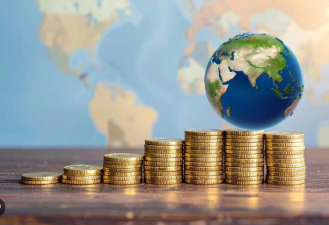
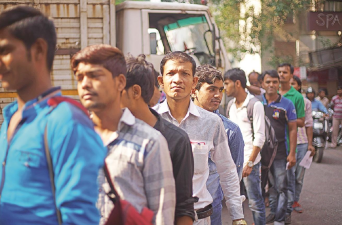
Employment refers to the state of having a job. It provides individuals with income and stability. Employment can take various forms, including full-time, part-time, and freelance work. It plays a crucial role in the economy. A strong employment sector contributes to national growth. Employment laws protect workers' rights. These laws ensure fair treatment and safe working conditions.
India’s private sector activity accelerated in April 2026, with the HSBC Flash India Composite PMI Output Index rising to 58.3 from 57.0 in March 2026. The manufacturing sector...
Odisha approved 18 industrial projects with a total investment of ₹3,877.14 crore at the 146th meeting of the State Level Single Window Clearance Authority (SLSWCA) on 21 April...
For decades, economic policy has rested on a near-axiom: faster GDP growth will inevitably create more jobs. Higher output, it is assumed, requires more labour, even if productivity...
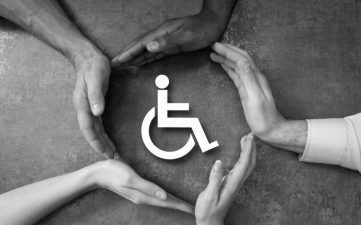
In India, disability is defined by the Rights of Persons with Disabilities Act, 2016. A person with a disability has a long-term impairment affecting their physical, mental, intellectual,...
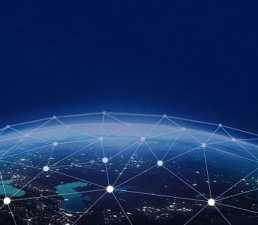
Globalization refers to the increasing interconnectedness of economies, societies, and cultures. It has been driven by advancements in technology and communication. This phenomenon has influenced employment patterns worldwide,...
Recently, India is set to enhance its air mobility capabilities by procuring an additional 15 C-295 transport aircraft from Airbus. This decision follows a previous contract for 56...
In recent years has witnessed a notable resurgence in agricultural dependence among rural households. The All India Rural Financial Inclusion Survey for 2021-22 reveals that 57% of rural...