The legal system is a framework for administering justice. It encompasses laws and regulations. Courts interpret and enforce these laws. Legal professionals advocate for clients. The system ensures rights and responsibilities are upheld. It also reflects societal values and norms. In India, the legal system is influenced by its constitution and historical context. It plays a crucial role in maintaining order and resolving disputes.
The purple mark on a voter’s finger is a familiar safeguard in Indian elections. It is called indelible ink and is used to prevent double voting. The recent...
The National Dam Safety Authority has issued a show-cause notice to the Narmada Valley Development Authority over serious safety lapses at Bargi Dam in Jabalpur district, Madhya Pradesh....
The 9th Apex-Level Meeting of the Narco-Coordination Centre was held in New Delhi, with a renewed focus on strengthening India’s anti-drug strategy. The meeting brought into light coordinated...
British India was a period of transformation in governance. The British established a colonial rule that aimed to manage and control the vast subcontinent. This era saw the...
Judicial activism refers to the proactive role of the judiciary in protecting citizens' rights. It encourages judges to interpret laws in a manner that promotes justice. This often...
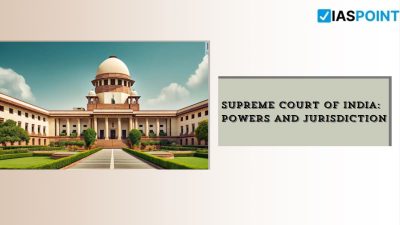
The Supreme Court of India is the highest judicial forum and final court of appeal under the Constitution of India. Established on January 28, 1950, it replaced the...