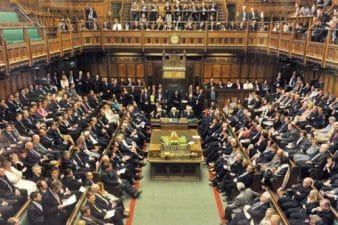
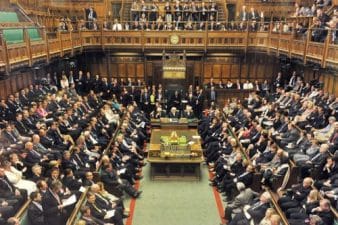
Parliament is the supreme legislative body in the United Kingdom. It consists of two houses: the House of Commons and the House of Lords. Members of Parliament (MPs) represent the public. They debate and pass laws. Parliament also scrutinises the government. It plays a crucial role in democracy. Its decisions impact various aspects of society, including economy and culture.
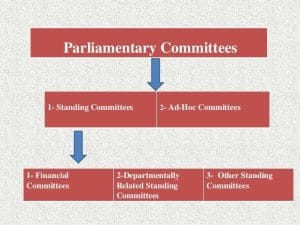
The two Houses of the Parliament work through committees. As per India, 2014 reference journal, the committees are: Broadly, Parliamentary Committees are of two kinds' Standing Committees and...
The two Houses of the Indian Parliament perform numerous important functions and possess significant powers. Legislative functions of the Parliament relate to making laws on subjects enumerated in...
He appoints the Governor of the State who holds office during his pleasure (Article155 and 156(1)). He assents or withholds his assent to the state bill submitted for...
With the new Lok Sabha (2014), most of the constitutional Amending bills have been elapsed. The constitution (121st Amending bill) has after being passed, becomes the 99th constitutional...
The Constitution of India has, more or less, opted f or a parliamentary democracy in the country. In adopting such a parliamentary system, the framers of the Constitution...
Parliamentary form of government had, by way of chance and not design, evolved in Britain. The major features of the parliamentary system as are usually known or described...
Constitutional Provisions: A reading of the articles relating to the parliamentary system in India is likely to help us understand the parliamentary pattern in the country: As executive...
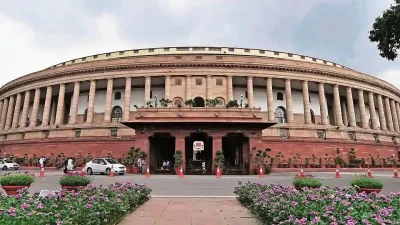
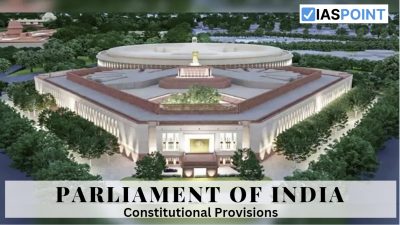
The Parliament of India is the supreme legislative body of the country. It operates under a bicameral system, comprising two houses - the Lok Sabha (House of the...
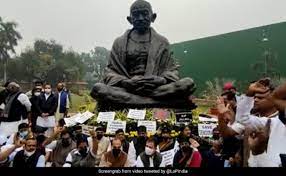
Recent incidents involving the suspension of Members of Parliament (MPs) from both the Lok Sabha and Rajya Sabha have raised questions about the evolving approach to disciplinary powers...