Planning in India involves strategic development for economic growth. It aims to improve infrastructure and public services. The Five-Year Plans have guided this process since independence. Various sectors, including agriculture and industry, receive focus. Regional disparities are addressed through targeted initiatives. Sustainable development is increasingly emphasised. Planning also considers cultural heritage and environmental conservation. Overall, it shapes India's future trajectory.
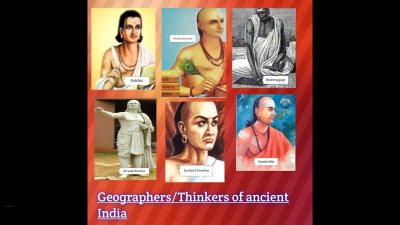
Geography in the Indian context has evolved from ancient cosmological descriptions in the Puranas to a rigorous social and physical science during the post-independence era. Indian geographers have...
The Central Government, in consultation with the Central Electricity Authority (CEA), has released the Resource Adequacy Planning Framework guidelines for India. These guidelines, formulated under the Electricity (Amendment)...
There have been changes in the nature of planning and role of Planning Commission in India. In earlier decades, planning used to fix quantitative targets for individual sectors...
Economic planning is a sort of conceiving, initiating, regulating and controlling economic activity by the State according to set priorities with a view to achieving well defined objectives...
According to the Natural Resources Defense Council (NRDC), India has achieved and even exceeds the goals of the Paris Agreement. The Natural Resources Defense Council (NRDC), in its...
The Ministry of Earth Sciences informed that India and Norway will work jointly in the area of marine spatial planning for the next five years. Key Points India...
Article: The Indian Institute of Geomagnetism (IIG) has made a significant advancement in the field of near-earth plasma study. Scientists at the IIG have constructed a broad-spectrum, one-dimensional...
The Early Vedic Period (Rig Vedic Age, c. 1500 BCE – 1000 BCE) was characterized by a tribal, pastoral, and relatively egalitarian social structure. Within this framework, women...