The Uniform Civil Code (UCC) aims to replace personal laws based on the scriptures and customs of each major religious community in India. It seeks to ensure equal rights for all citizens, regardless of religion. The UCC promotes gender justice and national integration. Its implementation remains a contentious issue in Indian politics and society, reflecting diverse cultural perspectives.
Madhya Pradesh constituted a high-level committee on 27 April 2026 to examine the feasibility of implementing a Uniform Civil Code (UCC) in the state. The panel has been...
The Uniform Civil Code (UCC) has become a central issue in the 2026 West Bengal Assembly elections scheduled for April 23 and 29. The Bharatiya Janata Party (BJP)...
The Supreme Court's verdict on the triple talaq case has reignited discussions on the Uniform Civil Code (UCC) in India. The triple talaq practice, allowing instant divorce by...
Definition of Uniform Civil Code (UCC) The Uniform Civil Code (UCC) refers to a proposal aimed at replacing personal laws based on the scriptures and customs of various...
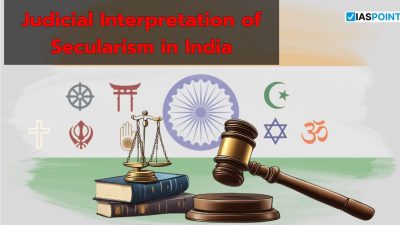
Definition and Conceptual Framework Secularism in India is defined as the separation of religion from the State. It aims to ensure equal treatment of all religions and promote...
Definition of Judicial Interpretation Judicial interpretation refers to the process through which courts analyse and apply laws, including constitutional provisions, to specific cases. This process is essential in...
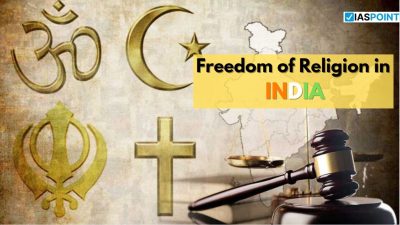
Definition of Freedom of Religion Freedom of religion in India is the right to practice, profess, and propagate any religion. This concept is enshrined in Articles 25 to...
India is constitutionally defined as a secular state. Secularism implies that the state does not favour any religion. The preamble of the Constitution of India guarantees freedom of...