
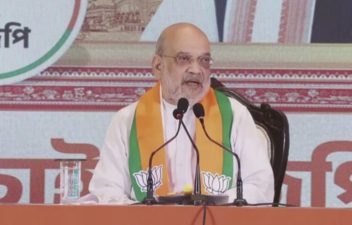
The Uniform Civil Code (UCC) has become a central issue in the 2026 West Bengal Assembly elections scheduled for April 23 and 29. The Bharatiya Janata Party (BJP) promised to implement the UCC within six months of forming the state government. The Trinamool Congress (TMC) pledged to oppose and revoke any such law if the BJP loses power.
BJP’s Election Promise and Strategy
The BJP’s manifesto, released on April 10, 2026, includes a commitment to enact the UCC in West Bengal within six months. Union Home Minister Amit Shah and Prime Minister Narendra Modi framed the UCC as ending “appeasement politics” and promoting “One Nation, One Law.” Modi linked it to preventing Bengalis from becoming a minority in their own state and connected it with the Citizenship Amendment Act (CAA) and National Register of Citizens (NRC).
TMC’s Opposition and Minority Vote
Chief Minister Mamata Banerjee vowed to strongly oppose the UCC, describing it as a threat to cultural diversity. She argued it would undermine religious practices of Hindus, Muslims, Tribals, and Christians. West Bengal’s Muslim population, about 30% of the electorate, remains a key TMC support base. The party positions itself as the defender of minority rights against BJP’s push for cultural homogenisation.
Constitutional and Political Debate
The BJP cites Article 44 of the Indian Constitution’s Directive Principles as a basis for the UCC. The TMC and other opposition leaders argue that such a major reform requires broad consensus and should not be used as an election tactic. The issue is also linked to concerns about NRC, delimitation, and illegal immigration management.
Election Timeline and Developments
Phase 1 of voting is on April 23, 2026, and Phase 2 on April 29, 2026. Results will be declared on May 4, 2026. The UCC debate has intensified campaign rhetoric, with rallies held in Muslim-majority Murshidabad and Paschim Medinipur. Both parties have made the UCC a defining electoral issue.
What to Study for UPSC Exams?
- Directive Principles of State Policy
- Religious Personal Laws in India
- Demographic Politics in India
- National Register of Citizens (NRC)
Directive Principles of State Policy
Part IV of the Indian Constitution, Directive Principles guide the state in policy-making but are non-justiciable. Article 44 calls for a Uniform Civil Code to promote unity. These principles influence governance without enforceable legal mandate. They reflect ideals inspired by Ireland’s constitution and aim to establish a welfare state.
Religious Personal Laws in India
India’s personal laws govern marriage, divorce, inheritance, and adoption per religion. Hindu, Muslim, Christian, and Parsi communities have distinct laws codified through various acts. The system allows legal pluralism but faces criticism for gender inequality and inconsistency. The Muslim Personal Law is largely based on Sharia principles.
Demographic Politics in India
Demographic politics involves electoral strategies based on caste, religion, and community composition. Population data influences political mobilization and policy decisions. Census and voter lists are critical tools. Shifts in demographics can alter power balances, often leading to identity-based political appeals.
National Register of Citizens (NRC)
NRC is a register of legal citizens aimed to identify illegal immigrants. First implemented in Assam, it caused large-scale documentation drives and controversies. It excludes those unable to prove citizenship, affecting minorities disproportionately. NRC links to debates on citizenship, migration, and human rights in India.
Last Modified: April 12, 2026