
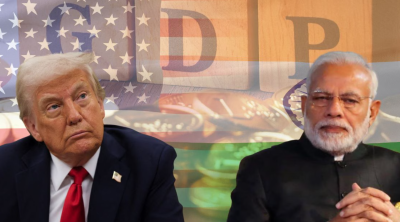
Global economic uncertainty has acquired a new shorthand in recent years, shaped by sharp reversals, unilateral tariffs, and transactional diplomacy. In this unsettled post-Davos world, economic security has moved to the centre of policy debates, especially for countries like India that must navigate growth ambitions amid global volatility. Against this backdrop, Finance Minister Nirmala Sitharaman will present the Union Budget 2026 at a moment when external shocks and internal structural stresses intersect.
A fractured global order and its spillovers
The idea of a stable, rules-based global economic order has always been imperfect, but recent years have exposed its fragility. Protectionism, sanctions, and tariff threats—often driven by domestic political calculations in major economies—have reduced predictability in trade and capital flows. As even close allies question the durability of existing arrangements, middle powers like India face a more transactional and less rules-bound global environment.
India’s growth paradox: strong headline numbers, weak undercurrents
India is expected to record GDP growth of around 7.4%, a figure that compares favourably with most major economies. Yet beneath this headline performance lie clear fault lines. Employment-intensive sectors are under stress, private consumption is sharply K-shaped, and technological disruption—especially artificial intelligence-enabled commerce—is reshaping labour demand faster than job creation.
The data reflects this divergence. The rupee has depreciated sharply over the past year, foreign direct investment inflows have weakened, and foreign institutional investor sell-offs have reinforced currency pressures. India’s largest formal employment generator, the IT services sector, has seen negligible net hiring in 2025–26, weakening its role as a consumption engine. At the same time, housing demand has shifted dramatically towards ultra-luxury segments, signalling rising inequality and constrained mass demand.
Why Budget 2026 matters for economic security
In this context, Budget 2026 is not merely a fiscal exercise; it is a strategic opportunity to insulate the economy from external shocks while addressing internal structural weaknesses. “Trump-proofing” the economy, in this sense, means reducing vulnerability to abrupt policy shifts in major economies, restoring confidence in domestic investment, and broadening income generation to revive consumption across India’s large population base.
Reviving the rupee through investment-led confidence
The rupee’s decline is both a symptom and a cause of economic stress. Short-term measures, such as special foreign currency deposit schemes, offer only temporary relief. A durable response requires creating attractive investment opportunities that draw stable capital inflows. This calls for aligning privatisation with foreign direct investment by inviting global bids for government stakes in banks, airports, and oil marketing companies.
In parallel, idle assets of stressed public sector units could be converted into plug-and-play hubs for data centres and advanced technology facilities, allowing India to capitalise on the global artificial intelligence boom while attracting long-term dollar inflows.
Rethinking investment promotion beyond Davos
India’s engagement at global forums often highlights ambition, but outcomes remain uneven. Instead of multiple State-level investment summits and symbolic participation in overseas events, a single, well-structured India Investment Summit could present opportunities across States in a coordinated manner. Chief Ministers could showcase regional strengths, supported by comparative data such as a credible Investor Friendliness Index prepared by .
Building new cities to unlock growth
By 2050, nearly 90 crore Indians are expected to live in urban areas, yet public spending on urban infrastructure remains below 1% of GDP, according to the . Public sector enterprises collectively hold vast tracts of land, but piecemeal monetisation has yielded limited results. A more ambitious approach would involve bundling PSU land with railway, defence, and ordnance parcels to develop integrated, mid-sized cities. These could support manufacturing, services, and even senior living, driving jobs, housing demand, and consumption.
Creating INDRA: from ideas to outcomes
India’s public research institutions have developed numerous technologies but often struggle with commercialisation. A dedicated platform—an India Development Research Agency (INDRA)—could bridge this gap. By pooling innovations from institutions such as ISRO, DRDO, ICAR, and national laboratories, and licensing them on a fee or royalty basis, INDRA could convert public research into scalable solutions for agriculture, energy efficiency, materials, and urban challenges. Existing budgetary commitments to research and urban innovation provide a financial base for such an ecosystem.
Regulatory reform as the missing link
Perhaps the most binding constraint on investment and execution is regulatory complexity. Projects often require approvals running into triple digits, reflecting overlapping jurisdictions and outdated processes. While the government has announced high-level committees to review regulations, credibility now depends on transparency, interim findings, and fixed timelines. Mapping and rationalising approval processes could unlock private investment without additional fiscal burden.
An opportunity to break the crisis-driven cycle
India is not rigidly aligned to ideological or identity-based blocs, giving it strategic flexibility. Yet this advantage is often undermined by delays in translating ideas into outcomes. Budget 2026 offers a chance to shift from reactive policymaking to anticipatory reform—strengthening economic security, expanding domestic demand, and harnessing entrepreneurial capacity at scale. If used decisively, it could help insulate India from global volatility while addressing its internal structural challenges.
What to note for Prelims?
- Concept of economic security and its relevance in a volatile global order.
- Trends in FDI, FII flows, and rupee depreciation.
- Role of privatisation and asset monetisation.
What to note for Mains?
- Impact of global protectionism on India’s macroeconomic stability.
- Structural challenges in employment and consumption.
- Urbanisation, regulatory reform, and growth sustainability.
- Link between research institutions and economic outcomes.