
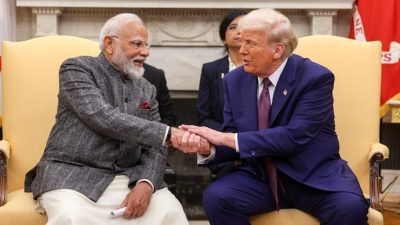
President Donald Trump announced reciprocal tariffs that affected trade relations with various countries, particularly India. This decision aimed to address perceived unfair trade practices. India, with its higher tariffs on U.S. goods, faced potential economic challenges. The announcement came amid ongoing discussions for a bilateral trade agreement between the U.S. and India, raising questions about future trade dynamics.
About Reciprocal Tariffs
Reciprocal tariffs are levies imposed by a country on imports from another country to match tariffs that the second country applies. Trump’s approach aimed to level the playing field. He brought into light that nations like India imposed tariffs exceeding 100% on U.S. automobiles, while the U.S. maintained lower tariffs. This disparity prompted the need for a more balanced trade relationship.
Impact on Indian Agriculture
The agriculture sector in India is particularly vulnerable to these tariffs. India imposes high tariffs on agricultural goods, averaging 39% compared to the U.S. average of 5%. This stark contrast could lead to price increases for Indian agricultural products in the U.S. market, affecting farmers and their income stability.
Automobile and Pharmaceutical Sectors
India’s automobile and pharmaceutical industries are also at risk. The tariff differential in the automobile sector stands at 23.1%. For pharmaceuticals, it is 8%. These sectors are crucial for India’s economy, contributing to exports. Increased tariffs could hinder their competitiveness in the U.S. market.
Strategies for Mitigation
To counter the effects of these tariffs, Indian industries are encouraged to explore alternative markets. Regions with lower tariffs, such as Southeast Asia and Africa, present opportunities for expansion. Additionally, forming joint ventures with U.S. firms or establishing assembly units in the U.S. could provide a strategic advantage.
The Role of the World Trade Organization
The U.S. Trade Policy Agenda questioned the effectiveness of the World Trade Organization (WTO). It suggested that the WTO has strayed from its original purpose of promoting open market policies. The U.S. criticises the special treatment afforded to developing countries like India, arguing that it undermines fair competition.
Future Trade Relations
The announcement of reciprocal tariffs has created uncertainty for future trade agreements. The existing bilateral trade agreement between India and the U.S. may face challenges. Indian officials are working to secure concessions on tariffs to encourage a more equitable trading environment.
Questions for UPSC:
- Examine the implications of reciprocal tariffs on global trade dynamics.
- Critically discuss the vulnerabilities of the Indian agriculture sector in light of international tariff policies.
- Analyse the potential strategies Indian industries can adopt to mitigate the impact of U.S. tariffs.
- Estimate the role of the World Trade Organization in regulating international trade amid rising protectionism.
Answer Hints:
1. Examine the implications of reciprocal tariffs on global trade dynamics.
- Reciprocal tariffs can lead to trade wars, escalating tensions between nations.
- They disrupt established trade agreements and alliances, creating uncertainty in international markets.
- Developing countries may face economic challenges due to higher tariffs imposed by developed nations.
- Global supply chains could be affected, leading to increased costs for consumers and businesses.
- Long-term implications may include shifts in trade policies and the emergence of new trading blocs.
2. Critically discuss the vulnerabilities of the Indian agriculture sector in light of international tariff policies.
- India’s agriculture sector has high tariffs (39% average) compared to the U.S. (5% average), creating trade imbalance.
- Farmers may experience reduced income stability due to increased competition from U.S. imports.
- High tariffs can limit India’s access to lucrative U.S. markets, affecting export potential.
- Protests from farmers indicate a strong reliance on government support, denoting economic fragility.
- The agricultural sector’s vulnerability may lead to calls for policy reforms and better support systems for farmers.
3. Analyse the potential strategies Indian industries can adopt to mitigate the impact of U.S. tariffs.
- Diversifying export markets to regions with lower tariffs, such as Southeast Asia and Africa.
- Forming joint ventures with U.S. firms to share resources and mitigate tariff impacts.
- Establishing assembly units in the U.S. to bypass tariffs and enhance competitiveness.
- Investing in innovation and technology to improve product quality and reduce costs.
- Engaging in lobbying efforts to influence trade policy and negotiate better terms in bilateral agreements.
4. Estimate the role of the World Trade Organization in regulating international trade amid rising protectionism.
- The WTO aims to facilitate smooth trade relations and reduce barriers among member countries.
- It provides a platform for dispute resolution, helping countries address trade grievances.
- However, rising protectionism challenges the WTO’s effectiveness and relevance in modern trade dynamics.
- Criticism of special treatment for developing countries raises questions about fairness and equality in trade policies.
- The WTO must adapt to address non-market practices and ensure compliance with open market principles.