
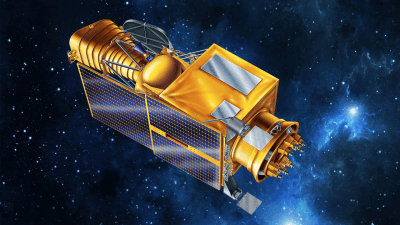
The Israel Space Agency (ISA) and NASA have partnered to launch ULTRASAT, Israel’s first telescope mission, into a geostationary orbit in early 2026. The ultraviolet observatory will be observing short-duration space events like supernovae and merging of neutron stars. The partnership will leverage Israel’s space industry to provide advanced ultraviolet sensitivity, real-time data control and transfer, and a wide field of view while NASA will be providing launch-related services.
ULTRASAT Mission Objectives
ULTRASAT (Ultra-Violet Transient Astronomy Satellite) is a specialized telescope designed to observe short-duration space events in the ultraviolet range. These events can include supernovae and the merging of neutron stars, which release vast amounts of energy in the form of ultraviolet light. ULTRASAT will have a wide field of view, which means that it will be able to quickly capture ultraviolet light from such sources. The mission will focus on the study of astrophysical phenomena that occur on short timescales of seconds to hours.
Partnership between ISA and NASA
The ULTRASAT mission is a collaboration between the ISA and NASA, with each partner contributing unique capabilities. The ISA has expertise in the design and manufacture of advanced space systems, while NASA has experience in launching scientific payloads and coordinating international space missions.
The partnership will leverage Israel’s space industry to provide advanced ultraviolet sensitivity, real-time data control and transfer, and a wide field of view. NASA will be providing launch-related services, including the Flight Payload Adapter. The adapter will be used to mount ULTRASAT on the launch vehicle and will ensure that the satellite is correctly oriented during its journey into space.
Significance of ULTRASAT
ULTRASAT is significant because it will provide new insights into some of the most energetic events in the universe. The ultraviolet light emitted by supernovae and merging neutron stars can be used to study the physics of these events and provide clues about the origin of the universe. ULTRASAT will also be able to detect other types of transient events, such as gamma-ray bursts and tidal disruptions, which can provide valuable information about the properties of black holes.
Last Modified: February 20, 2024