
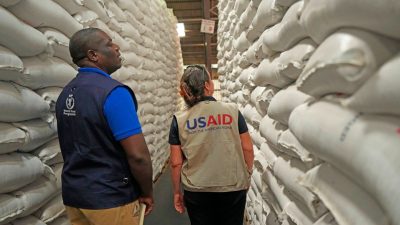
President Donald Trump announced a temporary freeze on nearly all foreign assistance as part of his “America First” agenda. This decision halted billions in funding, causing widespread alarm among aid groups and foreign governments. The freeze primarily aims to reassess the effectiveness of US foreign aid and ensure that taxpayer money yields tangible returns.
About US Foreign Aid
- The United States is the largest donor of foreign aid globally. In 2023, it disbursed approximately $72 billion across nearly 180 countries.
- The aid is divided into economic assistance, humanitarian aid, and military support, with portions allocated to countries like Ukraine, Jordan, Yemen, and Afghanistan.
Breakdown of Aid Distribution
- Economic assistance constituted the largest share of aid, amounting to $59.9 billion.
- Ukraine received the highest individual allocation of $14.4 billion.
- Other notable recipients included Jordan with $770 million and Yemen with $359.9 million.
- The Pentagon, USAID, and the State Department are the primary agencies managing this aid.
Impact of the Aid Freeze
- The freeze affects various sectors, including health and education.
- Emergency food programmes remain exempt, but many other initiatives face uncertainty.
- Notably, the President’s Emergency Plan for AIDS Relief (PEPFAR), which has saved millions of lives, is at risk.
- The abrupt halt to funding puts vulnerable populations in jeopardy.
Historical Context of US Foreign Aid
US foreign aid has evolved over the decades. Post-World War II, initiatives like the Marshall Plan aimed to rebuild Europe. More recently, aid has been used as a foreign policy tool, including during the COVID-19 pandemic, where the US committed $4 billion for vaccine distribution to low and middle-income countries.
Future Implications of the Freeze
The 90-day review period initiated by Secretary of State Marco Rubio will determine the fate of various programmes. Experts speculate that the outcome may result in either a reinstatement of most programmes or a more drastic realignment of US foreign aid strategy. The reliability of US assistance is now under scrutiny, potentially altering how recipient countries engage with American support in the future.
Questions for UPSC:
- Critically discuss the implications of the US foreign aid freeze on global humanitarian efforts.
- Examine how historical events have shaped the current structure of US foreign aid.
- Analyse the role of foreign aid as a tool of US foreign policy in the 21st century.
- Point out the potential long-term effects of the US foreign aid freeze on recipient countries’ governance and stability.
Answer Hints:
1. Critically discuss the implications of the US foreign aid freeze on global humanitarian efforts.
- Significant funding cuts jeopardize essential services like health, education, and emergency aid.
- Vulnerable populations, particularly in conflict zones and underdeveloped regions, face increased risk of suffering and death.
- Humanitarian organizations, like UN agencies, are forced to scale back operations, impacting millions reliant on aid.
- Long-term projects, such as PEPFAR, which saved millions from HIV, are now at risk of being suspended.
- The freeze undermines decades of bipartisan support for global humanitarian efforts, potentially eroding trust in US commitments.
2. Examine how historical events have shaped the current structure of US foreign aid.
- The Marshall Plan post-World War II established a precedent for US involvement in global recovery efforts.
- Cold War dynamics led to aid being used as a strategic tool to counter Soviet influence in developing nations.
- Humanitarian crises, such as famines and epidemics, have prompted shifts in funding priorities toward health and emergency assistance.
- Recent events, including the COVID-19 pandemic, have brought into light the need for global health initiatives, influencing aid distribution.
- Changes in political leadership have resulted in fluctuating foreign aid policies, reflecting domestic priorities and international relations.
3. Analyse the role of foreign aid as a tool of US foreign policy in the 21st century.
- Foreign aid serves to advance US strategic interests, including promoting democracy and stability in volatile regions.
- Economic assistance is often tied to political conditions, influencing governance and reforms in recipient countries.
- Humanitarian aid is utilized to build goodwill and strengthen alliances, particularly in response to crises.
- The US has increasingly focused on health-related aid, addressing global pandemics to protect national interests.
- Critics argue that aid can sometimes perpetuate dependency rather than encouraging sustainable development and self-reliance.
4. Point out the potential long-term effects of the US foreign aid freeze on recipient countries’ governance and stability.
- Reduced aid may weaken government capacity to provide essential services, leading to increased public discontent.
- Countries reliant on US assistance may experience political instability, as funding cuts can exacerbate existing tensions.
- Potential loss of support for democratic institutions and civil society organizations may hinder governance reforms.
- Economic downturns due to aid cuts can lead to increased poverty and social unrest, destabilizing regions further.
- Recipient countries may seek alternative partnerships, potentially realigning their foreign relations and reducing US influence.