
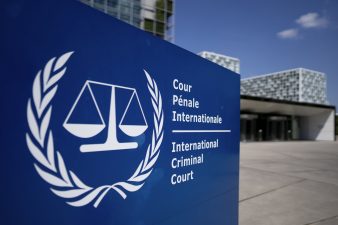
The International Criminal Court (ICC) faces unprecedented challenges following an executive order signed by former US President Donald Trump. This order imposes sanctions on the ICC, accusing it of illegitimate actions against the United States and its ally, Israel. The ICC’s role as a global tribunal for war crimes and genocide is now under threat.
What Is the International Criminal Court?
The ICC was established in 2002 as a permanent institution to prosecute the most serious international crimes. It focuses on war crimes, crimes against humanity, genocide, and aggression. While the United States and Israel are not members, 125 countries have ratified the Rome Statute, the court’s foundational treaty. The ICC intervenes when national jurisdictions are unable or unwilling to prosecute crimes.
Recent Developments in the ICC
Recently, Ukraine became the ICC’s newest member. The court has convicted 11 individuals since its inception. Notable cases include Congolese warlord Thomas Lubanga, sentenced in 2012, and Bosco Ntaganda, convicted in 2019 for ethnic conflict atrocities. In 2021, Dominic Ongwen was convicted for war crimes committed while leading the Lord’s Resistance Army in Uganda.
Impact of Trump’s Sanctions
Trump’s sanctions use emergency powers to allow the US Treasury and State Departments to target individuals involved with the ICC. Chief prosecutor Karim Khan and judges linked to the investigation of Israeli officials may be affected. These sanctions could severely disrupt the ICC’s operations, as seen in previous sanctions against former prosecutor Fatou Bensouda.
Arrest Warrant for Israeli Leaders
The ICC issued arrest warrants for Israeli Prime Minister Benjamin Netanyahu and Defence Minister Yoav Gallant in November 2024. They are accused of war crimes in Gaza, including using starvation as warfare and intentionally targeting civilians. This marked moment as it is the first time a sitting leader of a major Western power has faced such accusations.
Current Status of ICC Trials
The ICC currently has no active trials, a first since its establishment. It has issued 33 unsealed arrest warrants for individuals including Netanyahu and Russian President Vladimir Putin. Several verdicts are pending, including cases involving leaders from the Central African Republic and Sudan. The court’s ability to conduct trials is now in jeopardy due to the sanctions.
Challenges Ahead for the ICC
The ICC’s future is uncertain. The sanctions could hinder its ability to pursue justice for victims of atrocities worldwide. The court has faced criticism and challenges since its inception, but these recent developments may pose the most threat to its operations and credibility.
Questions for UPSC:
- Examine the role of the International Criminal Court in addressing global justice.
- Discuss the implications of the United States not being a member of the International Criminal Court.
- Critically discuss the significance of the arrest warrants issued against world leaders by the International Criminal Court.
- With suitable examples, discuss the impact of international sanctions on global judicial institutions.
Answer Hints:
1. Examine the role of the International Criminal Court in addressing global justice.
- The ICC was established to prosecute serious international crimes like war crimes and genocide.
- It acts when national courts are unable or unwilling to prosecute offenders.
- The court provides a platform for victims to seek justice on a global scale.
- It promotes accountability and deters future atrocities by holding leaders accountable.
- As a permanent tribunal, it aims to uphold international law and human rights standards.
2. Discuss the implications of the United States not being a member of the International Criminal Court.
- The US’s non-membership limits the ICC’s jurisdiction over American nationals and actions.
- This absence undermines the court’s authority and credibility in international law.
- It creates a precedent for other nations to avoid accountability under international law.
- The US can impose sanctions, as seen with Trump’s executive order, affecting ICC operations.
- The lack of US support hampers global cooperation in addressing war crimes and injustices.
3. Critically discuss the significance of the arrest warrants issued against world leaders by the International Criminal Court.
- Issuing arrest warrants against leaders like Netanyahu sets a precedent for accountability at the highest levels.
- It challenges the impunity often enjoyed by powerful figures in international politics.
- The warrants can deter future crimes by signaling that no one is above the law.
- They complicate international relations and travel for accused leaders, potentially isolating them.
- The warrants highlight the ICC’s role in enforcing international humanitarian law and protecting victims’ rights.
4. With suitable examples, discuss the impact of international sanctions on global judicial institutions.
- Sanctions can cripple the operations of institutions like the ICC, limiting their ability to function effectively.
- Trump’s sanctions against the ICC restricted access to financial resources and targeted key personnel.
- Previous sanctions against ICC prosecutor Fatou Bensouda demonstrated how such measures can impede investigations.
- Sanctions may deter cooperation from member states, affecting the court’s ability to enforce justice.
- They can also raise ethical concerns about the politicization of international justice mechanisms.