
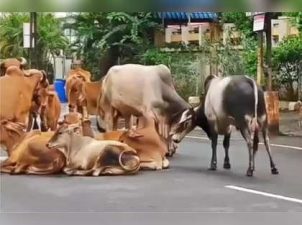
Uttar Pradesh is addressing the growing problem of stray cattle on highways. The state has initiated a novel approach by attaching reflective strips to the horns and necks of these animals. This project aims to enhance visibility during nighttime driving. Stray cattle have become hazard on the roads, especially in areas where they blend into the dark.
Background of the Initiative
The initiative began in Pilibhit, targeting three major highways. These include Bareilly-Haridwar NH-74, Pilibhit-Basti NH-730, and Bhind-Lipulekh NH-731. The project was launched in response to increasing accidents involving stray animals. The reflective strips are designed to glow under vehicle headlights, making the animals more visible.
Implementation Challenges
Despite its promise, the project faces considerable challenges. Field teams lack essential safety equipment, making them vulnerable while working with the animals. Moreover, the sheer number of stray cattle complicates the efforts. There are an estimated 1.5 million stray cattle in Uttar Pradesh, with many living in shelters.
Community Involvement
Local villagers have played important role in supporting the initiative. They have provided funding and assistance to the project. This community involvement is vital for the initiative’s success. Villagers’ backing demonstrates a collective commitment to road safety.
Cost and Effectiveness
The cost of attaching the reflective strips is approximately Rs 400 per animal. Although officials claim the initiative has reduced nighttime collisions, concrete data to confirm its effectiveness is still pending. The reflective tapes come in various sizes to accommodate different breeds of cattle.
Future Prospects
The project has opened avenues for collaboration between the Animal Husbandry Department and the Transport Department. They are mapping accident-prone areas for more interventions. The goal is to make roads safer for both humans and animals. The reflective tapes serve as a temporary solution, but a more systemic change is needed.
Safety Measures
The lack of protective gear for field teams is concern. Without proper safety measures, expanding the initiative further may not be feasible. The safety of personnel is critical for the project’s sustainability.
Conclusion
The reflective strips provide a glimmer of hope for reducing accidents involving stray cattle. However, the initiative’s long-term success depends on addressing safety concerns and improving data collection to measure its impact.
Questions for UPSC:
- Examine the impact of stray cattle on road safety in urban areas.
- Critically discuss the role of community involvement in public safety initiatives.
- Analyse the effectiveness of reflective safety measures in reducing road accidents.
- Point out the challenges faced by local governments in managing stray animal populations.
Answer Hints:
1. Examine the impact of stray cattle on road safety in urban areas.
- Stray cattle contribute to number of road accidents, especially at night when visibility is low.
- Urban areas experience increased traffic density, making encounters with stray animals more hazardous.
- Stray cattle often blend into dark surroundings, posing unforeseen risks to drivers.
- Accidents involving stray animals can lead to serious injuries and fatalities, affecting public safety.
- Local authorities are pressured to implement measures to mitigate these dangers and ensure safer roadways.
2. Critically discuss the role of community involvement in public safety initiatives.
- Community support can provide essential funding and resources for safety projects, enhancing their viability.
- Local residents often have a vested interest in the outcomes, leading to greater engagement and collaboration.
- Community involvement encourages a sense of ownership and responsibility toward public safety initiatives.
- Active participation can help identify specific local issues and tailor solutions effectively.
- Challenges may arise if community interests conflict with broader public safety goals, necessitating negotiation.
3. Analyse the effectiveness of reflective safety measures in reducing road accidents.
- Reflective safety measures, like strips, enhance visibility of stray animals, particularly at night.
- Initial reports suggest a decrease in nighttime collisions, though comprehensive data is lacking.
- Effectiveness may vary based on animal behavior and environmental conditions, impacting overall outcomes.
- The success of such measures relies on consistent implementation and community awareness of the initiative.
- Ongoing evaluation is necessary to determine long-term effectiveness and areas for improvement.
4. Point out the challenges faced by local governments in managing stray animal populations.
- Local governments often lack resources and funding to manage large populations of stray animals effectively.
- Safety concerns for personnel involved in managing stray animals can hinder intervention efforts.
- Public perception and community attitudes toward stray animals can complicate management strategies.
- Legal and regulatory frameworks may not adequately support proactive measures for population control.
- Coordination between different government departments is essential but can be difficult to achieve.