
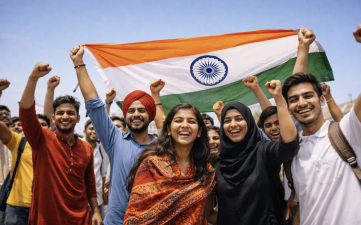
The Government of India has commenced registrations for Yuva Sangam Phase-VI from 2nd to 25th March 2026. This phase covers 22 States and Union Territories, continuing the youth exchange programme under the Ek Bharat Shreshtha Bharat (EBSB) initiative. Yuva Sangam enables young Indians aged 18–30 to participate in 5–7 day exposure tours to paired States/UTs, encouraging national integration and experiential learning aligned with the National Education Policy 2020.
Yuva Sangam Overview
Yuva Sangam is a structured youth exchange programme launched under EBSB in 2023. It connects youth from diverse regions to experience India’s cultural, linguistic, and institutional diversity firsthand. The programme is implemented through Higher Education Institutions acting as nodal centres coordinating with partner institutions in paired States/UTs. Participants include students, NSS and NYKS volunteers, and young professionals. The tours involve visits to cultural sites, institutions, innovation hubs, and community organisations.
Programme Evolution and Impact
Since its inception, Yuva Sangam has expanded through multiple phases, increasing geographic reach and youth participation. Starting with a focus on the North Eastern Region in Phase I, it now covers most regions of India. The programme promotes sustained engagement rather than one-time exposure, encouraging youth to understand the country’s diversity in a lived manner. Interaction with governance leaders and local institutions enhances the learning experience.
Alignment with National Education and Budget Priorities
Yuva Sangam supports the experiential learning framework of NEP 2020 by linking classroom knowledge with real-world exposure. The Union Budget 2026-27 emphasises youth empowerment and skill development, proposing integrated higher education ecosystems and sector-specific initiatives like AVGC content labs. The programme complements these efforts by building human capital through regional exposure and encouraging a sense of national unity.
Operational Details of Phase-VI
Phase-VI involves 22 nodal Higher Education Institutions paired with host States/UTs. Selection emphasises balanced representation in terms of gender, disciplines, and geography. Participants must be medically fit and respectful of cultural sensitivities. The tours provide immersive experiences that combine cultural heritage, governance, innovation, and community engagement, nurturing a connected and informed youth cohort.
Topics for Prelims:
Yuva Sangam
- Launched in 2023 under Ek Bharat Shreshtha Bharat.
- Targets youth aged 18–30 across India.
- Exposure tours last 5 to 7 days.
- Implemented via nodal Higher Education Institutions.
- Focuses on national integration and experiential learning.
Ek Bharat Shreshtha Bharat (EBSB)
- Launched in 2015 on Rashtriya Ekta Diwas.
- Pairs States and Union Territories for cultural exchange.
- Promotes year-round multi-sectoral engagement.
- Involves education, tourism, language, and sports.
- Fosters national unity through shared experiences.
National Education Policy 2020 (NEP 2020)
- Emphasises experiential and multidisciplinary learning.
- Encourages learning beyond classrooms.
- Supports integration of skill development with education.
- Promotes exposure to diverse cultural and knowledge systems.
- Aligns with programmes like Yuva Sangam for youth development.
Questions for Mains:
- Critically analyse the role of youth exchange programmes like Yuva Sangam in strengthening national integration in a diverse country like India. [GS-I-Indian Society]
- Explain how the National Education Policy 2020’s emphasis on experiential learning can be operationalised through initiatives such as Yuva Sangam. Illustrate with examples. [GS-II-Governance]
- With suitable examples, comment on the importance of multi-ministerial coordination in implementing large-scale youth development programmes in India. [GS-II-Constitution of India & Polity]
- What are the challenges and opportunities in linking education, skill development and employment for India’s youth in the context of the Union Budget 2026-27? Underline the role of programmes like Yuva Sangam in this ecosystem. [GS-III-Economic Development]
Answer Hints:
1. Critically analyse the role of youth exchange programmes like Yuva Sangam in strengthening national integration in a diverse country like India. [GS-I-Indian Society]
- Exposure to diverse cultures, languages, traditions through paired State/UT visits builds empathy and respect.
- Promotes One India sentiment by enabling youth to experience unity in diversity beyond textbooks.
- Facilitates interpersonal connections and sustained engagement rather than one-time events.
- Encourages understanding of regional contributions to national development and shared challenges.
- Operates through Higher Education Institutions ensuring structured, balanced representation (gender, region, disciplines).
- Challenges – linguistic barriers, cultural sensitivities, ensuring inclusivity of remote/rural youth.
2. Explain how the National Education Policy 2020’s emphasis on experiential learning can be operationalised through initiatives such as Yuva Sangam. Illustrate with examples. [GS-II-Governance]
- NEP 2020 advocates learning beyond classrooms; Yuva Sangam enables real-world exposure via 5–7 day immersive tours.
- Visits to cultural sites, innovation hubs, governance institutions link theory with practice.
- Interaction with local communities and leaders deepens understanding of socio-economic realities.
- Example – Phase II’s engagement with national/state leadership adds governance insights beyond academics.
- Multidisciplinary exposure aligns with NEP’s holistic education goals.
- Programme’s structured framework through HEIs ensures systematic experiential learning delivery.
3. With suitable examples, comment on the importance of multi-ministerial coordination in implementing large-scale youth development programmes in India. [GS-II-Constitution of India & Polity]
- Yuva Sangam involves Ministries of Education, Culture, Youth Affairs, Tourism, DoNER, ensuring comprehensive approach.
- Coordination enables integration of cultural, educational, governance, and regional development objectives.
- Example – Phase I involved multiple ministries to operationalise exchanges in North Eastern Region effectively.
- Multi-sectoral collaboration avoids duplication, pools resources, and enhances outreach.
- Ensures policy coherence and sustained engagement across levels—classrooms, communities, institutions.
- Challenges include bureaucratic coordination, alignment of goals, and timely communication.
4. What are the challenges and opportunities in linking education, skill development and employment for India’s youth in the context of the Union Budget 2026-27? Underline the role of programmes like Yuva Sangam in this ecosystem. [GS-III-Economic Development]
- Challenges – Skill mismatch, regional disparities, rapid tech changes (AI, digital sectors), and limited industry-academia linkage.
- Opportunities – Budget’s focus on integrated Higher Education ecosystems, AVGC labs, and Education to Employment Standing Committee.
- Yuva Sangam complements by building human capital through experiential learning and cross-regional exposure.
- Enhances youth’s adaptability, cultural competence, and understanding of diverse economic landscapes.
- Supports capacity-building for emerging sectors and entrepreneurship via visits to innovation hubs/startups.
- Can bridge gap between education and employment by encouraging soft skills, networking, and national integration.