Economic planning is a resource allocation mechanism based on a computational procedure for solving a pricing problem with the iterative process of equilibrium. It is a deliberate, conscious,...
Q1. Consider the following statements regarding the Greater and Lesser Flamingos found in Indian wetlands: Both species are categorized as 'Critically Endangered' on the IUCN Red List.They are...
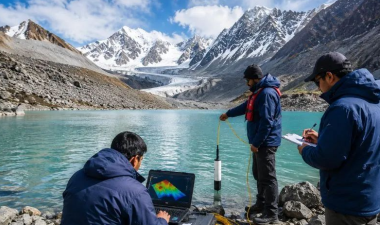
The National Centre for Polar and Ocean Research, alongside regional institutes, concluded the fifth scientific expedition to the Khangri Glacier in the Tawang district of Arunachal Pradesh on...
India has deployed advanced geospatial technology for high-accuracy land and property mapping in the Union Territory of Chandigarh under the newly launched NAKSHA programme and the statutory provisions...
The 1991 New Economic Policy (NEP) transitioned India from a "Command and Control" economy to a market-linked economy. This period is characterized by the shift from the "Hindu...
The New Economic Policy (NEP) of 1991, popularly known as the LPG reforms, was a strategic response to a severe Balance of Payments (BoP) crisis. Orchestrated by the...
The Structural Adjustment Programme (SAP) refers to the set of "stabilization" and "structural reform" policies implemented by India in 1991 under the aegis of the International Monetary Fund...
The 1991 Economic Crisis was the culmination of structural imbalances, fiscal profligacy, and external shocks that brought the Indian economy to the brink of a sovereign default. By...
The "License Permit Raj" refers to the elaborate system of licenses, regulations, and red tape that governed the Indian economy between 1947 and 1991. Rooted in the Nehruvian-Mahalanobis...
Post-independence India inherited a colonial economy characterized by stagnant agriculture, a weak industrial base, and massive poverty (estimated at over 70% in 1947). The early decades focused on...