
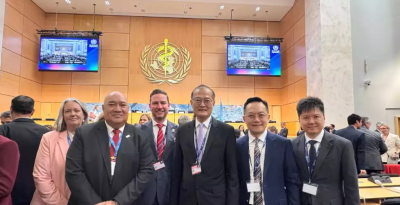
The 79th World Health Assembly (WHA) commenced its six-day session in Geneva, Switzerland, gathering health ministers, policymakers, and medical experts from more than 165 countries. Running from May 18 to May 23, 2026, the assembly operates under the central theme, “Reshaping Global Health: A Shared Responsibility.” Union Minister of Health and Family Welfare Jagat Prakash Nadda is leading the Indian delegation at this summit. The convention focuses on reforming the global health architecture, addressing public health emergencies, and creating inclusive, resilient healthcare networks capable of countering emerging biological and environmental threats.
Institutional Framework of the World Health Assembly
The World Health Assembly serves as the supreme decision-making organ of the World Health Organization (WHO), driving international medical governance and statutory guidelines.
Core Functions and Mandate
- Policy Formulation: The assembly determines the overarching health policies and strategic directions for the WHO.
- Executive Appointments: It elects the Director-General of the WHO, typically for a five-year term.
- Financial Oversight: Delegates review, debate, and approve the proposed biennial programme budget.
- Supervisory Role: The body monitors the financial policies, internal auditing, and operational compliance of the organization.
Composition and Governance Structure
- Membership: The assembly is attended by official delegations from all 194 WHO Member States.
- The Executive Board: A smaller executive board composed of 34 technically qualified health experts prepares the specific agenda and resolutions considered during the plenary sessions.
- Annual Conventions: The assembly meets annually every May in Geneva, Switzerland, where the headquarters of the WHO is located.
Agenda and Focus Areas of the 79th Session
The 2026 assembly addresses a broad spectrum of technical, administrative, and emergency health challenges facing the international community.
Core Technical Discussions
- Universal Health Coverage (UHC): Standardizing access to primary healthcare services without creating financial hardships for vulnerable populations.
- Global Health Architecture Reform: Reviewing a member state-led, WHO-hosted joint process to restructure emergency responses following recent localized outbreaks of hantavirus and Ebola.
- Noncommunicable Diseases (NCDs): Evaluating structural prevention mechanisms for cardiovascular diseases, diabetes, and mental health management.
- Antimicrobial Resistance (AMR): Discussing the updated Global Action Plan on Antimicrobial Resistance 2026–2036 to curb drug-resistant pathogens.
Administrative and Financial Management
- Budget Review: Finalizing the financing, implementation, and performance frameworks of the Programme Budget for the 2026–2027 cycle.
- International Recruitment: Analyzing the draft resolution regarding the WHO Global Code of Practice on the International Recruitment of Health Personnel to ensure equitable distribution of medical workforces.
Intersectional Themes: Climate and Specific Diseases
The 79th assembly integrates environmental factors and targeted infectious disease goals into the broader health systems dialogue.
Climate Change and Health Intersection
Following the adoption of the Global Action Plan on Climate Change and Health at previous assemblies, this session focuses on the practical execution of these guidelines. Member states are assessing the cascading impacts of air pollution, extreme weather, and changing disease vectors on primary health infrastructure. The WHO is launching the Global Plan for Communications, Advocacy, and Partnerships for Climate Change and Health during the event to sustain institutional momentum.
UNAIDS and the 2030 Horizon
The Joint United Nations Programme on HIV/AIDS (UNAIDS) is utilizing the forum to emphasize the Global AIDS Strategy 2026–2031. Discussions center around the “triple elimination” initiative, which aims to halt the mother-to-child transmission of HIV, syphilis, and hepatitis B through integrated maternal healthcare.
IASPOINT Booster Facts for UPSC
- Establishment of the WHO: The World Health Organization was established on April 7, 1948. This date is celebrated annually as World Health Day.
- India’s Historical Leadership: Dr. Rajkumari Amrit Kaur, India’s first Health Minister, was elected as the first female President of the World Health Assembly during its third session in 1950.
- Classification of WHO Budget: The WHO budget relies on two main streams: Assessed Contributions (set dues paid by member states based on country wealth and population) and Voluntary Contributions (flexible or earmarked funds provided by governments, NGOs, or private entities). Voluntary contributions now form the majority of the WHO budget.
- International Health Regulations (IHR): The IHR (2005) is a legally binding instrument of international law that requires WHO member states to report specific disease outbreaks and public health events. The 79th assembly is reviewing extensions of standing IHR recommendations for mpox and COVID-19.
- Structure of Delegations: According to the WHO Constitution, each member state can be represented by a maximum of three delegates, one of whom must be designated as the chief delegate. These delegates should ideally possess technical competence in the field of health.