
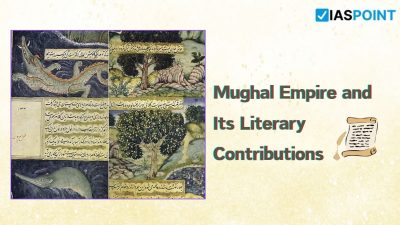
The Mughal era witnessed a remarkable growth in literature and regional languages influenced by Sufi and Bhakti movements. These movements encouraged the use of local languages, enhancing literary expression.
Literature in Babur and Humayun’s Reign
Babur, the founder of the Mughal dynasty, was a learned poet. He authored the Tuzuk-i-Baburi, his memoir, originally in Chagtai Turkish. This work was translated into Persian multiple times. Babur also composed poetry in Turkish and Persian. His son, Humayun, continued this tradition. His sister, Gulbadan Begum, wrote the Humayunnama, historical account. Humayun also established a library, although he tragically died from a fall in it.
Literature in Akbar’s Reign
Akbar, known for his appreciation of arts, built a grand library with over 24,000 manuscripts. He patronised numerous scholars, leading to a flourishing of literature. Notable writers included Abul Fazl, who authored the Akbarnama, a detailed history of Akbar’s reign. His student, Abdul Hamid Lahori, wrote the Padshahnama, chronicling Shah Jahan’s rule. Akbar also facilitated the translation of many Sanskrit texts into Persian.
Literature in Jahangir’s Reign
Jahangir, Akbar’s son, shared a passion for art and literature. He wrote his autobiography, Tuzuk-i-Jahangiri, which provides insight into his reign. Important literary works from this time include Iqbalnama-i-Jahangiri, which holds historical significance.
Literature in Shah Jahan and Aurangzeb’s Reign
Shah Jahan’s son, Dara Shikoh, contributed to Sufi literature. His work, Majma-ul-Bahrain, explored religious harmony. He also translated the Bhagavad Gita and Upanishads into Persian. During Aurangzeb’s reign, the Fatawa-i-Alamgiri became important legal text. Other works included Nuskho-i-Dilkusha and Muntakhab-ul-Lubab.
Translated Literature
The Mughal period saw many Sanskrit works translated into Persian. Key texts included the Mahabharata and Ramayana. Scholarly efforts by Muslim scholars led to these translations, enriching the literary landscape. Jagannatha Panditaraja, a famous Telugu poet, produced notable works during this time.
Regional Literature Development
Regional languages like Bengali, Gujarati, and Rajasthani flourished under Mughal patronage. Translations of religious texts into these languages enhanced their literary status. Urdu emerged as a common language, facilitating communication across diverse dialects. The contributions of common people also uplifted regional languages.
Hindi Literature During the Mughal Era
Hindi poets gained prominence in Mughal courts. Tulsidas, a renowned poet, authored the Ramcharitmanas, a celebrated version of the Ramayana. Surdas, known as the “blind bard of Agra,” wrote extensively in Braj Bhasha. Both poets influenced Hindi literature.
Key Literary Figures and Their Works
The Mughal period produced numerous influential literary figures. Notable works and their composers are listed in below table:
| Literary Figure | Notable Work(s) | Significance |
|---|---|---|
| Abul Fazl | Akbarnama, Ain-i-Akbari | Chronicled Akbar’s reign; a key historical and administrative source. |
| Faizi | Nal-Daman, Markaz-ul-Adwar | Poet laureate in Akbar’s court; translated Sanskrit texts into Persian. |
| Mirza Ghalib | Diwan-e-Ghalib | Renowned for his Persian and Urdu poetry, particularly ghazals. |
| Amir Khusrau | Khazain-ul-Futuh, Tughlaq Nama | Pre-Mughal, but widely referenced during Mughal times for his contributions to Indo-Persian literature. |
| Badauni | Muntakhab-ut-Tawarikh | A critical historian of Akbar’s reign. |
| Nizamuddin Ahmad | Tabqat-i-Akbari | Documented the history of Muslim rulers in India. |
| Alamgir Aurangzeb | Fatawa-e-Alamgiri | A legal compendium of Islamic law compiled under Aurangzeb’s orders. |
| Zeb-un-Nisa | Diwan-i-Makhfi | Daughter of Aurangzeb; a Persian poet with mystical themes. |
| Shaikh Mubarak | Mujmua-ul-Bahrain | Promoted religious and cultural syncretism during Akbar’s era. |
| Abdur Rahim Khan-i-Khanan | Rahim Satsai | Composed Hindi couplets; a patron of literature under Akbar. |
| Birbal | Humorous and philosophical tales | Known for wit and wisdom; contributed to court culture. |
| Muhammad Quli Qutb Shah | Ghazals and Masnavis | Developed early Dakhani Urdu poetry; contemporary to Mughal era. |
| Urfi Shirazi | Persian ghazals and qasidas | Court poet of Akbar known for his eloquence and wit. |
| Jahangir | Tuzuk-i-Jahangiri | Autobiographical account of Jahangir’s reign. |
| Sauda | Satirical Persian poetry | Critiqued the socio-political state during later Mughal rule. |
| Mir Taqi Mir | Diwan-e-Mir | Known as the “God of Urdu Poetry,” flourished in the declining Mughal era. |
| Inayat Khan | Shah Jahan Nama | Chronicles of Shah Jahan’s reign. |
| Gulbadan Begum | Humayun Nama | Account of Humayun’s life; written by Akbar’s aunt. |
| Khusrau Shah Anwar | Persian poetry and histories | Court poet of Shah Jahan. |
| Mutribi Samarqandi | Majalis-i-Mutribi | Documented conversations with Emperor Babur. |
Promotion of Urdu Literature
The Mughal emperors played important role in the development of Urdu. They patronised poets and writers, creating a conducive environment for literary growth. Muhammad Shah and Bahadur Shah Zafar were notable for their support of Urdu literature. They hosted literary gatherings, encouraging creativity.
Influence of Sufi and Bhakti Movements
The Sufi and Bhakti movements impacted literature during the Mughal era. These movements encouraged the use of local languages, leading to the rise of regional literature. They promoted spiritual themes and encourageed a sense of unity among diverse communities.
Legacy of Mughal Literature
The literary contributions of the Mughal Empire left a lasting legacy. Persian literature thrived, but regional languages also gained prominence. The period marked evolution in literary forms and styles. The patronage of Mughal rulers facilitated this cultural renaissance.
Last Modified: December 24, 2024