
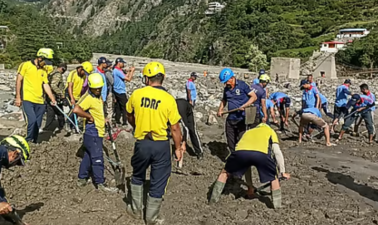
Recent devastating floods, landslides, and cloudbursts in India’s northern Himalayan States have raised alarm among scientists and environmentalists. They warn that unchecked development and climate change are worsening the fragile ecosystem. Experts urge the Central Government to adopt a science-based policy focused on prevention rather than relief.
Impact of Climate Change on Himalayan Weather
Rising temperatures have increased atmospheric moisture, causing intense monsoon rains. Warmer Indian Ocean and Arabian Sea waters hold more water vapour. This leads to sudden heavy rainfall events, triggering floods and landslides. States like Uttarakhand, Himachal Pradesh, and Jammu & Kashmir face heightened vulnerability.
Unplanned Development and Ecological Damage
Road expansions, railway projects, and tourism infrastructure have caused massive deforestation and soil erosion. Use of dynamite for tunnels has hollowed mountain interiors. Projects such as the Rishikesh–Karnaprayag railway and Char Dham road have destabilised slopes. These activities amplify disaster risks in a region classified as Seismic Zone V.
Human-Induced Disasters and Their Consequences
Experts show that recent calamities are largely human-made. Reckless construction and poor planning have weakened natural barriers. The loss of vegetation cover reduces slope stability, increasing landslide frequency. Flash floods and glacial lake bursts have led to loss of life and property.
Weak Policy Enforcement and Financial Constraints
Despite warnings, policy measures have been poorly enforced. Regulations controlling deforestation and construction remain lax. Financial aid from the Union Government is insufficient to meet reconstruction needs. This gap hinders effective disaster management and ecological restoration.
Scientific Evidence of Environmental Stress
Glacial retreat is accelerating, with the Gangotri-Gaumukh glacier shrinking by nearly 40 kilometres. Over 1,500 landslides were recorded along the Char Dham highway. Surveys identified 1,266 glacial lakes in Uttarakhand, with 13 at high risk of outburst floods. These data underline the urgent need for sustainable action.
Call for Sustainable, Science-Based Development
Experts demand a shift from short-term economic gains to long-term ecological balance. Strict regulation of all construction activities is essential. Controlling unplanned tourism and infrastructure growth can reduce environmental stress. A national consensus prioritising ecology is critical to protect the Himalayas.
Questions for UPSC:
- Point out the causes and consequences of glacial lake outburst floods (GLOFs) in the Himalayan region with suitable examples.
- Critically analyse the impact of unplanned infrastructure development on seismic zones in India and suggest sustainable alternatives.
- Estimate the role of climate change in altering monsoon patterns and its effects on Himalayan ecology and human settlements.
- Underline the challenges in implementing environmental policies in disaster-prone regions and discuss measures to enhance policy enforcement and community resilience.
Answer Hints:
1. Point out the causes and consequences of glacial lake outburst floods (GLOFs) in the Himalayan region with suitable examples.
- Causes – Rapid glacial melting due to rising temperatures leads to formation and expansion of glacial lakes.
- Natural dam failures caused by avalanches, landslides, or earthquakes trigger sudden outbursts.
- Example – Uttarakhand has 1,266 glacial lakes, with 13 highly vulnerable to GLOFs.
- Consequences – Flash floods causing loss of life, destruction of homes, infrastructure, and agricultural land.
- Environmental degradation including soil erosion, sedimentation in rivers, and destabilization of downstream ecosystems.
- Increased disaster frequency in fragile Himalayan terrain exacerbates human vulnerability and economic losses.
2. Critically analyse the impact of unplanned infrastructure development on seismic zones in India and suggest sustainable alternatives.
- Unplanned road expansions, tunnel constructions, and railway projects (e.g., Rishikesh–Karnaprayag railway) cause deforestation and soil destabilization.
- Use of dynamite hollowing mountain interiors weakens natural geological stability in Seismic Zone V.
- Increased landslides, tunnel collapses, and amplified earthquake risks threaten lives and property.
- Sustainable alternatives – Strict environmental impact assessments and science-based planning before approvals.
- Promote eco-friendly construction technologies, limit large-scale deforestation, and implement controlled tourism.
- Community involvement and long-term ecological monitoring to ensure resilience and reduce disaster risks.
3. Estimate the role of climate change in altering monsoon patterns and its effects on Himalayan ecology and human settlements.
- Rising temperatures increase atmospheric moisture by ~7% per °C, intensifying monsoon rainfall.
- Warming of Indian Ocean and Arabian Sea contributes to sudden, heavy rainfall events (cloudbursts).
- Resulting floods and landslides cause widespread ecological damage and threaten fragile mountain ecosystems.
- Accelerated glacial retreat (e.g., Gangotri-Gaumukh glacier receding ~40 km) impacts water availability and stability.
- Human settlements face increased risk of disasters, displacement, and economic loss.
- Changing rainfall patterns disrupt agriculture, biodiversity, and traditional livelihoods in Himalayan states.
4. Underline the challenges in implementing environmental policies in disaster-prone regions and discuss measures to enhance policy enforcement and community resilience.
- Challenges – Weak enforcement of regulations, poor coordination between agencies, and inadequate financial resources.
- Lack of accountability and political will result in unchecked deforestation and unscientific construction.
- Insufficient disaster preparedness and low awareness among local communities increase vulnerability.
- Measures – Strengthen legal frameworks and ensure strict monitoring of development activities.
- Increase funding for disaster management, ecological restoration, and capacity building at grassroots levels.
- Promote community participation, early warning systems, and sustainable livelihood options to build resilience.