
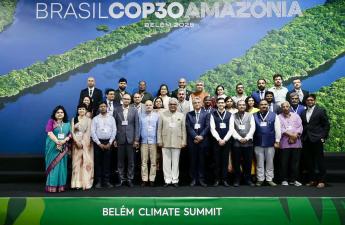
The 2025 UNFCCC COP30 summit in Belém, Brazil ended with widespread disillusionment, especially among developing nations. Despite high expectations, the summit failed to deliver firm financial commitments to tackle climate change. Developed countries reiterated promises but avoided binding targets. This outcome marks a growing trust deficit and raises concerns about global climate finance adequacy.
Overview of COP30 Outcomes
COP30 centred on the Mutirão political decision, aiming to implement climate finance goals. However, it resulted in vague promises without clear timelines or enforcement. UN Secretary-General António Guterres admitted the summit fell short of urgent scientific needs. The summit’s financial pledges remain far below what developing countries require to adapt and mitigate climate impacts.
Climate Finance Goals and Gaps
Developed countries pledged $100 billion annually by 2020 but only met this in 2022, eroding trust. The new goal set at COP29 in Baku targets $300 billion per year by 2035, far less than the $1.3 trillion requested by developing countries. Global climate investment needs are estimated at $7.4 trillion annually by 2030. COP30’s voluntary Baku-to-Belém Roadmap lacks mandatory milestones, suggesting finance flows will stay near historical levels of 100-115 billion yearly.</p> <h4>Adaptation Finance Deficiencies</h4> <p>Adaptation finance is critical for vulnerable countries facing climate impacts. UNEP estimates require215-387 billion annually by 2030, rising to $350 billion by 2035. Yet current adaptation funding is only about $40 billion. COP30’s pledge to triple adaptation finance by 2035 lacks baseline data, definitions, and enforcement, making it unverifiable. Most climate finance is loan-based, increasing debt burdens for already indebted developing countries.
Loss and Damage Fund Challenges
COP30 was the first full session after launching the Loss and Damage Fund (LDF). The Fund’s governance improved but financial resources remain insufficient. Total pledges stand at $788.8 million with only $407 million available. No new large-scale pledges or replenishment plans were made, risking fund depletion by 2027. Without urgent funding, the LDF risks becoming ineffective.
Implications for Global Climate Action
COP30 exposed a critical gap between climate finance promises and scientific needs. Developed countries’ reluctance to commit adequate, predictable, and grant-based finance deepens the global divide. The summit deferred urgent finance decisions to future talks, while climate impacts accelerate. Immediate action is essential to restore trust and support vulnerable nations.
Questions for UPSC:
- Critically discuss the role of climate finance in achieving the goals of the Paris Agreement and the challenges faced by developing countries in accessing such finance.
- Examine the significance of adaptation finance in climate change mitigation and analyse the implications of loan-based climate funding on developing economies.
- Point out the institutional mechanisms under the UNFCCC for addressing loss and damage and estimate their effectiveness in supporting vulnerable countries.
- Analyse the impact of delayed climate finance commitments on global climate governance and discuss measures to enhance accountability and trust among nations.
Answer Hints:
1. Critically discuss the role of climate finance in achieving the goals of the Paris Agreement and the challenges faced by developing countries in accessing such finance.
- Climate finance is essential for mitigation, adaptation, and technology transfer under the Paris Agreement framework.
- Developed countries pledged $100 billion annually by 2020, but delivery was delayed until 2022, undermining trust.
- The new collective quantified goal (NCQG) of $300 billion by 2035 is far below developing countries’ estimated needs (~$1.3 trillion annually).
- Finance flows remain voluntary, with no binding timelines or enforcement, limiting predictability and scale.
- Developing countries face barriers like complex access procedures, lack of capacity, and insufficient grant-based funding.
- Loan-heavy finance increases debt burdens, reducing the effectiveness of climate investments in vulnerable economies.
2. Examine the significance of adaptation finance in climate change mitigation and analyse the implications of loan-based climate funding on developing economies.
- Adaptation finance addresses vulnerabilities by building resilience to climate impacts, crucial for sustainable development.
- UNEP estimates adaptation costs for developing countries at $215-387 billion annually by 2030, but current funding is only ~$40 billion.
- COP30’s pledge to triple adaptation finance by 2035 lacks baselines, definitions, and enforcement, making progress unverifiable.
- Over 60% of climate finance to developing countries is loan-based, increasing debt burdens and financial vulnerability.
- Loan-based funding shifts responsibility to developing countries, despite historical emissions by developed nations.
- Heavy debt servicing limits spending on health, education, and climate resilience, undermining long-term adaptation efforts.
3. Point out the institutional mechanisms under the UNFCCC for addressing loss and damage and estimate their effectiveness in supporting vulnerable countries.
- The Warsaw International Mechanism (WIM) is the primary institutional framework for loss and damage under the UNFCCC.
- The Loss and Damage Fund (LDF), operationalized at COP30, aims to provide financial support but currently holds limited resources (~$407 million).
- The Santiago Network enhances technical assistance and coordination for loss and damage response.
- Governance improvements have been made, but funding pledges are insufficient and lack replenishment plans.
- Without predictable, scaled-up finance, the LDF risks depletion by 2027, limiting its effectiveness.
- Overall, institutional frameworks exist but are underfunded and lack enforcement, reducing support for vulnerable countries.
4. Analyse the impact of delayed climate finance commitments on global climate governance and discuss measures to enhance accountability and trust among nations.
- Delayed fulfillment of pledges (e.g., $100 billion target met two years late) erodes trust between developed and developing countries.
- Unmet commitments reduce willingness of vulnerable countries to engage constructively in negotiations.
- Weak enforcement and voluntary finance targets create a credibility gap and slow global climate action.
- Enhancing transparency through clear baselines, interim targets, and monitoring mechanisms can improve accountability.
- Prioritizing grant-based, predictable finance with legal obligations strengthens trust and equity.
- Immediate delivery on existing pledges and scaling up finance for adaptation and loss and damage are critical to rebuild confidence.