
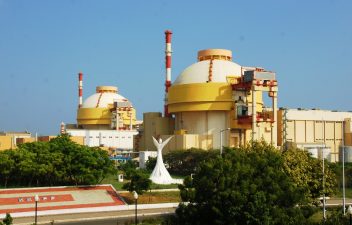
The Sustainable Harnessing and Advancement of Nuclear Energy for Transforming India (SHANTI) Act marks the most consequential reform of India’s nuclear sector since the Atomic Energy Act of 1962. By dismantling decades of state monopoly and opening the door to private and foreign participation, the law seeks to position nuclear power as a pillar of India’s clean energy transition, industrial growth and strategic autonomy. Yet, the success of this reform will depend less on legislative intent and more on how unresolved regulatory, liability and pricing questions are handled.
Why the SHANTI Act matters
For over six decades, India’s nuclear sector remained tightly controlled by the State, largely due to strategic concerns and international isolation. The SHANTI Act signals a decisive shift by:
- Ending the exclusive public-sector monopoly in nuclear power generation
- Creating a licence-based framework for private investment
- Giving statutory independence to the
This liberalisation aligns with India’s climate commitments, energy security goals and the need for reliable, non-fossil baseload power — something intermittent renewables alone cannot provide.
Civil nuclear liability: the biggest breakthrough
The most significant reform lies in restructuring civil nuclear liability. The , shaped by the legacy of the Bhopal gas tragedy, had made India an outlier globally. Section 17(b), which allowed operators to seek recourse against suppliers for defective equipment or services, deterred global suppliers and stalled projects.
The SHANTI Act corrects this by limiting supplier liability to:
- Cases explicitly provided for in contracts, or
- Incidents caused by intentional acts to cause damage
This brings India in line with international norms under the Convention on Supplementary Compensation and removes a long-standing hurdle for projects such as Kovvada and Jaitapur.
An unfinished liability question
One important gap remains: the Act does not define “supplier”. Earlier reform proposals had recommended distinguishing between:
- Manufacturers of systems or components
- Entities providing design specifications
- Firms offering quality assurance or design services
Without a statutory definition, uncertainty persists along the nuclear supply chain. For overseas suppliers and domestic vendors alike, this ambiguity could translate into higher risk premiums and slower investment decisions.
Regulatory design and investor confidence
Nuclear power projects are capital-intensive, long-gestation and highly sensitive from safety and security perspectives. Predictability is therefore crucial. The SHANTI Act leaves many operational details to future rules, especially around:
- “Sensitive” activities that cannot be patented
- Matters with “national security implications”
- Projects deemed of a “strategic nature”
For start-ups working on advanced technologies such as small modular reactors (SMRs), unclear boundaries raise fears that privately developed intellectual property could later be claimed by the State, discouraging R&D investment.
Concerns over regulatory independence
Although the AERB gains statutory status, its members are to be selected by a committee constituted by the Atomic Energy Commission under the Department of Atomic Energy. Comparative regulatory practice in India suggests that greater structural independence — through search committees with independent experts and retired judges — would strengthen credibility.
Rules framed under the Act could still address this by ensuring transparent selection processes while allowing government oversight on security grounds.
The pricing dilemma: nuclear power outside electricity markets
A contentious provision is Section 37, which vests pricing authority for nuclear electricity in the central government, overriding the . This creates friction with India’s broader power market reforms.
Once generated, electricity is indistinguishable by source. Excluding nuclear power from market-based tariff determination risks:
- Burdening financially stressed State discoms with high-cost power
- Insulating producers from efficiency and demand signals
- Limiting innovative business models
Unlocking demand through private markets
Nuclear power’s future scale in India is more likely to come from matching the right producers with the right consumers. Data centres, industrial clusters, SEZs and commercial consumers seeking reliable, clean, round-the-clock power are natural candidates, especially for SMRs.
Allowing captive generation, bilateral contracts and open access — as enabled under the Electricity Act — would mirror the successful renewable energy experience and reduce the need for administered pricing.
What to note for Prelims?
- SHANTI Act ends state monopoly in nuclear power.
- Reforms civil nuclear liability framework.
- Statutory status granted to Atomic Energy Regulatory Board.
- Supplier liability aligned with international norms.
What to note for Mains?
- Critically assess how nuclear sector liberalisation supports India’s climate and energy security goals.
- Discuss the importance of liability reform in attracting foreign investment.
- Examine regulatory independence as a prerequisite for private participation in strategic sectors.
- Analyse whether administered pricing is suitable for nuclear power in a liberalised electricity market.