
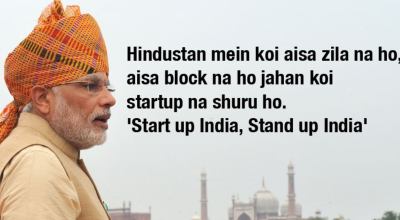
Over the past decade, Startup India has transformed entrepreneurship from a niche aspiration into a nationwide movement. What began as a policy announcement from the Red Fort has evolved into one of the world’s largest startup ecosystems, channelising youthful energy into job creation, innovation and economic growth. This transformation is now closely linked to Prime Minister Narendra Modi’s vision of Viksit Bharat 2047—a developed, self-reliant and globally competitive India.
From Red Fort Vision to Policy Architecture
Startup India was formally launched on January 16, 2016, by the . The underlying idea was simple but ambitious: entrepreneurship must not remain confined to metros or elite institutions, but take root in every district and block.
Over time, this vision translated into a structured ecosystem—policy recognition, financial support, regulatory easing and institutional backing—that allowed startups to emerge across sectors and geographies.
Sectoral Spread and National Development Priorities
Indian startups today operate across a wide spectrum of the economy. The highest concentration is in:
- IT services and digital platforms
- Healthcare and life sciences
- Education technology
- Agriculture and allied activities
- Construction and infrastructure
Beyond these, startups are active in more than 50 other industries, including climate technology and infrastructure, reflecting alignment with India’s long-term development priorities rather than narrow consumer-focused innovation alone.
Innovation, AI and the Deep-Tech Push
A defining shift in the Startup India journey has been the growing emphasis on innovation and deep technology. India’s rise in the Global Innovation Index—from 81st in 2015 to 38th recently—mirrors this change.
Government initiatives such as the India AI Mission, the Research Development and Innovation Scheme, and the Anusandhan National Research Foundation aim to create a pipeline of high-end research and commercialization. As a result, startups are now active in areas such as aerospace, defence, robotics, green technologies, Internet of Things and semiconductors.
This shift is reinforced by intellectual property creation. Indian startups have filed over 16,400 patent applications, signalling a move from replication to original, globally competitive innovation.
Pan-India Expansion Beyond the Metros
Equally significant is the geographical spread of entrepreneurship. From just four states with startup policies in 2016, India now has dedicated startup frameworks in over 30 States and Union Territories. DPIIT-recognised startups exist in every state and UT.
More than 2,00,000 startups have been recognised so far, with 2025 recording the highest annual addition since inception. Around half of these startups are based in Tier II and Tier III cities, underscoring a decentralisation of opportunity and employment generation.
Inclusion as an Ecosystem Strength
Inclusion has emerged as a structural feature rather than an afterthought. Over 45% of recognised startups have at least one woman director, making women-led entrepreneurship a major pillar of the ecosystem.
This broad-based participation has helped embed startups into local economies, creating jobs closer to home and reducing distress-driven migration.
From Local Innovation to Global Markets
As Indian startups scale, global markets are increasingly central to their growth strategies. Startup India has built 21 international bridges and two strategic alliances to facilitate cross-border collaboration and market access, including with the UK, Japan, South Korea, Sweden and Israel.
Startups are now a regular part of India’s official business delegations abroad, helping project India not just as a market, but as a source of innovation.
Reforms, Finance and Market Access
Ease of doing business reforms have been critical to sustaining momentum. Eligible startups can avail a three-year tax holiday within their first decade, while the abolition of angel tax and regulatory simplification have improved investor confidence.
Access to finance has been strengthened through:
- Fund of Funds for Startups via Alternative Investment Funds
- Credit Guarantee Scheme for Startups
- Startup India Seed Fund Scheme for early-stage support
Market access has also expanded through the Government e-Marketplace, allowing startups to directly supply to public procurement systems at scale.
A Cultural Shift in Aspirations
Perhaps the most enduring impact of Startup India lies beyond numbers. Entrepreneurship has gained social legitimacy in a society once dominated by preferences for government jobs, engineering and medicine. Young Indians increasingly aspire to be job creators rather than job seekers, with families and institutions beginning to support such ambitions.
What to Note for Prelims?
- Startup India launch year and nodal ministry
- DPIIT recognition of startups
- Fund of Funds for Startups and Seed Fund Scheme
- India AI Mission and deep-tech focus
What to Note for Mains?
- Role of startups in employment generation and inclusive growth
- Contribution of Startup India to innovation and IP creation
- Importance of Tier II and Tier III cities in entrepreneurship
- Link between startups and Viksit Bharat 2047 vision