
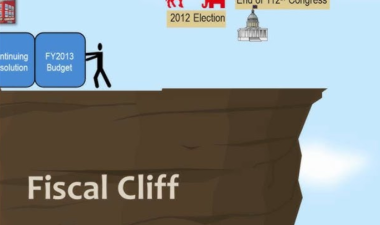
Amid the din around the Union Budget, trade negotiations with the US and the EU, and the rupee’s fluctuations, two developments with far-reaching implications for India’s federal economy have largely slipped under the radar. One is the tabling of the Sixteenth Finance Commission report; the other is the quiet but deepening fiscal distress of state governments. Together, they reveal a troubling paradox: even as the Centre projects macroeconomic stability, a large number of states are edging towards a fiscal cliff that is both serious and genuinely pan-Indian.
The Sixteenth Finance Commission as a Federal Mirror
The Sixteenth Finance Commission is not merely a technical body deciding how taxes are shared; it is a litmus test of India’s fiscal federalism. Its recommendations, tabled just ahead of the Budget, draw heavily on a recent assessment of state finances. The message is stark: while the Centre has largely contained its deficit, several states are structurally vulnerable, with debt and committed expenditures crowding out development spending.
A Crisis Without Regional Boundaries
Unlike earlier debates where fiscal stress was framed as a regional grievance—southern states feeling penalised, eastern states neglected, or western states favoured—the current predicament cuts across geography. Punjab, Tamil Nadu, Rajasthan, Bihar and West Bengal feature prominently among fiscally stressed states. This mix of relatively prosperous, industrialised states and poorer ones underscores that the problem is systemic rather than regional.
Interest Payments: The Silent Budget Killer
The most alarming indicator is the share of revenue consumed by interest payments. In Punjab, over 40 per cent of total state revenue—tax and non-tax combined—is spent simply on servicing debt. Tamil Nadu, often perceived as fiscally prudent, tells a similar story: despite generating over ₹2 lakh crore in revenue, it spends around ₹62,000 crore annually on interest payments. For poorer states like Bihar and West Bengal, with limited revenue bases, the squeeze is even tighter.
The Double Whammy Facing States
States today face a twofold constraint. First, the share of central taxes devolved to them has not seen a significant upward revision since the jump from 32 per cent to 40 per cent announced in the early years of the BJP-led NDA government under the stewardship of . Since then, transfers have largely stagnated in relative terms. Second, and more damaging, is the rapid growth of committed expenditures that do not generate future income or productivity.
Freebies and the Politics of Fiscal Stress
Across party lines, states have embraced expansive welfare and “freebie” schemes. Karnataka’s annual welfare bill of over ₹60,000 crore leaves little room for capital investment in roads, schools or healthcare. Similar pressures are visible in Maharashtra, Madhya Pradesh, Punjab and West Bengal, driven by schemes such as Ladki Behen or Ladli Behna. While politically rewarding, these programmes neither expand the tax base nor significantly enhance workforce productivity, including women’s labour force participation, which is often cited as their justification.
Why Development Spending Is the First Casualty
With 30–40 per cent of revenues locked into interest payments and a large share committed to salaries, pensions and welfare transfers, states are left with minimal fiscal space. Infrastructure, education, and health—expenditures that yield long-term growth—are invariably the first to be cut or postponed. The World Bank notes that at least six of India’s 20 largest states are highly vulnerable to external shocks due to this rigid expenditure structure.
Centre–State Tensions Beneath the Surface
The Centre has sought to incentivise higher capital expenditure by states through special assistance schemes. However, these measures are increasingly viewed through a political lens. Opposition-ruled states allege discrimination, while BJP-ruled states are accused of receiving preferential treatment. This politicisation further weakens cooperative federalism at a time when coordinated fiscal reform is urgently needed.
What to Note for Prelims?
- Role and significance of the Sixteenth Finance Commission
- Key findings of the World Bank on state-level debt and fiscal rigidity
- Difference between committed expenditure and capital expenditure
- Concept of fiscal federalism in India
What to Note for Mains?
- Structural causes of state-level fiscal stress in India
- Impact of freebie politics on long-term economic growth
- Centre–state fiscal relations and challenges to cooperative federalism
- Reforms needed to restore state fiscal sustainability without undermining welfare goals