
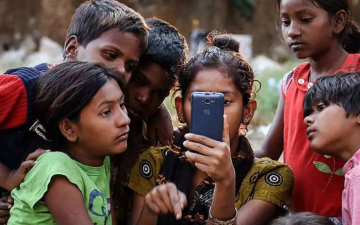
The death of three young sisters in Ghaziabad on February 4 has shaken the country and reignited a familiar demand: ban social media for children. Preliminary police findings pointing to screen addiction and parental conflict have amplified calls for swift, punitive action. Such reactions are emotionally understandable. But they also risk repeating a grave policy mistake—responding to a complex, structural problem with blunt bans that evade platform accountability while curtailing the digital rights and futures of young people.
What the Evidence Actually Says About Harm
There is little doubt that excessive social media use is associated with mental health risks among adolescents. A growing body of global research, including meta-analyses and systematic reviews, points to small but consistent correlations between heavy usage and anxiety, depressive symptoms, self-harm tendencies, and body image dissatisfaction—particularly among teenage girls. While most of this evidence comes from outside India, it still offers a cautionary signal. The problem, however, is not social media in isolation, but how it is designed, monetised, and moderated.
Global Crackdowns and the Logic of Moral Panic
The Ghaziabad tragedy coincides with a wave of international regulatory crackdowns. Australia’s 2024 law banning under-16s from major platforms—Instagram, TikTok, YouTube, Snapchat, and X—came into force in December 2025, enforced through mandatory age verification and steep financial penalties. Spain, under Prime Minister , has announced similar intentions, framing social media as a “digital Wild West”.
These measures offer political reassurance, but they also resemble what sociologist Stanley Cohen famously described as moral panic: complex social failures reduced to a single villain and met with symbolic, disproportionate crackdowns. For India, copying this model would be particularly damaging.
Why Blanket Bans Will Fail in India
First, bans are technically porous. Adolescents routinely bypass age-gating through VPNs or false declarations, often migrating from moderated platforms to encrypted, unregulated digital spaces where risks of grooming and radicalisation are far greater. Mandatory age verification also raises serious concerns about mass surveillance if social media accounts are linked to government IDs.
Second, a blanket ban ignores the social role platforms play for many adolescents. For rural youth, urban slum dwellers, queer and differently-abled teenagers, online spaces are often the only avenues for peer support, learning, and self-expression. Child protection bodies globally have acknowledged that social media can function as a lifeline, not merely a threat.
Third, such bans suffer from a democratic deficit. In India, policies affecting children and adolescents are routinely designed without consulting them. Young people are treated as passive subjects of regulation rather than stakeholders whose lived experiences should shape policy.
The Gendered Cost of Digital Prohibition
Perhaps the most damaging consequence would be the deepening of gender inequality. According to National Sample Survey data, only 33.3% of women in India have ever used the Internet, compared to 57.1% of men. In patriarchal households where girls’ internet access is already viewed with suspicion, an official mandate to “police” age is likely to translate into outright confiscation of devices from young girls. A ban, in practice, would restrict female mobility and opportunity far more than male behaviour.
Moving Beyond the Politics of Censorship
If bans are not the answer, what is? First, the government must move away from its reflexive reliance on censorship and the “notice-and-takedown” framework under the . Instead, it must confront the economic incentives and algorithmic architectures of Big Tech.
This requires a robust digital competition law and legally enforceable “duty of care” obligations for platforms dealing with minors, backed by meaningful monetary penalties. Crucially, enforcement must rest with an independent, expert regulator—not a politically controlled bureaucracy lacking technical capacity.
Why Indian Evidence and Youth Voices Matter
India also needs serious public investment in long-term, local research on how social media affects children across class, gender, caste and region. The failure to do so is already evident in laws like the , whose poorly designed consent mechanisms are likely to encourage false declarations or exclusion rather than protection. Young people must be involved not just as survey subjects, but as participants shaping regulatory outcomes.
The Missing Link: AI and Child Safety
The debate also reveals a striking inconsistency. If the concern is harm to children, why is moral outrage confined to social media? Generative AI chatbots are already embedded within these platforms, and early research links heavy AI reliance to “cognitive debt” and weaker critical thinking. Reports and lawsuits have flagged serious child-safety failures in conversational AI, including sexualised interactions with minors and alleged links to self-harm. Any credible child-protection framework must address AI alongside social media, rather than treating it as a sacred cow of innovation.
What to Note for Prelims?
- Global approaches to regulating children’s access to social media
- Key provisions of the IT Act, 2000 and DPDP Act, 2023
- Concept of “duty of care” in digital regulation
- Gender digital divide in India
What to Note for Mains?
- Limits of censorship-based regulation in addressing social harms
- Impact of social media bans on gender and social inequality
- Need for independent digital regulators and competition law
- Emerging child-safety concerns linked to AI technologies
A ban may offer the illusion of decisive action after tragedy. But, as media scholar Neil Postman once cautioned, being “pro” or “anti” technology is as futile as being for or against food. The real challenge is to build a healthy media ecosystem—one that protects children without erasing their rights, voices, and opportunities.
Last Modified: February 10, 2026