
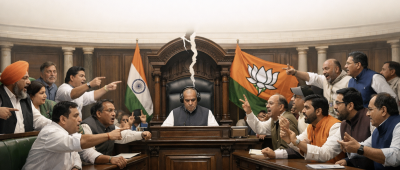
Recent discussions on synchronising India’s general and state elections have gained momentum. The proposal called ‘One Nation One Election’ (ONOE) aims to hold Lok Sabha and State Assembly elections simultaneously. However, experiences from countries like Indonesia and constitutional issues raise concerns.
Background and Recent Developments
In 2019 and 2024, Indonesia held simultaneous elections but faced severe human costs, including many deaths and illnesses among poll workers. Its Constitutional Court ruled in 2025 to separate elections to reduce overload. India’s ONOE proposal argues for synchronisation to reduce costs, security deployment, and continuous campaigning. A High-Level Committee led by former President Ram Nath Kovind recommended constitutional amendments to implement this.
Constitutional and Federal Challenges
India’s parliamentary system emphasises executive accountability to the legislature. Early dissolution of assemblies is a democratic safeguard, not a flaw. ONOE requires curtailing assembly terms to align with national elections, weakening this principle. The Supreme Court in S.R. Bommai vs Union of India (1994) upheld federalism as a basic structure. ONOE may undermine state autonomy by forcing uniform electoral cycles.
Issues with ‘Unexpired-Term’ Elections
The proposed amendment introduces mid-term elections with truncated mandates. This risks voter apathy and weakens governance incentives. It may create governance dead zones with caretaker governments lacking full powers. Deferral of elections by the Election Commission without clear guidelines could enable misuse and extended unelected rule, conflicting with constitutional safeguards.
Cost and Administrative Considerations
Election expenses are small relative to India’s GDP and budget. Staggered elections allow efficient use of resources like electronic voting machines and security forces. Simultaneous polls could increase costs and logistical challenges. The administrative benefits claimed by ONOE are thus questionable. Tamil Nadu’s Justice Kurian Joseph Committee recommended withdrawing the Bill, citing these concerns.
Topics for Prelims:
One Nation One Election (ONOE)
- Proposal to synchronise Lok Sabha and State Assembly elections.
- Suggested by High-Level Committee chaired by Ram Nath Kovind.
- Amendment Bill proposes Article 82A and changes to Articles 83, 172, 327.
- Introduces unexpired-term elections and deferral powers to Election Commission.
- Raises constitutional and federalism concerns.
Constitutional Safeguards and Federalism
- Early dissolution allows governments to seek fresh mandates.
- S.R. Bommai case affirms federalism as basic structure.
- Articles 75 and 164 establish executive accountability to legislatures.
- President’s Rule limited by Article 356 to one year normally.
- ONOE risks weakening state autonomy and democratic rhythms.
International Comparison
- Indonesia’s simultaneous elections caused health crises among poll workers.
- Canada and Australia hold federal and provincial elections separately.
- Germany staggers state elections; stability from constructive no-confidence vote.
- South Africa and Indonesia use proportional representation, India uses first-past-the-post.
- USA’s fixed cycles work due to presidential system, unlike India’s parliamentary model.
Questions for Mains:
- Critically discuss the implications of the One Nation One Election proposal on India’s federal structure and democratic accountability. [GS-II-Constitution of India & Polity]
- Analyse the constitutional challenges posed by ‘unexpired-term’ elections and their impact on governance and voter participation in India. [GS-II-Constitution of India & Polity]
- With suitable examples, examine the advantages and disadvantages of synchronised versus staggered elections in federal democracies. [GS-I-Modern World History]
- Discuss in the light of electoral management, how administrative and health challenges in large-scale elections can be addressed without compromising democratic principles. [GS-III-Governance]
Answer Hints:
1. Critically discuss the implications of the One Nation One Election proposal on India’s federal structure and democratic accountability. [GS-II-Constitution of India & Polity]
- ONOE mandates synchronising Lok Sabha and State Assembly elections, truncating state assembly terms, impacting federal autonomy.
- S.R. Bommai (1994) case affirms federalism as a basic structure; states have independent constitutional identity and electoral rhythms.
- Early dissolution and staggered elections enable executive accountability and legislative confidence; ONOE weakens this by forcing fixed cycles.
- Proposed amendments shift India’s parliamentary democracy towards quasi-presidentialism by protecting tenures over accountability.
- Risk of central government overreach via deferral powers to Election Commission, undermining state governments and democratic processes.
- Continuous electoral feedback from staggered polls ensures governments remain responsive; ONOE risks voter apathy and weakened democracy.
2. Analyse the constitutional challenges posed by ‘unexpired-term’ elections and their impact on governance and voter participation in India. [GS-II-Constitution of India & Polity]
- ‘Unexpired-term’ elections mean newly elected legislatures serve only remaining term, not a fresh five-year mandate, lacking constitutional precedent.
- Truncated mandates reduce incentives for long-term reforms, encouraging populism and policy drift, weakening governance.
- Frequent mid-term polls with residual terms risk voter fatigue and apathy, devaluing franchise and democratic participation.
- Governance dead zones may emerge with caretaker governments lacking full powers, hampering budgetary and legislative functions.
- Deferral powers to Election Commission lack clear criteria, risking misuse, prolonged President’s Rule, and undermining constitutional safeguards (Articles 85, 112-117, 356).
- Fundamental constitutional principles of legislative confidence and accountability are compromised, challenging the basic structure doctrine.
3. With suitable examples, examine the advantages and disadvantages of synchronised versus staggered elections in federal democracies. [GS-I-Modern World History]
- Synchronised elections (e.g., Indonesia 2019) can reduce costs, security deployments, and political instability but risk administrative overload and health crises.
- Staggered elections (e.g., Canada, Australia, Germany) respect federal autonomy, allow continuous electoral feedback, and avoid voter fatigue.
- Countries with proportional representation (South Africa, Indonesia) mitigate risks of national waves sweeping states; India’s first-past-the-post system lacks this safeguard.
- Fixed cycles in presidential systems (USA) differ fundamentally from parliamentary systems like India, limiting applicability of synchronisation.
- Synchronisation can cause truncated mandates, governance dead zones, and weaken democratic accountability in parliamentary federations.
- Staggered polls enable rotation of resources (EVMs, security), reducing logistical burden and election fatigue among administrators and voters.
4. Discuss in the light of electoral management, how administrative and health challenges in large-scale elections can be addressed without compromising democratic principles. [GS-III-Governance]
- Phased elections allow rotation of electronic voting machines, security personnel, and reduce administrative overload, as practiced in India.
- Indonesia’s experience (2019 & 2024) shows simultaneous polls can cause severe health risks to poll workers, indicating need for better workload management.
- Investment in poll worker training, adequate staffing, and health safeguards (PPE, rest periods) essential to reduce illness and fatalities.
- Decentralised election schedules reduce pressure on officials and voters, preserving quality of democratic participation.
- Use of technology (EVMs, VVPATs) and robust logistical planning can improve efficiency without rushing or compressing election timelines.
- Maintaining staggered elections avoids prolonged Model Code of Conduct impositions, enabling governments to function effectively and voters to engage meaningfully.