
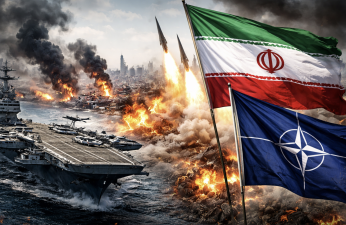
The recent speech by US President Donald Trump has intensified concerns over the US-Iran conflict and the future of NATO. Trump reiterated threats against Iran but did not announce any change in the US’s NATO membership. His disparaging remarks about NATO have strained transatlantic relations and raised questions about the alliance’s future.
US-Iran Conflict Status
The US continues its military campaign against Iran without clear success. Iran’s missile and drone attacks have become more sophisticated, supported by Russian and Chinese intelligence. The Strait of Hormuz remains blocked, impacting global oil supplies. The US faces difficulty in claiming victory as Iranian military capabilities persist.
Diplomatic Efforts and Challenges
Third-party countries like Pakistan, Türkiye, and Oman are attempting to mediate. However, negotiations are stalled due to ongoing conflict and lack of ceasefire. The US government shows confusion over war objectives, with mixed signals from officials about the war’s duration and strategy.
NATO and Transatlantic Relations
Trump’s threats to leave NATO have alarmed European allies. He criticises Europe for not sharing defence burdens and threatens to cut arms supplies to Ukraine. The US’s unpredictable stance weakens the alliance’s unity and trust. Europe has increased its support for Ukraine despite US criticism.
Potential War Outcomes
Three pathways exist – 1. Trump claims victory and announces ceasefire (unlikely now). 2. Diplomatic ceasefire via third parties (currently stalled). 3. US withdrawal from NATO and coalition efforts to reopen the Strait of Hormuz, possibly involving military action. A US ground incursion into Iran could escalate conflict and destabilise the region further.
Topics for Prelims:
US-Iran Conflict
- Iran’s missile and drone capabilities have increased.
- Strait of Hormuz remains blocked, affecting oil supply.
- Russia and China provide intelligence support to Iran.
- US military bases targeted by Iranian attacks.
- Diplomatic mediation attempted via Pakistan, Türkiye, Oman.
NATO and Transatlantic Relations
- Trump called NATO obsolete and threatens withdrawal.
- European countries increased defence spending and Ukraine support.
- US accuses Europe of unfair burden sharing.
- Trust in NATO alliance severely damaged.
- UK struggles to manage US-UK special relationship.
Global Energy Security
- Strait of Hormuz is a strategic oil transit chokepoint.
- Blocking the Strait disrupts global energy markets.
- US wants coalition to secure the Strait.
- UN Security Council’s Article 7 invoked by UAE for force use.
- Military action alone cannot reopen the Strait without negotiation.
Questions for Mains:
- Critically analyse the impact of US foreign policy shifts on NATO’s unity and global security. [GS-II-International Relations]
- Comment on the strategic importance of the Strait of Hormuz in global energy security and international diplomacy. [GS-III-Economic Development]
- With suitable examples, explain the role of third-party mediation in resolving international conflicts, denoting challenges faced in the US-Iran war. [GS-II-Governance]
- What are the implications of unilateral military actions by global powers on regional stability and international law? Discuss with reference to the US-Iran conflict. [GS-III-Internal & External Security]
Answer Hints:
1. Critically analyse the impact of US foreign policy shifts on NATO’s unity and global security. [GS-II-International Relations]
- Trump’s repeated criticism of NATO as obsolete and paper tiger undermines alliance credibility.
- Threats to withdraw from NATO create strategic uncertainty and erode trust among European allies.
- US accusations of unfair burden-sharing strain transatlantic relations and reduce cooperative spirit.
- Europe’s increased defense spending and support for Ukraine contrast with US unpredictability, causing friction.
- Damaged NATO unity weakens collective defense (Article 5) and global security architecture.
- UK and other allies struggle to manage special relationship amid US volatility, impacting coordinated responses.
2. Comment on the strategic importance of the Strait of Hormuz in global energy security and international diplomacy. [GS-III-Economic Development]
- Strait of Hormuz is a critical chokepoint, facilitating over 20% of global oil trade and 35% of seaborne oil.
- Blockades or attacks disrupt global energy markets, causing price volatility and supply insecurity.
- Control or reopening of the Strait is vital for Gulf economies and global energy stability.
- US seeks international coalition to secure passage, denoting multilateral diplomatic efforts.
- UN Security Council’s Article 7 invoked to legitimize use of force, but military action alone insufficient without negotiation.
- Geopolitical tensions around the Strait influence broader regional and global diplomatic relations.
3. With suitable examples, explain the role of third-party mediation in resolving international conflicts, denoting challenges faced in the US-Iran war. [GS-II-Governance]
- Third parties (Pakistan, Türkiye, Oman) attempt shuttle diplomacy to propose ceasefire and negotiations.
- Mediation helps reduce direct confrontation, facilitates dialogue amid hostility.
- Challenges include lack of ceasefire, mistrust, and conflicting war objectives, stalling talks.
- US cognitive dissonance and mixed signals from officials impede coherent negotiation stance.
- Complex regional alliances and external intelligence support (Russia, China) complicate mediation efforts.
- Successful mediation requires temporary ceasefire and mutual willingness to compromise, currently absent.
4. What are the implications of unilateral military actions by global powers on regional stability and international law? Discuss with reference to the US-Iran conflict. [GS-III-Internal & External Security]
- Unilateral actions risk escalating conflicts, destabilizing regions (e.g., potential US ground incursion in Iran).
- Such moves undermine prospects for negotiated ceasefires and peaceful conflict resolution.
- Violation or circumvention of international law norms (e.g., sovereignty, UN Charter) erodes global order.
- Collateral damage and proxy escalations (Iran’s missile/drone attacks) exacerbate insecurity.
- Global economic impacts, notably energy market disruptions, arise from instability.
- Unilateralism strains alliances and international cooperation, weakening collective security frameworks.