
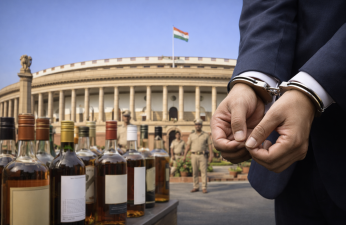
The Delhi excise policy corruption case, which began with major arrests including Delhi’s Chief Minister and Deputy Chief Minister, ended in 2026 with the trial court refusing to frame charges. Despite months of investigation and custody, the court found no prima facie evidence of criminal conspiracy or bribery. This case marks challenges in prosecuting high-profile corruption in India.
Background and Investigation
The Central Bureau of Investigation (CBI) and Enforcement Directorate (ED) probed alleged kickbacks of ₹100 crore linked to Delhi’s excise policy. Political leaders and businesspersons were arrested. The case dominated media and political discourse. However, the investigation failed to produce solid evidence connecting policy decisions to personal gain.
Judicial Standards and Challenges
Courts require clear proof of dishonest intent and personal benefit to criminalise policy decisions. Corruption cases must rely on strong financial trails, documents, and witness testimony. The Delhi case collapsed due to lack of such evidence. Judicial caution protects individuals from politically motivated cases but makes corruption prosecutions difficult.
Investigative Capacity and Institutional Issues
India’s investigative agencies lack advanced forensic financial skills and coordination. Many cases depend on witness statements rather than forensic accounting or data analytics. Countries like Singapore and Hong Kong have specialised units for tracing complex financial flows. Strengthening India’s investigative tools is essential for credible prosecutions.
Political and Democratic Implications
Corruption remains a serious concern in Indian democracy. However, misuse of criminal law for political gains damages anti-corruption efforts. Successful prosecution of large bribery cases is rare, increasing public cynicism. The excise policy case underlines the need for impartial investigations and fair trials to uphold public trust.
Topics for Prelims:
Delhi Excise Policy Case
- Alleged ₹100 crore kickbacks in excise policy.
- Arrests of Delhi CM Arvind Kejriwal and Deputy CM Manish Sisodia.
- Investigated by CBI and Enforcement Directorate.
- Case ended with no charges framed by trial court.
- Judicial emphasis on lack of evidence for criminal conspiracy.
Corruption Investigation in India
- Corruption cases require financial trails and witness testimony.
- Judiciary demands proof of dishonest intent and personal gain.
- India’s investigative agencies lack forensic and analytic expertise.
- Political misuse of corruption probes harms institutional credibility.
- Successful large-scale bribery prosecutions are very rare.
Questions for Mains:
- Critically discuss the challenges faced by Indian investigative agencies in prosecuting high-profile corruption cases, with examples from recent cases. [GS-III-Internal & External Security]
- Analyse the role of judiciary in balancing anti-corruption efforts and protection against politically motivated prosecutions, with reference to the Delhi excise policy case. [GS-II-Constitution of India & Polity]
- Examine the impact of political influence on law enforcement agencies in India and discuss measures to ensure their autonomy and credibility. [GS-II-Governance]
- Discuss in the light of global best practices how India can strengthen its forensic and financial investigation capabilities to improve corruption prosecution outcomes. [GS-III-Science & Technology]
Answer Hints:
1. Critically discuss the challenges faced by Indian investigative agencies in prosecuting high-profile corruption cases, with examples from recent cases. [GS-III-Internal & External Security]
- Investigative agencies often lack advanced forensic financial expertise and rely heavily on witness testimonies.
- Complex financial trails involving shell companies, intermediaries, and digital transactions are difficult to trace without sophisticated tools.
- Fragmented coordination among multiple agencies (CBI, ED, etc.) hampers seamless investigation.
- Political pressure and public expectations complicate impartial investigations in high-profile cases.
- Examples – Delhi excise policy case where no prima facie evidence was found despite arrests; other large contract corruption cases rarely lead to convictions.
- Need for capacity building in forensic accounting, data analytics, and international cooperation for tracing cross-border flows.
2. Analyse the role of judiciary in balancing anti-corruption efforts and protection against politically motivated prosecutions, with reference to the Delhi excise policy case. [GS-II-Constitution of India & Polity]
- Judiciary demands clear evidence of dishonest intent and personal gain before criminalising policy decisions.
- Trial court in Delhi excise case refused to frame charges due to lack of prima facie evidence, upholding judicial caution.
- Supreme Court jurisprudence protects individuals from politically motivated prosecutions by setting high evidentiary standards.
- This balance preserves rule of law and prevents misuse of criminal law as a political weapon.
- Judicial scrutiny ensures anti-corruption efforts are credible and fair, maintaining public trust.
- However, high standards also make corruption prosecution challenging, requiring stronger investigations.
3. Examine the impact of political influence on law enforcement agencies in India and discuss measures to ensure their autonomy and credibility. [GS-II-Governance]
- Political interference can lead to selective investigations and misuse of agencies for partisan gains.
- Such influence damages institutional credibility and public confidence in anti-corruption bodies.
- Cases like Delhi excise policy show risks of arrests and prosecutions driven by political momentum rather than evidence.
- Measures needed – statutory safeguards for agency autonomy, transparent appointment processes, and fixed tenure for heads.
- Strengthening internal accountability, independent oversight bodies, and parliamentary scrutiny can reduce undue influence.
- Building professional capacity and insulating agencies from executive pressure enhances impartiality and effectiveness.
4. Discuss in the light of global best practices how India can strengthen its forensic and financial investigation capabilities to improve corruption prosecution outcomes. [GS-III-Science & Technology]
- Adopt forensic accounting and data analytics tools to trace complex financial transactions and beneficial ownership.
- Develop specialised units like those in Singapore and Hong Kong focusing on financial crimes and cross-border money flows.
- Enhance inter-agency coordination and data sharing mechanisms for comprehensive investigations.
- Invest in capacity building through training in digital forensics, blockchain analysis, and financial intelligence.
- Leverage technology such as AI and machine learning for pattern detection and anomaly identification in financial data.
- Establish international cooperation frameworks for mutual legal assistance and tracking illicit funds globally.