
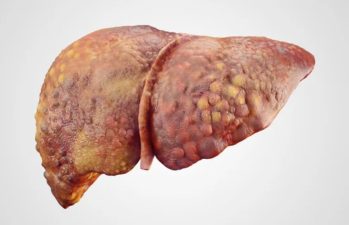
Recent research from IIT Bombay and Sunway University, Malaysia, has revealed new vital information about how certain antibiotics cause liver damage. This study focuses on two antibiotics, Teicoplanin and Oritavancin, used against serious bacterial infections. Despite their chemical similarity, these drugs differ in liver toxicity due to how they interact with liver cell membranes. The findings could transform drug safety prediction and development.
Antibiotics and Liver Damage
Antibiotics save lives by fighting infections but can sometimes harm the liver. Drug-induced liver injury is a major reason for drug withdrawal or restrictions. It is difficult to predict because symptoms may be delayed or masked by multiple medications. Even similar drugs can cause different liver effects.
Study Focus and Methods
The study compared Teicoplanin and Oritavancin, both used for severe infections like hospital-acquired pneumonia and MRSA. Researchers used Dynamic Light Scattering, Cryo-Transmission Electron Microscopy, and molecular modelling to observe how these drugs interact with liver cell membranes at the molecular level.
Key Findings on Membrane Interaction
Oritavancin disrupts membranes strongly by penetrating and causing fusion. Teicoplanin, however, stays on the membrane surface longer without much disruption. This surface-level binding causes more liver harm by altering membrane surface charge and lipid packing. Rat studies confirmed Teicoplanin caused more liver enzyme elevation and tissue damage than Oritavancin.
Implications for Drug Development
The study shifts focus from the extent of membrane damage to the location and duration of drug interaction. Persistent surface binding leads to chronic liver injury by disturbing cell communication. This insight can guide safer drug design and faster toxicity screening before clinical trials.
Topics for Prelims:
Teicoplanin Antibiotic
- Used to treat severe gram-positive bacterial infections.
- Commonly prescribed for MRSA infections.
- Known to raise liver enzyme levels in some patients.
- Interacts mainly with liver cell membrane surface.
- Can cause liver inflammation and tissue damage.
Oritavancin Antibiotic
- Newer long-acting antibiotic similar to Teicoplanin.
- Used against serious bacterial infections.
- Penetrates deeper into liver cell membranes.
- Generally better tolerated by the liver.
- Can be administered as a single dose due to long half-life.
Liver Cell Membrane Interaction
- Membrane surface binding can cause chronic toxicity.
- Disruption inside the membrane causes less surface stress.
- Membrane charge and lipid packing affect cell function.
- Dynamic Light Scattering measures particle aggregation.
- Cryo-TEM visualises membrane structural changes.
Questions for Mains:
- Critically discuss how drug-membrane interactions influence drug-induced liver injury with suitable examples from antibiotics. [GS-III-Science & Technology]
- Analyse the challenges in predicting drug toxicity in clinical trials and suggest modern scientific approaches to overcome them. [GS-III-Economic Development]
- With examples, discuss the role of hospital-acquired infections in increasing antibiotic resistance and its implications for public health policy. [GS-II-Governance]
- Examine the significance of biophysical techniques like Dynamic Light Scattering and Cryo-Transmission Electron Microscopy in advancing pharmaceutical research. [Optional Paper
Chemistry]
Answer Hints:
1. Critically discuss how drug-membrane interactions influence drug-induced liver injury with suitable examples from antibiotics. [GS-III-Science & Technology]
- Drug-induced liver injury (DILI) often results from how drugs interact with liver cell membranes, not just chemical toxicity.
- Teicoplanin binds persistently to the membrane surface, altering surface charge and lipid packing, causing inflammation and liver damage.
- Oritavancin penetrates deeper into membranes, causing structural disruption but less surface-level stress and milder liver effects.
- Location and duration of drug-membrane interaction are critical in determining liver toxicity rather than extent of membrane rupture.
- Examples show that chemically similar antibiotics can differ in liver toxicity due to differing membrane interaction modes.
- About these interactions helps predict toxicity and design safer drugs with reduced liver injury risk.
2. Analyse the challenges in predicting drug toxicity in clinical trials and suggest modern scientific approaches to overcome them. [GS-III-Economic Development]
- Drug toxicity, especially liver injury, is hard to predict due to delayed symptoms and polypharmacy masking effects.
- Individual variability and complex drug interactions complicate identification of toxic agents in trials.
- Traditional focus on chemical potency overlooks biophysical drug-cell membrane interactions influencing toxicity.
- Modern approaches include molecular-level studies of drug-membrane interactions using biophysical techniques like Dynamic Light Scattering and Cryo-TEM.
- Computer-based molecular modeling enables prediction of drug localization and interaction duration within membranes before trials.
- Incorporating these scalable, rapid tests in early drug development can reduce late-stage failures and economic losses.
3. With examples, discuss the role of hospital-acquired infections in increasing antibiotic resistance and its implications for public health policy. [GS-II-Governance]
- Hospital-acquired infections (HAIs) occur in vulnerable patients via medical devices, ventilators, or surgical sites.
- Gram-positive bacteria like MRSA cause serious HAIs, often resistant to common antibiotics requiring stronger drugs like Teicoplanin.
- Overuse/misuse of powerful antibiotics in hospitals accelerates resistance development, limiting treatment options.
- HAIs increase morbidity, mortality, and healthcare costs, burdening public health systems.
- Public health policies must enforce strict infection control, antibiotic stewardship, and surveillance to curb resistance.
- Investment in new antibiotics and alternative therapies is critical to combat resistant HAIs and protect patient safety.
4. Examine the significance of biophysical techniques like Dynamic Light Scattering and Cryo-Transmission Electron Microscopy in advancing pharmaceutical research. [Optional Paper Chemistry]
- Dynamic Light Scattering (DLS) measures particle size and aggregation, revealing drug-induced membrane clustering effects.
- Cryo-Transmission Electron Microscopy (cryo-TEM) visualizes membrane structural changes at near-atomic resolution under native conditions.
- These techniques provide molecular-level vital information about drug-membrane interactions critical for understanding toxicity mechanisms.
- They enable differentiation between drugs causing surface binding versus deep membrane penetration, guiding safer drug design.
- Combined with molecular modeling, they allow prediction of drug localization and interaction duration within membranes.
- Such advanced tools accelerate drug development by enabling early identification of potential toxicities, reducing clinical trial risks.