
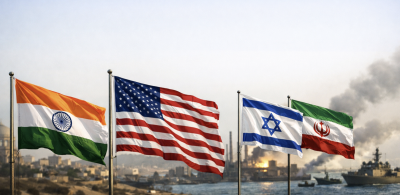
Recent global tensions have placed India’s foreign policy under scrutiny. The US-Israeli war against Iran has sparked calls for India to condemn the conflict. Critics accuse the government of moral cowardice for its silence. However, India’s stance reflects a long tradition of balancing principle with pragmatism in diplomacy.
India’s Historical Diplomatic Approach
India’s foreign policy since independence has centred on protecting sovereignty and avoiding entanglements. Jawaharlal Nehru’s non-alignment policy was not moral indifference but a strategic choice to stay clear of Cold War conflicts. Today, India follows multi-alignment — engaging with multiple global powers while prioritising national interests.
Reasons Behind India’s Silence
India’s silence on the US-Israeli war is not approval but prudence. The country has stakes in the Gulf region, including $200 billion in annual trade and energy security reliant on Gulf oil and gas. About 9 million Indians live and work in Gulf countries, making regional stability vital. Condemning the war could destabilise these relations and harm India’s economy and citizens.
Balancing Principles and National Interest
India has often chosen silence over confrontation when principles clash with critical interests. Past examples include not condemning Soviet actions in Hungary, Czechoslovakia, and Afghanistan due to strategic ties. Similarly, India maintains a delicate balance with the US, despite disagreements on international law, because of defence cooperation and shared concerns about China.
Diplomacy as Responsible Statecraft
Foreign policy is the art of managing power and consequences. India’s restraint reflects wisdom, not weakness. Silence preserves communication channels for quiet diplomacy and peace efforts. Moral absolutism without leverage can risk national interests. India honours its values through pragmatic engagement, adapting to global realities rather than rigid dogma.
Topics for Prelims:
India’s Non-Alignment and Multi-Alignment
- Non-alignment aimed to keep India neutral during Cold War.
- Multi-alignment involves engaging multiple global powers simultaneously.
- Both policies prioritise India’s sovereignty and interests.
- Non-alignment was a strategic, not moral, stance.
- Multi-alignment adapts to a multipolar world order.
India’s Strategic Interests in the Gulf
- Gulf region accounts for nearly $200 billion in trade with India.
- India depends heavily on Gulf oil and gas for energy.
- Approximately 9 million Indians reside and work in Gulf countries.
- Regional stability is crucial for remittances supporting Indian households.
- Gulf ties influence India’s foreign policy decisions.
India’s Relations with Major Powers
- India has strategic partnerships with the US and Russia.
- Defence and technology cooperation with the US is vital.
- Historical ties with the Soviet Union shaped past policies.
- India balances relations amid global rivalries.
- National interest guides India’s diplomatic choices.
Questions for Mains:
- Critically analyse India’s policy of non-alignment and multi-alignment in the context of current global conflicts. [GS-II-International Relations]
- Explain the role of economic and strategic interests in shaping India’s foreign policy decisions, with examples from India’s relations with the Gulf countries and the United States. [GS-II-International Relations]
- With suitable examples, comment on the challenges of balancing moral principles and pragmatic interests in international diplomacy. [GS-II-Constitution of India & Polity]
- What are the implications of India’s diplomatic silence on conflicts involving major powers for its global standing and national security? Critically analyse. [GS-III-Internal & External Security]
Answer Hints:
1. Critically analyse India’s policy of non-alignment and multi-alignment in the context of current global conflicts. [GS-II-International Relations]
- Non-alignment aimed to keep India neutral during Cold War to protect sovereignty and avoid entanglement in hostilities.
- Multi-alignment reflects engagement with multiple global powers simultaneously in a multipolar world, balancing competing interests.
- Both policies prioritize national interest over ideological or moral absolutism.
- Non-alignment was strategic, not moral indifference; similarly, multi-alignment is pragmatic diplomacy amid complex global conflicts.
- Current conflicts (US-Israel-Iran, Russia-Ukraine) show India’s cautious stance to maintain relations without overt condemnation.
- These policies allow India to safeguard sovereignty, security, and economic interests while navigating global power rivalries.
2. Explain the role of economic and strategic interests in shaping India’s foreign policy decisions, with examples from India’s relations with the Gulf countries and the United States. [GS-II-International Relations]
- India’s $200 billion annual trade with Gulf countries makes economic ties vital for growth.
- Energy security depends heavily on Gulf oil and gas imports.
- About 9 million Indians work in the Gulf, with remittances crucial for millions of Indian households.
- Strategic relations with the US include defence cooperation, technology partnerships, and counterbalancing China.
- India’s silence on US-Israeli-Iran conflict reflects protection of these intertwined economic and strategic interests.
- Foreign policy decisions prioritize preserving stability and cooperation over moral posturing that could jeopardize ties.
3. With suitable examples, comment on the challenges of balancing moral principles and pragmatic interests in international diplomacy. [GS-II-Constitution of India & Polity]
- India’s refusal to condemn Soviet invasions (Hungary 1956, Czechoslovakia 1968, Afghanistan 1979) marks tension between principle and pragmatism.
- Condemning US-Israeli war on Iran would align with moral principles but risk strategic and economic interests.
- Foreign policy is not academic idealism but managing real-world consequences affecting millions.
- Wise diplomacy involves restraint, silence, or quiet engagement instead of grandstanding.
- Balancing Gandhi’s and Nehru’s values with national interest requires adaptation, not rigid dogma.
- Failure to balance can lead to loss of leverage, destabilized relations, and compromised sovereignty.
4. What are the implications of India’s diplomatic silence on conflicts involving major powers for its global standing and national security? Critically analyse. [GS-III-Internal & External Security]
- Silence preserves India’s strategic autonomy and flexibility in a multipolar world.
- Maintains crucial economic ties and energy security, especially with Gulf countries.
- Protects defence and technology cooperation with the US, vital for security and countering China.
- Risk of criticism for moral cowardice but reflects responsible statecraft prioritizing national interest.
- Silence enables quiet diplomacy and channels for conflict de-escalation without confrontation.
- However, prolonged silence may affect India’s image as a proponent of international law and global justice.