
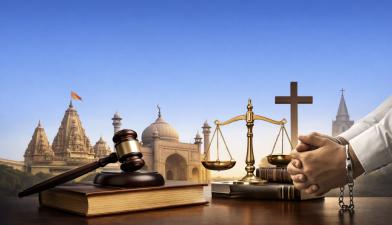
Several arrests of Muslims in North India have raised concerns about organised networks allegedly facilitating religious conversions from Hinduism to Islam. These cases, mainly in Uttar Pradesh and Uttarakhand, are under investigation. If proven, they may reveal new ideological shifts within Muslim communities. Otherwise, they risk being seen as politically motivated narratives. The last large-scale conversion was in 1981 in Tamil Nadu, where 558 Dalits embraced Islam to escape caste oppression.
Historical Background of Religious Conversion
Religious conversion in India has been a sensitive issue for decades. Notably, Dr B.R. Ambedkar’s 1956 conversion to Buddhism symbolised emancipation from caste oppression. Earlier, he encouraged Dalits to convert to Sikhism and other religions. Mahatma Gandhi opposed mass conversions fearing loss of anti-colonial unity and political support. Colonial laws like the Raigarh State Conversion Act (1936) and Patna Freedom of Religion Act (1942) attempted to regulate conversions. Article 25(1) of the Constitution of India guarantees freedom of religion but has not resolved social tensions.
Legal Framework and Amendments
Post-independence, several states enacted anti-conversion laws to regulate religious conversions, initially targeting Christian missionary activity. Examples include the Orissa Freedom of Religion Act (1967) and Madhya Pradesh Dharma Swatantrya Adhiniyam (1968). BJP-ruled states have since expanded these laws to include conversions to Islam, often linked to love jihad allegations. Uttarakhand’s Freedom of Religion Act (2018) was amended in 2022 and 2025 to increase penalties with proposals up to life imprisonment, though the latest bill awaits gubernatorial approval.
Impact and Political Consensus
Anti-conversion laws have been enacted across party lines, including Congress and regional governments. While intended to curb forced conversions, these laws have sometimes encouraged vigilantism and communal tensions. Several cases under these laws have ended in acquittals, raising questions about their effectiveness. The laws have contributed to social discord and challenged India’s secular fabric, denoting the need for careful review and balanced implementation.
Topics for Prelims:
Religious Conversion in India
- Mass conversions linked to social and caste issues.
- Dr B.R. Ambedkar’s 1956 conversion to Buddhism.
- Article 25(1) of the Constitution of India guarantees religious freedom.
- Colonial laws regulating religious conversions.
- Anti-conversion laws enacted by various states post-independence.
Anti-Conversion Laws
- Orissa Freedom of Religion Act (1967) and Madhya Pradesh Dharma Swatantrya Adhiniyam (1968).
- Uttarakhand Freedom of Religion Act (2018) and subsequent amendments.
- Legal penalties proposed up to life imprisonment for forced conversions.
- Implementation across BJP and non-BJP states.
- Cases leading to acquittals and legal challenges.
Key Concepts
- Love Jihad allegations and their political significance.
- Communal tensions and vigilantism linked to anti-conversion laws.
- Secularism and religious freedom in India’s constitutional framework.
- Impact of caste oppression on religious conversions.
- Social and political consensus on regulating conversions.
Questions for Mains:
- Critically analyse the impact of anti-conversion laws on India’s secular fabric and communal harmony. With suitable examples, suggest measures to balance religious freedom and social order. [GS-II-Constitution of India & Polity]
- Point out the role of caste oppression in influencing religious conversions in India. How does this intersect with constitutional guarantees of religious freedom? [GS-I-Indian Society]
- Estimate the challenges faced by the Indian legal system in implementing anti-conversion laws. Underline the implications of these challenges on social justice and minority rights. [GS-II-Social Justice]
- With examples from India and other countries, critically analyse the phenomenon of ‘love jihad’ as a socio-political issue and its impact on internal security. [GS-III-Internal & External Security]
Topics for Prelims:
Dr B.R. Ambedkar
- Principal architect of the Constitution of India.
- Converted to Buddhism in 1956 as a protest against caste discrimination.
- Advocated Dalit rights and social emancipation.
- Urged Dalits to convert to religions offering equality.
- His conversion inspired the Dalit Buddhist movement.
Uttarakhand Freedom of Religion Act
- Enacted in 2018 to regulate religious conversions.
- Amended in 2022 to increase penalties for forced conversions.
- 2025 amendment proposed further stricter punishments up to life imprisonment.
- Law targets conversions to Islam and Christianity.
- Implementation has led to legal disputes and acquittals.
Article 25(1) of the Constitution of India
- Guarantees freedom of conscience.
- Allows all citizens to profess, practise, and propagate religion.
- Subject to public order, morality, and health.
- Forms the constitutional basis for religious freedom in India.
- Has been central in debates over anti-conversion laws.
Answer Hints:
1. Critically analyse the impact of anti-conversion laws on India’s secular fabric and communal harmony. With suitable examples, suggest measures to balance religious freedom and social order. [GS-II-Constitution of India & Polity]
- Anti-conversion laws exist in multiple states (Orissa 1967, Madhya Pradesh 1968, Uttarakhand 2018) aiming to curb forced conversions.
- Originally targeted Christian missionary activities; later expanded to include conversions to Islam (e.g., love jihad allegations).
- Laws often encourage vigilantism, communal tensions, and social discord, undermining secularism.
- Several cases under these laws have resulted in acquittals, questioning their effectiveness and fairness.
- Constitutional guarantee under Article 25(1) protects freedom of religion including propagation and conversion, subject to public order.
- Suggested measures – clearer legal definitions, safeguards against misuse, awareness campaigns, judicial oversight, and promoting interfaith dialogue to balance freedom and order.
2. Point out the role of caste oppression in influencing religious conversions in India. How does this intersect with constitutional guarantees of religious freedom? [GS-I-Indian Society]
- Caste-based discrimination and social exclusion have historically driven marginalized communities to convert (e.g., 1981 Meenakshipuram mass conversion to Islam).
- Dr. B.R. Ambedkar’s 1956 conversion to Buddhism was a symbolic act of emancipation from caste oppression.
- Conversions often serve as a protest and search for social equality outside Hindu caste hierarchies.
- Constitutional Article 25(1) ensures freedom to convert or not convert, protecting individual conscience against caste-based coercion.
- However, social realities and anti-conversion laws complicate exercise of this freedom for oppressed groups.
- Intersection marks tension between social justice, caste dynamics, and religious liberty in India’s plural society.
3. Estimate the challenges faced by the Indian legal system in implementing anti-conversion laws. Underline the implications of these challenges on social justice and minority rights. [GS-II-Social Justice]
- Vague definitions of forced or fraudulent conversion create legal ambiguities and misuse.
- Disproportionate targeting of minority communities, especially Muslims and Christians, leading to social alienation.
- Judicial backlog and acquittals indicate difficulties in proving coercion, weakening law’s deterrent effect.
- Encouragement of vigilantism undermines rule of law and minority protections.
- Challenges affect social justice by restricting minorities’ religious freedoms and encouraging communal distrust.
- Need for balanced legal frameworks ensuring protection of minority rights while addressing genuine coercion.
4. With examples from India and other countries, critically analyse the phenomenon of ‘love jihad’ as a socio-political issue and its impact on internal security. [GS-III-Internal & External Security]
- ‘Love jihad’ alleges organised efforts to convert Hindu women to Islam through marriage, mainly propagated by right-wing groups in India.
- Several BJP-ruled states have amended anti-conversion laws to criminalise such conversions (e.g., Uttarakhand Freedom of Religion Act amendments).
- Evidence for organised ‘love jihad’ networks is contested; many cases end in acquittals, indicating possible misuse for political agendas.
- Similar phenomena of religious inter-marriage suspicion exist in other countries (e.g., communal tensions in Pakistan, Israel).
- ‘Love jihad’ discourse fuels communal polarization, vigilantism, and undermines social harmony and internal security.
- Requires balanced law enforcement, community engagement, and countering misinformation to safeguard social cohesion.