
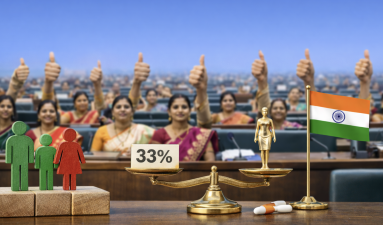
The Union Cabinet has approved key amendments to enable a 33% reservation for women in the Lok Sabha and State Legislative Assemblies. This decision aims to enhance women’s representation in legislative bodies and promote gender equality in political participation. The move is a significant step towards empowering women and ensuring their voices are better represented in policymaking.
Background of Women’s Reservation
Women’s reservation in legislatures has been a subject of debate in India for decades. The Women’s Reservation Bill, also known as the Constitution (108th Amendment) Bill, was first introduced in 1996 but faced repeated delays and opposition. The bill proposes reserving one-third of all seats in the Lok Sabha and State Assemblies for women. This amendment aims to finally operationalise this provision by amending relevant laws and procedures.
Key Provisions of the Amendment
The Cabinet’s approval includes amendments to the Representation of the People Act and other electoral laws. These changes will enable the reservation of 33% of seats for women candidates in the next general and state assembly elections. The reservation will be rotational among constituencies to ensure fair representation across regions. The amendments also provide mechanisms to implement and monitor the reservation effectively.
Impact on Political Representation
This reservation is expected to increase women’s participation in legislative processes significantly. Currently, women constitute a small percentage of elected representatives. With this affirmative action, more women will have the opportunity to influence legislation and governance. It is also anticipated to encourage political parties to field more women candidates and promote gender-sensitive policies.
Challenges and Future Outlook
While the amendment is a progressive step, challenges remain in its implementation. Ensuring genuine representation rather than tokenism is crucial. Political parties will need to support women candidates actively. Additionally, social and cultural barriers that hinder women’s political participation must be addressed. The success of this reservation will depend on sustained political will and public support.
What to Study for UPSC Exams?
- Women’s Political Participation in India
- Reservation Policies and Constitutional Amendments
- Representation of the People Act, 1951
- Gender and Governance in India
- Role of Women in Indian Electoral Politics
Women’s Political Participation in India
Women’s political participation in India has evolved since independence, with gradual increases in voter turnout and representation. Women gained voting rights in 1950 under universal adult suffrage. Despite constitutional guarantees of equality, women’s representation in Parliament and state assemblies remains low, around 14% in Lok Sabha (17th). Grassroots participation is higher, notably in Panchayati Raj institutions after the 73rd and 74th Amendments mandated 33% reservation for women. Social, cultural, and economic barriers continue to limit broader political engagement. Efforts focus on increasing women’s candidacy, leadership roles, and policy influence.
Reservation Policies and Constitutional Amendments
Reservation policies in India provide affirmative action for marginalized groups in education, employment, and politics. The Constitution allows reservations under Articles 15 and 16. Political reservations include seats for Scheduled Castes, Scheduled Tribes, and women. The 73rd and 74th Amendments (1992) mandated 33% reservation for women in local bodies. The Women’s Reservation Bill (108th Amendment) seeks to reserve 33% seats in Lok Sabha and State Assemblies but has faced delays. Constitutional amendments require parliamentary approval and presidential assent and may specify duration and rotation of reserved seats.
Representation of the People Act, 1951
The Representation of the People Act, 1951 governs the conduct of elections in India, including qualifications, disqualifications, and processes for Lok Sabha, Rajya Sabha, and State Assemblies. It regulates electoral rolls, nomination of candidates, election expenses, and dispute resolution. The Act has been amended multiple times to incorporate changes like electronic voting, candidate disclosures, and reservation provisions. It provides the legal framework for implementing reservations, including those for Scheduled Castes, Scheduled Tribes, and women, ensuring transparency and fairness in elections.
Gender and Governance in India
Gender and governance in India examine the role of gender in political, administrative, and policy processes. Women’s representation in governance institutions remains limited despite constitutional equality. Gender-sensitive governance promotes inclusive policies addressing women’s health, education, safety, and economic empowerment. Mechanisms include gender budgeting, women’s commissions, and legal reforms. Challenges include patriarchal norms, underrepresentation in decision-making roles, and gender-based violence. Increasing women’s participation in governance aims to improve accountability, responsiveness, and social justice.
Role of Women in Indian Electoral Politics
Women in Indian electoral politics have participated as voters, candidates, and officeholders since 1950. Despite early leaders like Sarojini Naidu and Indira Gandhi, women’s electoral representation remains low compared to men. Political parties field fewer women candidates, often due to socio-cultural biases and resource constraints. Women have been elected as MPs, MLAs, and local representatives, with increased presence after reservation policies in local bodies. Women’s electoral participation influences policy priorities and governance styles. Campaigns and legal reforms seek to enhance women’s political empowerment and leadership.
Last Modified: April 9, 2026