
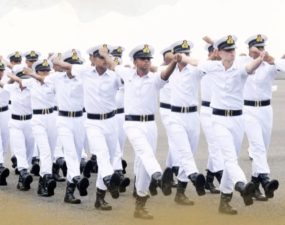
The first edition of the Indian Navy Commanders’ Conference 2026 commenced on April 14 at Nausena Bhawan, New Delhi. The three-day apex-level meeting involves senior naval leadership reviewing operational posture, strategic priorities, and inter-services coordination. The conference runs until April 16, 2026.
Key Focus Areas and Strategic Agenda
The conference prioritises India’s energy security amid the West Asia crisis, focusing on protection of maritime supply routes. Operational doctrines were reviewed following lessons from Operation Sindoor. The Navy’s role as a “Preferred Security Partner” in the Indian Ocean Region (IOR) and Indo-Pacific forms a core agenda under the MAHASAGAR vision. Discussions include safeguarding national maritime interests affected by regional conflicts.
Technology and Innovation Integration
Deliberations cover the integration of Artificial Intelligence (AI) for pan-Navy applications and data-driven systems. The use of uncrewed and autonomous platforms for enhanced operational capabilities was highlighted. The Navy aims for 100% indigenisation by 2047, focusing on domestic production of weapons, sensors, and aircraft components. The NIPUN Portal serves as a digital knowledge aggregator for naval personnel.
Jointness and Inter-Services Coordination
The conference features interactions with the Chief of Defence Staff, General Anil Chauhan, and Home Secretary Govind Mohan. These sessions aim to enhance jointness between the Navy and other services, aligning maritime strategy with national security objectives. Strategic alignment with the Ministry of Home Affairs and Defence is emphasised.
Recent Milestones and Operational Readiness
Recent inductions include the indigenous stealth frigate INS Dunagiri and anti-submarine warfare vessels. Updated naval regulations, such as the Regulations for Naval Armament Service and the Foreign Cooperation Roadmap, were released. The conference reaffirms the transition towards a “Builder’s Navy” with a technology-driven operational doctrine.
What to Study for UPSC Exams?
- India’s Maritime Security Strategy
- Indigenisation in Defence Sector
- Artificial Intelligence in Armed Forces
- Inter-Services Jointness and Coordination
India’s Maritime Security Strategy
India’s Maritime Security Strategy outlines safeguarding sea lanes vital for trade and energy. It emphasizes protection of the Indian Ocean Region (IOR) against piracy, terrorism, and regional conflicts. The strategy integrates naval diplomacy, surveillance, and cooperation with littoral states to maintain regional stability.
Indigenisation in Defence Sector
Indigenisation aims to reduce foreign dependency by promoting domestic manufacturing of weapons, sensors, and platforms. India targets 100% self-reliance by 2047 under initiatives like Make in India and Atmanirbhar Bharat. Defence Public Sector Undertakings and private firms collaborate on advanced technologies and production.
Artificial Intelligence in Armed Forces
AI is deployed for intelligence analysis, autonomous vehicles, and predictive maintenance in armed forces. It enhances decision-making speed and accuracy in combat scenarios. Ethical frameworks and secure data systems are being developed to govern AI use in military applications.
Inter-Services Jointness and Coordination
Jointness involves integrated planning, training, and operations among Army, Navy, and Air Force. It improves resource efficiency and combat effectiveness. Structures like the Chief of Defence Staff (CDS) office facilitate unified command and strategic alignment across services.
Last Modified: April 12, 2026