
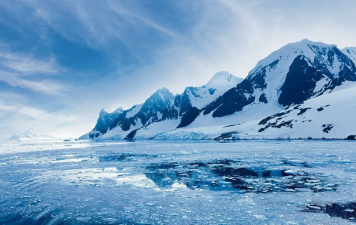
East Antarctica experienced an extreme winter warming event in July and August 2024, with temperatures rising by up to 28°C above average for more than two weeks. The event occurred during the Antarctic winter, when surface temperatures in the interior are normally far below freezing.
Antarctic Winter Climate
Antarctica is the coldest continent on Earth and is covered by the Antarctic Ice Sheet, which contains about 90% of the world’s ice and about 70% of the world’s fresh water. The continent is divided into East Antarctica and West Antarctica, and East Antarctica is the larger and colder sector.
Polar Vortex And Stratospheric Warming
The Antarctic polar vortex is a large circulation of strong westerly winds that forms in the stratosphere during the Southern Hemisphere winter. In July 2024, the vortex weakened and stratospheric warming exceeded 15°C, a condition that can disturb the normal containment of cold air over the continent.
Atmospheric Rivers And Ocean Influence
An atmospheric river is a long, narrow corridor of concentrated water vapour transport in the atmosphere. In this event, a persistent high-pressure system over East Antarctica helped draw warm, moisture-rich air deep into the continent, while low sea ice and a warmer Southern Ocean supported the inflow of heat.
Sea Ice And Long-Term Trends
The US National Snow and Ice Data Center recorded Antarctic sea ice at its third-smallest winter peak extent since satellite monitoring began 47 years ago, with the peak occurring on 17 September 2025. Antarctic sea ice reaches its annual maximum in September and its annual minimum in February.
Earlier Extreme Events
- In March 2022, some Antarctic areas recorded temperatures nearly 40°C above average.
- Antarctica is warming at about twice the global average rate.
- High-emissions scenarios project that such Antarctic heatwaves may become up to 20 times more common by the end of the century.