
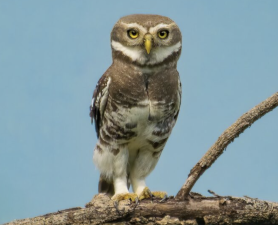
The Forest Owlet, a rare bird endemic to central India, has been recorded in Kuno National Park in Madhya Pradesh after a long gap of more than a century. The sighting is for biodiversity conservation and adds to the ecological importance of Kuno, which is already known for its cheetah reintroduction project. The bird was identified in the Parond Beat area, marking the first confirmed record of the species in the park.
About the Forest Owlet
The Forest Owlet is a small, diurnal owl species that hunts mainly in the early morning hours. Unlike most owls, it is active in daylight and often perches openly on tall branches. It is endemic to central India and has a highly fragmented distribution. The species was first described in the 19th century and later believed to have vanished for decades before being rediscovered in Maharashtra in 1997.
Conservation Status and Habitat
- The International Union for Conservation of Nature lists the Forest Owlet as endangered.
- Its global population is estimated at 250 to 999 mature individuals.
- Habitat loss and forest fragmentation remain the main threats.
- Its known range includes parts of Madhya Pradesh, Maharashtra and Gujarat.
Significance of the Kuno Sighting
- This is the first confirmed record of the species in Kuno National Park.
- The sighting indicates the presence of suitable habitat and prey base.
- It strengthens the conservation value of Kuno beyond the cheetah project.
- It suggests that ecosystem restoration may support the return of rare species.
Broader Biodiversity Importance
The record is important for wildlife monitoring in central India. It marks the need to protect forest corridors, reduce habitat degradation and improve species surveys. Such sightings help assess the health of ecosystems and can guide future conservation planning in protected areas.
Last Modified: April 28, 2026