
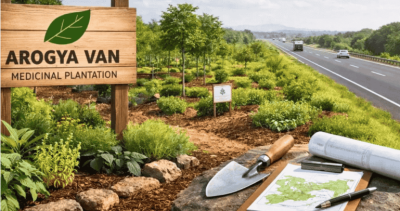
National Highways Authority of India (NHAI) has initiated ‘Arogya Van’, a thematic plantation programme focused on medicinal tree species along vacant land parcels near National Highways. The initiative aims to improve biodiversity, support pollinators and birds, and strengthen ecological resilience while adding educational and cultural value to highway landscaping.
Key Features of Arogya Van
- The first phase covers 17 land parcels across 62.8 hectares.
- Around 67,462 medicinal trees will be planted.
- The plantation plan includes about 36 medicinal species.
- Species identified include Neem, Amla, Imli, Jamun, Lemon, Gular and Maulsari.
Geographical Spread and Site Selection
The plantations will be developed across National Highway projects in Madhya Pradesh, Haryana, Delhi-NCR, Andhra Pradesh, Gujarat, Karnataka, Odisha, Tamil Nadu, Rajasthan, Maharashtra and Chhattisgarh. Priority will be given to land parcels near toll plazas, wayside amenities, interchanges, cloverleaf junctions and other prominent stretches to improve public visibility and outreach.
Ecological and Policy Significance
The initiative is designed to use species suited to local agro-climatic conditions, which can improve survival rates and long-term sustainability. NHAI has also identified about 188 hectares of vacant land for plantation during the monsoon season. The programme supports biodiversity conservation, roadside greening and ecological stabilisation. It also aligns with national efforts to promote Ayurveda and conserve indigenous medicinal flora.
Broader Public Value
Arogya Van is intended to function as a living repository of traditional medicinal knowledge. It may help create public awareness on the relevance of medicinal plants in contemporary life. The initiative reflects a shift towards environmentally sustainable infrastructure by combining highway development with ecological restoration and public education.
Last Modified: April 28, 2026