
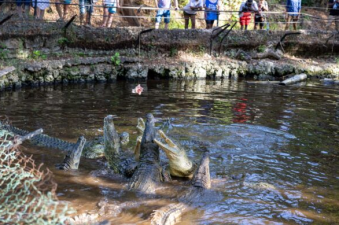
A peer-reviewed scientific study published in May 2026 revealed a major expansion in Kenya’s commercial wildlife trade, with live reptile exports increasing more than tenfold over a ten-year period. Analyzing data from the Convention on International Trade in Endangered Species of Wild Fauna and Flora (CITES) between 2013 and 2023, the report tracked the export of over 870,000 live animals from Kenya to 43 countries across five continents. The findings show that reptiles are the dominant group in both volume and export records within the country’s legal wildlife trade, raising concerns over animal welfare, data transparency, and ecological sustainability. The documentation comes at a critical juncture as Kenya reviews its statutory frameworks under the proposed Wildlife Conservation and Management Bill, 2025.
Statistical Dynamics and Market Profiles
Export Scale and Group Dominance
The study documented 886 CITES export records from Kenya involving 28 vertebrate species across nine taxonomic orders.
- Taxonomic Breakdown: Reptiles comprised 81% of all documented wildlife export records, followed by birds at 15% and mammals at 4%.
- Live Animal Share: Live specimens accounted for 80% of total export records, with reptiles representing 96.1% of these live animal entries.
- Volume Expansion: The annual volume of live reptile exports escalated from 8,551 individuals in 2013 to 86,330 individuals in 2023.
Global Importer Distribution
Commercial transactions accounted for 93% of Kenya’s wildlife exports, supplying global exotic pet and luxury item markets. The primary destination countries spanned North America, Europe, and Asia.
| Key Importing Regions | Major Importer Nations |
| North America | United States |
| Europe | Germany, Spain |
| Asia | Taiwan, Republic of Korea |
Conservation Impacts and Species Vulnerability
Wild Population Trends
The justification for captive-breeding and ranching facilities is often to protect wild ecosystems from depletion. However, the study indicates that 77% of the reptile species exported from Kenya have either declining or completely unknown wild population trends. This data deficiency makes it difficult to assess whether wild-caught specimens are being illegally laundered through licensed captive facilities.
Threatened Species in Trade
At least seven of the species regularly exported from Kenya are internationally classified as threatened.
- The Pancake Tortoise (Malacochersus tornieri): This species is classified as Critically Endangered. Despite strict legal protections, international seizure records show that illegal trade and laundering of the pancake tortoise persist.
- Chameleons and Leopards: More than 170,000 chameleons were exported during the ten-year window. High export numbers were also recorded for leopard tortoises and Nile crocodile skins, with the latter exceeding 80,000 skins.
Biosecurity, Animal Welfare, and Regulatory Gaps
Transport and Captive Mortality
The live reptile trade involves high transport risks due to crowding, temperature changes, and prolonged confinement.
- Chameleon Vulnerability: Captive chameleons face high stress levels, leading to a domestic captive mortality rate of 28% compared to the baseline reptile average of 3.6%.
- Wholesaler Stock Attrition: Data from commercial supply chains indicate that up to 72% of reptiles die within a six-week wholesaler stock cycle. Furthermore, 41.6% die within ten days of confiscation due to dehydration, emaciation, or injury.
- First-Year Household Mortality: Inappropriate microclimates, improper diets, and inadequate husbandry contribute to a first-year mortality rate of up to 75% for reptiles kept as household pets.
Biosecurity and Public Health Risks
The accumulation and high-density containment of wild reptiles pose public health challenges. An estimated 70% to 75% of emerging human infectious diseases are zoonotic, meaning they originate in animals. The intensive handling, lack of pathogen surveillance, and global transit of live reptiles create potential transmission pathways for zoonotic pathogens.
CITES Data Discrepancies
The research highlighted persistent mismatches between the export volumes reported by Kenya and the import volumes reported by destination countries. These data gaps point to systemic tracking weaknesses, non-standardized reporting protocols, and a lack of coordination among international customs authorities.
Legislative Framework and Policy Reform
Wildlife Conservation and Management Bill, 2025
Kenya is currently restructuring its wildlife governance framework by replacing the older Wildlife Conservation and Management Act, 2013, with the new Wildlife Conservation and Management Bill, 2025. The new Bill introduces dedicated chapters to address modern commercial challenges.
- Part VII (National Wildlife Biodiversity Data): Establishes structured mechanisms to collect, maintain, and analyze data on wild populations to ensure policy choices are based on scientific evidence.
- Part VIII (Wildlife Biodiversity Economy): Creates a formal regulatory framework to integrate wildlife conservation with sustainable economic benefits, ensuring local communities profit from legal conservation activities.
- Part IX (Licences and Permits on Trade): Toughens rules on issuing permits for wildlife specimens to prevent illegal exploitation and trafficking while overseeing the legal exotic trade.
Recommended Mitigation Protocols
Civil society organizations and researchers have submitted specific recommendations to strengthen the upcoming 2025 legislation:
- Traceability Systems: Developing digital tracking tools to map specimens from their facility of origin to the final point of export, verifying they are genuinely captive-bred.
- Independent Welfare Audits: Introducing mandatory health and welfare checks across breeding centers, holding pens, and transport containers.
- Pathogen Surveillance: Implementing regular biosecurity monitoring and testing for zoonotic diseases within commercial wildlife supply lines.
IASPOINT Booster Facts for UPSC
International Conventions, Species Profiles, and Trade Terms
- CITES (Convention on International Trade in Endangered Species of Wild Fauna and Flora): An international agreement between governments, drafted as a result of a resolution adopted in 1963 at a meeting of members of the IUCN. It entered into force on July 1, 1975, and is legally binding on its Parties, though it does not take the place of national laws.
- CITES Appendix Classifications:
- Appendix I: Includes species threatened with extinction; trade is permitted only in exceptional circumstances.
- Appendix II: Includes species not necessarily threatened with extinction, but in which trade must be controlled to avoid utilization incompatible with their survival.
- Appendix III: Contains species that are protected in at least one country, which has asked other CITES Parties for assistance in controlling the trade.
- Pancake Tortoise (Malacochersus tornieri): A unique species of tortoise native to Tanzania and Kenya. It is known for its flat, flexible, thin shell, which allows it to squeeze into tight rock crevices for protection. It is listed under CITES Appendix I.
- Captive-Bred vs. Ranched Specimens: Under CITES definitions, Captive-Bred (Source Code C) refers to animals born and reared in a controlled environment from parents that mated in captivity. Ranched (Source Code R) refers to rearing specimens in a controlled environment taken as eggs or juveniles from the wild, where they would otherwise have had a low probability of surviving to adulthood.
- Zoonoses: Any disease or infection that is naturally transmissible from vertebrate animals to humans. Reptiles are well-documented vectors for various strains of Salmonella bacteria and premium exotic viral strains.
- IUCN Red List Status: The International Union for Conservation of Nature (IUCN) Red List of Threatened Species provides taxonomic, conservation status, and distribution information. The pancake tortoise is designated as Critically Endangered (CR) on this global index.